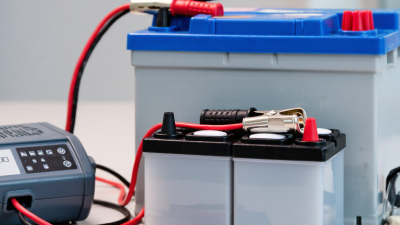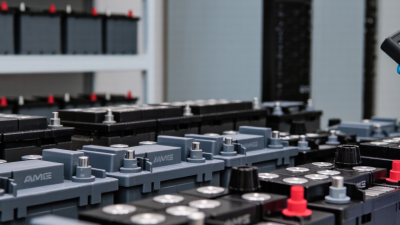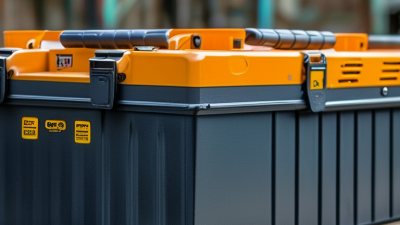
A maintenance free sealed lead acid battery is often chosen for backup power, security systems, emergency lighting, and small solar installations. Its sealed case limits routine watering, while an internal valve helps manage pressure. “Maintenance-free” does not mean care-free. Correct charging, suitable temperature, and regular inspection still affect service life. A warm equipment cabinet, loose terminal, or charger set to the wrong voltage can quietly shorten it.
This guide draws on the published work of Dr. David A. J. Rand, a lead-acid battery researcher. To avoid presenting invented wording as his, the following is an editorial summary, not a verbatim quotation: “Sealed batteries still depend on sound charging and operating conditions.” That distinction matters. A product label alone cannot predict performance in a real installation.
The sections ahead explain battery types, capacity ratings, charging practices, storage, and common selection errors. They also show what to check on a datasheet, including standby use, cycle life, and operating temperature. Small details count. A battery placed beside a heat-producing device may age faster than one in a stable, ventilated location. No single model suits every load. Buyers should compare the actual duty cycle, required backup time, and charger specifications before choosing. Even careful estimates can miss real-world conditions; recording test results after installation is a sensible way to revisit the decision.

A sealed lead-acid battery stores energy through a reversible chemical reaction. Its positive plates contain lead dioxide, while its negative plates contain porous lead. Sulfuric acid electrolyte carries ions between them. During discharge, both plates form lead sulfate, and the electrolyte becomes more diluted. Charging reverses the reaction. Simple in principle, but temperature and charging voltage matter.
Most maintenance-free sealed batteries are valve-regulated lead-acid (VRLA) designs, commonly using absorbent glass mat or gel to immobilize the electrolyte. Oxygen produced during charging can recombine inside the case, reducing water loss. A pressure-relief valve still matters: “sealed” does not mean airtight. Battery Council International cites a U.S. lead-battery recycling rate above 99%; that figure describes recycling, not battery life or performance. The “maintenance-free” label can sound absolute. It is not.
Tips: Keep terminals clean and charging voltage within the maker’s specification. Avoid prolonged heat; a warm enclosure can shorten service life. Check the case for swelling or leaks, even when routine water refilling is unnecessary.
Maintenance-free sealed lead-acid batteries are commonly available as AGM or gel types. AGM batteries hold electrolyte in absorbent glass mats, making them a practical choice for many standby systems. Gel batteries use a thickened electrolyte and may suit applications needing slower, steady discharge. Their charging requirements differ, so check the battery maker’s specifications before choosing a charger.
Ratings need context. A 12-volt battery’s amp-hour capacity is often measured over a 20-hour discharge, not under every load. A unit rated at 7 Ah may deliver less usable energy when a device draws current quickly or operates in a cold room. Check the discharge chart, expected runtime, terminal style, and operating temperature. Small details matter.
These batteries power alarm panels, emergency lights, backup power supplies, and some mobility equipment. In a backup unit, the battery may sit unused for months, then need to deliver power at once. Size it for the actual load and required runtime, with a sensible margin. Still, a tidy label can mislead. “Maintenance-free” does not mean maintenance-free forever: inspect for swelling, corrosion, loose connections, and declining runtime. Replacement intervals vary, and I would not rely on age alone.
| Battery type | Construction and characteristics | Common nominal ratings | Typical charging guidance | Typical applications |
|---|---|---|---|---|
| AGM VRLA | Electrolyte is absorbed in glass-mat separators. Sealed, valve-regulated design; generally offers good power delivery and low internal resistance. | Common blocks: 6 V and 12 V. Small standby models often range from under 1 Ah to about 20 Ah; larger models are also available. | For many 12 V AGM products, float charging is approximately 13.5–13.8 V and cyclic charging approximately 14.4–14.7 V at 20–25°C. Follow the product datasheet. | UPS systems, emergency lighting, alarm panels, communications backup, and other standby-power equipment. |
| Gel VRLA | Electrolyte is immobilized with silica gel. Sealed, valve-regulated construction; often selected for applications involving regular cycling or where a gel-specific charging profile is supported. | Common blocks: 6 V and 12 V. Capacity varies by model and size, from small standby units to larger deep-cycle products. | Charging voltage is model-specific. Many 12 V gel batteries use a float range around 13.5–13.8 V and a lower cyclic charge limit than some AGM models; check the manufacturer’s specified limits. | Mobility equipment, solar energy storage, marine systems, and standby or cyclic applications designed for gel batteries. |
| High-rate AGM VRLA | AGM construction optimized for relatively high current over short periods. Runtime depends on discharge rate, temperature, and the battery’s rated capacity test conditions. | Usually supplied as 12 V blocks; capacity and high-rate output are specified for each model, often with discharge tables for short backup durations. | Use the model’s specified constant-voltage charge settings and current limits. Avoid exceeding the recommended charge voltage or operating temperature. | UPS systems, data-center backup, switchgear, and other equipment requiring brief, high-power backup. |
| Deep-cycle AGM VRLA | AGM design intended for repeated charge and discharge. Cycle life varies substantially with depth of discharge, temperature, charging quality, and product design. | Commonly available in 6 V or 12 V formats, with capacities ranging from small units to large deep-cycle blocks. | Use a charger with an AGM-compatible profile. Charge promptly after discharge and apply temperature compensation when specified by the battery maker. | Recreational vehicles, marine house systems, portable power, and renewable-energy storage. |
| Front-terminal AGM VRLA | AGM battery with front-access terminals for easier installation and maintenance in equipment racks. Electrical performance depends on the specific model. | Typically 12 V blocks; capacity is model-specific and commonly stated in ampere-hours with a defined discharge rate. | Follow the model-specific float and cyclic voltage limits; allow ventilation and suitable spacing in battery cabinets. | Telecommunications cabinets, network infrastructure, and rack-mounted backup systems. |
Note: Ratings and charging figures are typical examples, not universal specifications. Capacity depends on the stated discharge rate and test conditions. “Maintenance-free” means routine electrolyte top-up is not required; inspection, correct charging, temperature control, and safe handling are still important. Always consult the battery datasheet.
China’s maintenance-free sealed lead-acid battery industry includes manufacturers serving backup power, security systems, and industrial equipment. Their capabilities vary, so “made in China” alone says little about a battery’s service life. Look for clear capacity ratings, production traceability, and test records tied to the specific model.
Quality standards matter. Buyers can compare products with applicable IEC and GB/T requirements, checking that the stated standard matches the battery’s intended use. Useful evidence includes capacity tests, charging performance, temperature limits, and checks for leakage or casing defects. Ask for dated reports, not just a certificate image. Details count.
Factory practices also shape consistency. Automated plate assembly and controlled curing can reduce variation, while incoming-material checks help catch defects before production. During evaluation, inspect sample terminals, labels, and packaging, then confirm the warranty terms and recommended charging settings. No single test tells the whole story. A low initial price may look attractive, but it cannot replace dependable test data. Even careful suppliers can have uneven batches, so periodic inspection remains sensible.
Sealed lead-acid batteries are assembled from cells with a nominal voltage of about 2 V each. The chart shows common series configurations, not a ranking of manufacturers or product quality. For quality evaluation, check that test methods and requirements match the battery’s intended application; IEC 60896-21 and IEC 60896-22 cover test methods and requirements for stationary valve-regulated lead-acid batteries.
Select a sealed lead-acid battery by matching its nominal voltage, required runtime, discharge rate, and operating temperature to the equipment. Check the capacity rating’s stated discharge duration; a 100 Ah rating does not guarantee 100 Ah at every load. Allow for aging and cold conditions, using the battery maker’s discharge tables rather than a generic sizing shortcut. One judgment call remains: future load growth is easy to underestimate.
Install the battery in a clean, dry, ventilated space, with terminals protected from accidental contact. Follow the specified charging voltage and temperature limits. Before connecting, inspect the case, confirm polarity, and measure each unit’s open-circuit voltage. During commissioning, record the date, ambient temperature, voltage, and connection torque. IEEE Std 1188-2005 recommends capacity testing at intervals no longer than 25% of expected service life or two years, whichever is shorter. Keep that baseline; later readings are much harder to interpret without it.
Tips: Use insulated tools. Tighten connections to the stated torque, not by feel. After charging, check for abnormal warmth, swelling, or voltage imbalance. Record what you observe—even a small mismatch may deserve a second check.
A maintenance-free sealed lead-acid battery needs no routine water topping, but it still needs careful handling. Heat is a quiet life-shortener: a battery stored beside a warm boiler may age faster than one kept in a cool, dry place. Use a charger matched to the battery’s voltage and charging profile. Loose terminals, repeated deep discharges, and long periods at low charge can also reduce service life. Small clues matter. A battery that once powered an alarm through an outage may now lose capacity well before its casing looks different.
For troubleshooting, check cable connections and measure voltage with a suitable meter, following the battery maker’s instructions. A single voltage reading cannot confirm full health; capacity testing may be needed. Do not open the case or add water. Stop using a battery that is swollen, unusually hot, leaking, or giving off an odd smell. Keep it away from sparks, protect the terminals from metal objects, and arrange professional assessment. Do not guess.
At replacement time, keep the old battery upright in a secure, ventilated container and take it to an approved battery collection or recycling facility. Lead and electrolyte require controlled handling, while recovered materials can re-enter manufacturing. Never place the battery in ordinary household waste. Recycling access varies by location, so check with a local waste service or battery retailer before transport. A little planning prevents spills and short circuits.