How to Recharge a Sealed Lead Acid Battery?
A rechargeable sealed lead acid battery may look simple: a compact case, two terminals, and a charger. Yet charging it correctly takes attention. AGM and gel batteries are both sealed lead-acid types, but their charging requirements can differ. The battery label and manufacturer’s instructions should guide every decision.
Battery specialist Isidor Buchmann explains, “Lead acid batteries should be charged in three stages, which are constant-current charge, topping charge and float charge.” That guidance helps frame this introduction, but it is not a substitute for the battery maker’s specifications. A compatible charger matters. So does the correct setting. Before connecting anything, check the case for swelling, cracks, or leakage, then confirm terminal polarity. Work in a ventilated area and keep sparks away.
A practical charging guide should explain how to choose a charger, connect it safely, monitor progress, and recognize when charging is complete. It should also cover what to do when a battery becomes unusually warm or fails to hold a charge. Small details count: a loose clamp, an unsuitable mode, or a forgotten charger can change the result. It is tempting to assume “sealed” means maintenance-free in every sense. That assumption needs questioning. Careful charging can support reliable service, but it cannot restore a damaged battery or erase poor storage habits.
Safety Precautions for Charging a Sealed Lead-Acid Battery
Safety Precautions for Charging a Sealed Lead-Acid Battery
Before charging, check the battery for cracks, swelling, corrosion, or leaks. Do not charge a damaged battery. Place it upright on a dry, stable surface in a well-ventilated area. Sealed does not mean gas-free: a faulty or overcharged battery can release gas. Keep flames, sparks, and cigarettes away. Remove metal jewelry, and use insulated tools. It is easy to rush this check; pausing for a minute is worthwhile.
Use a charger designed for sealed lead-acid batteries and set it for the correct battery type, such as AGM or gel. Confirm the voltage against the battery label or manufacturer instructions. Connect positive to positive and negative to negative, following the charger’s instructions. Keep the battery away from heat, and never charge one that is frozen or unusually hot. Stop if it becomes hot, swells, or gives off an unusual smell. Don’t open the case.
Tips: Check the charger’s settings before plugging it in. Keep the charging area clear, and stay nearby to check for heat or odd sounds. A small detail matters: loose clips can interrupt charging, so make sure connections are secure. If anything seems wrong, stop and seek qualified guidance.
Check the Battery’s Voltage, Capacity, and Charging Requirements
How to Recharge a Sealed Lead Acid Battery?
Check the Battery’s Voltage, Capacity, and Charging Requirements
Before connecting a charger, read the battery label and note its nominal voltage, capacity in amp-hours, and type, such as AGM or gel. These details matter: batteries with different designs may require different charging settings. Check the resting voltage with a multimeter while the battery is disconnected from its load. A low reading can indicate discharge, but voltage alone cannot confirm the battery’s remaining capacity or health. If the case is swollen, cracked, or leaking, do not charge it.
Tips: Use a charger designed for sealed lead-acid batteries and select the correct voltage and charging mode. Match the charger’s current to the battery maker’s guidance; a higher current is not automatically better. Keep the battery upright in a ventilated area, away from sparks. Stop if it becomes unusually hot.
Charging can take several hours, depending on capacity and how deeply the battery was discharged. Check the charger’s indicators, but do not treat a “full” light as proof that an aged battery still performs well. I find labels can be frustratingly small, and sometimes they are worn; guessing is not a good substitute. If the specifications are unreadable, consult the battery supplier or a qualified technician before charging. After charging, let the battery rest, then check its voltage again and watch for rapid voltage drop during use.
How to Recharge a Sealed Lead Acid Battery?
Check the battery’s voltage, capacity, and charging requirements before connecting a charger. The chart shows typical cyclic/absorption and float voltage targets for sealed lead-acid batteries at about 25°C. Always follow the specifications on the battery label; charging voltage may need temperature compensation.
Choose a Compatible Charger and Set the Correct Charging Mode
A sealed lead-acid battery needs a charger that matches its nominal voltage and battery type. Read the battery label before connecting anything. A 12-volt battery, for example, needs a charger rated for 12-volt lead-acid batteries, not a lithium setting. If the battery is marked AGM or gel, select that specific mode when available.
“Sealed” does not mean every charging profile is suitable. Check the manual for the recommended charging current and voltage; guessing can shorten battery life. Not every charger fits.
Tips: Switch off the charger before connecting the clamps. Match red to positive and black to negative, then choose the correct mode. Keep the battery upright in a ventilated area, away from sparks. Stop if you notice swelling, leakage, unusual heat, or a strong odor.
Let an automatic charger finish its cycle rather than disconnecting it early. Some models display a full-charge light or move to a maintenance stage. Follow the battery maker’s instructions for temperature limits, since charging conditions can change in a cold garage or a hot shed.
It is easy to overlook that detail. If the label is unreadable or the battery behaves oddly, pause and get qualified advice instead of trying a different mode at random.
Connect the Charger and Recharge the Battery Step by Step
How to Recharge a Sealed Lead Acid Battery?
Connect the Charger and Recharge the Battery Step by Step
Place the battery upright on a dry, stable surface with good airflow. Check its case for cracks, swelling, leaks, or unusual warmth. Do not charge a damaged or frozen battery. Keep flames and sparks away; sealed batteries can still release gas during charging. Check the battery label for its type and rated voltage. Set the charger to the matching sealed lead-acid mode, such as AGM or gel, when specified.
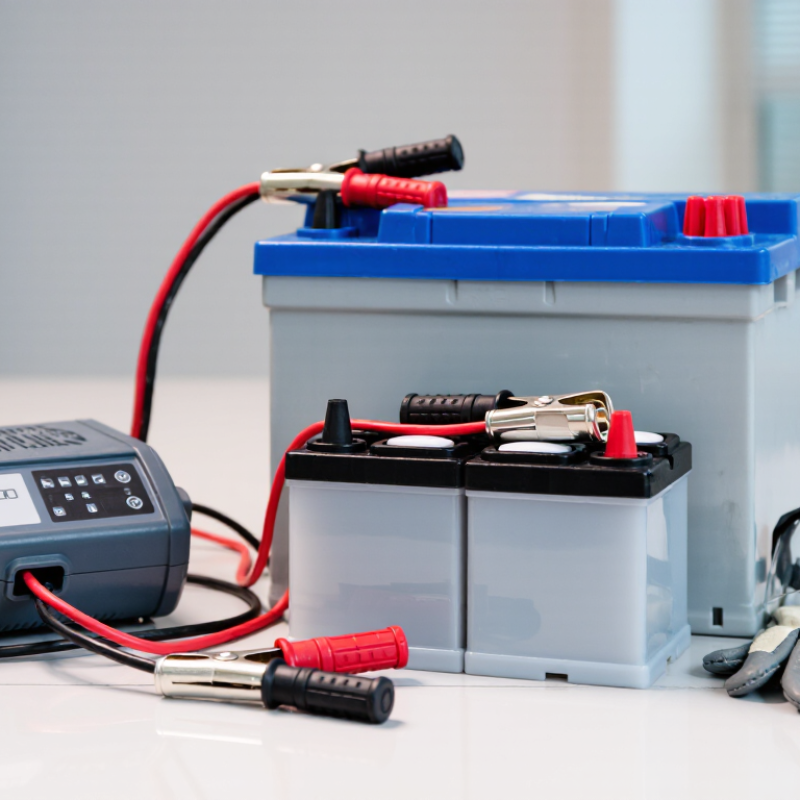
With the charger unplugged, connect its red clamp to the positive terminal and its black clamp to the negative terminal. Make sure both clamps grip clean metal. Then plug in the charger and start the cycle. Use the voltage and current limits stated by the battery maker; one setting does not fit every sealed battery. Stay nearby at first. Stop if the case gets hot, swells, or gives off an unusual smell. Small details matter.
Let the charger indicate a full charge rather than relying on a fixed time. Unplug it from the outlet before removing the clamps, following the charger instructions. IEEE Std 1188-2005 uses 80% of rated capacity as a replacement threshold for stationary VRLA batteries, assessed through capacity testing. That figure is not a charging target. It is a useful reminder: an old battery may show “full” yet deliver less power. Note the charge time and any warning signs; I would not assume one successful cycle proves the battery is healthy.
Disconnect the Charger and Check the Battery’s Condition
When charging is complete, switch off and unplug the charger before removing its clamps. Follow the charger’s instructions for disconnection; many models specify removing the negative clamp first. Keep the clamps apart, and avoid letting either touch metal objects. A small spark is still a warning, not something to ignore.
Let the battery rest in a dry, ventilated place, then inspect its case under good light. Look for bulging, cracks, damp spots, or a sharp, unusual odor. Sealed batteries should not be opened. If the case is swollen, leaking, or unusually hot, stop handling it and do not recharge it. Arrange safe assessment or disposal through an appropriate battery service.
Check the terminals for looseness or corrosion, and wipe away light surface dust with a dry cloth. Wear eye protection and gloves if you need to handle the battery. After it has rested, a suitable meter can show its open-circuit voltage; compare that reading with the battery’s specifications. Voltage alone cannot confirm good capacity. That part is easy to overlook. A battery may appear clean and still fail under load, so note its age and any recent loss of runtime before deciding it is healthy.