Who Are the Top Battery Pack Manufacturers in China?
China’s battery industry includes large cell makers, specialist pack integrators, and suppliers serving different end markets. The names that matter depend on the application. An electric vehicle battery pack must manage high power, thermal loads, vibration, and years of charging cycles. A stationary storage pack faces different priorities, including predictable output, service access, and safe operation inside a cabinet or container. Small packs for tools and mobility products bring their own constraints. Size matters. So does traceability.
This overview examines leading Chinese battery pack manufacturers through practical criteria rather than a single popularity ranking. It considers product focus, engineering capability, quality systems, production scale, and support after delivery. Public company information can help, but it does not replace a factory audit, sample testing, or a review of cell sourcing and pack-level controls. Buyers should compare specifications carefully, including chemistry, usable capacity, operating temperature, protection features, and warranty terms. A polished brochure is not proof. The picture is not always neat: a company may excel in one segment while offering less evidence in another. The shortlist therefore needs context, not hype. The sections ahead explain what distinguishes major suppliers, where their strengths appear, and which questions deserve direct answers before a partnership begins. This makes the comparison more useful for procurement teams, engineers, and readers entering the market. It also leaves room for uncertainty, which is often more honest than an unsupported “top” label.
China’s Battery Industry: 2023 Lithium-Ion Battery Output Exceeded 940 GWh
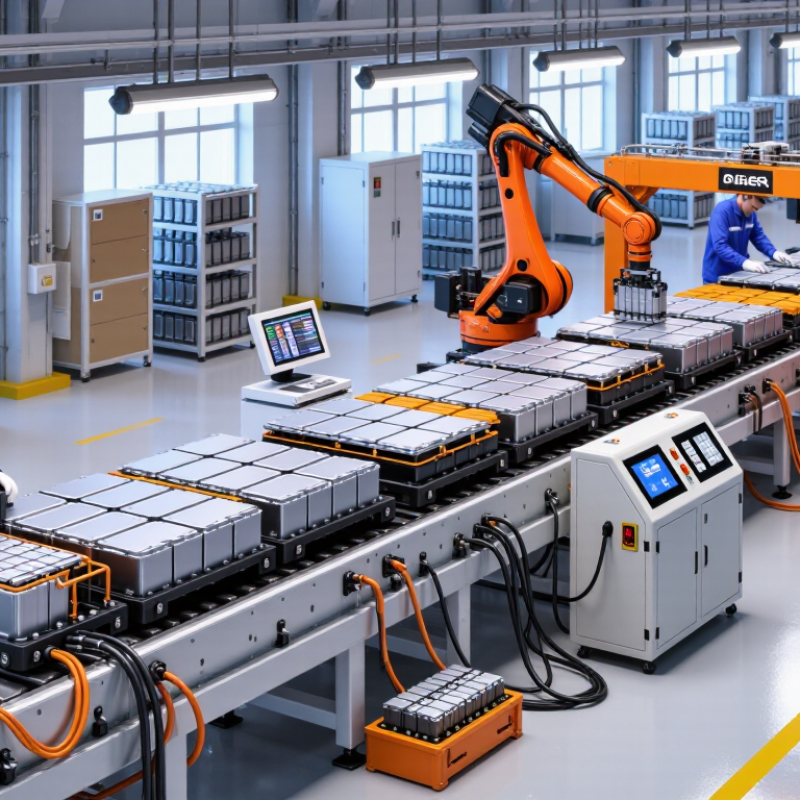
China’s lithium-ion battery output exceeded 940 GWh in 2023, a striking measure of the industry’s manufacturing scale. Behind that figure are busy production lines, electrode coating, cell assembly, and repeated quality checks. It describes battery output, not the amount installed in vehicles or energy-storage systems. That distinction matters.
For battery pack manufacturers, a large domestic cell supply can support sourcing and production planning. But output alone does not reveal a pack’s safety, lifespan, or performance. Buyers should also examine traceability, thermal management, testing procedures, and how suppliers handle defects. Details matter. A neat specification sheet cannot show every weakness inside a pack.
The number also invites a useful question: how consistently can manufacturers turn high-volume production into dependable finished packs? Pack design must account for cell matching, wiring, cooling, and the conditions where the product will operate. A system used in a hot warehouse faces different demands from one installed in a cold outdoor cabinet. Even strong industry data has limits. Production figures offer context, not a complete ranking of manufacturers.
China’s Lithium-Ion Battery Output
China’s lithium-ion battery output reached about 750 GWh in 2022 and exceeded 940 GWh in 2023. The 2023 figure is shown at the reported 940 GWh threshold.
Source: China’s Ministry of Industry and Information Technology (MIIT). Output figures are rounded; 2023 output was reported as exceeding 940 GWh.
Battery Pack Fundamentals: Cells, BMS, Thermal Management, and Enclosures
A battery pack is more than a stack of cells. Cells store energy; modules or structural layouts connect them, while the battery management system (BMS) monitors voltage, current, and temperature. The International Energy Agency’s Global EV Outlook 2024 reports that electric-vehicle battery demand reached about 750 GWh in 2023, roughly 40% above 2022. That scale makes consistency essential. A weak cell can limit a whole pack.
The BMS estimates state of charge and flags unsafe operating conditions, but its readings depend on accurate sensors and calibration. Thermal management keeps cells within their intended temperature range. On a cold morning, a pack may deliver less power; during fast charging, heat must be removed evenly. Small temperature differences matter. Cooling hardware also adds weight, cost, and failure points.
Enclosures protect cells from vibration, moisture, and impact while helping control heat and support pack structure. The U.S. Department of Energy’s 2023 battery cost assessment estimated a high-volume lithium-ion pack at $139 per kWh. That figure is a benchmark, not a promise for every design. A low-cost pack can still disappoint if service access, sensor placement, or heat paths were treated as afterthoughts. Real-world performance is often less tidy than a specification sheet suggests.
CATL and BYD: 2023 Global EV Battery Shares of 36.8% and 15.8%
In 2023, two Chinese battery-pack manufacturers held reported global electric-vehicle battery shares of
36.8%
and
15.8%.
The first figure represents more than one-third of the market, while the second approaches one-sixth. That is substantial. Together, the shares total
52.6%, pointing to significant concentration among a small group of suppliers. These figures describe market presence, not a direct measure of pack quality, safety, or durability.
For fleet operators and vehicle developers, large production scale can support steady sourcing and investment in pack engineering. A battery pack is more than cells: thermal management, enclosure design, software controls, and quality checks all affect everyday performance. Yet market share alone leaves important questions unanswered. How does a pack perform after years of fast charging, cold starts, or repeated acceleration? Buyers should compare verified range, warranty terms, safety testing, and service coverage, rather than supplier size alone. Share estimates may also vary by reporting scope and by whether calculations track installed capacity or shipments.
The numbers matter. They are a starting point, not a verdict.
Other Leading Chinese Manufacturers: CALB, Gotion, EVE Energy, and Sunwoda
Beyond the largest suppliers, four other Chinese manufacturers compete through shipment scale, chemistry mix, and customer programs. Their positions are not interchangeable. SNE Research estimated global EV battery usage at 1,072.4 GWh in 2024, up 27.2% year over year. A growing market creates room for these suppliers, but rankings can shift with vehicle launches and regional demand. Scale matters. It does not guarantee consistent cell quality or delivery.
China’s Power Battery Industry Innovation Alliance reported 548.4 GWh of installed batteries in China during 2024, with lithium iron phosphate accounting for about 74.6%. That mix helps explain continued investment in LFP production, alongside nickel-based cells for applications prioritizing range or energy density. Buyers should compare usable pack energy, charging curves, thermal management, warranty terms, and factory utilization—not just announced capacity. A cold-weather fleet test can reveal more than a specification sheet. Public rankings may combine batteries for vehicles and energy storage, so comparisons deserve caution. That caveat is easy to miss. Public figures rarely disclose production yields or customer concentration, yet both can affect dependable supply.