Choosing the right tractor battery is crucial for both performance and durability. A sturdy battery ensures that your tractor operates smoothly, especially during heavy-duty tasks. With numerous options available globally, buyers may find it challenging to select a reliable battery.
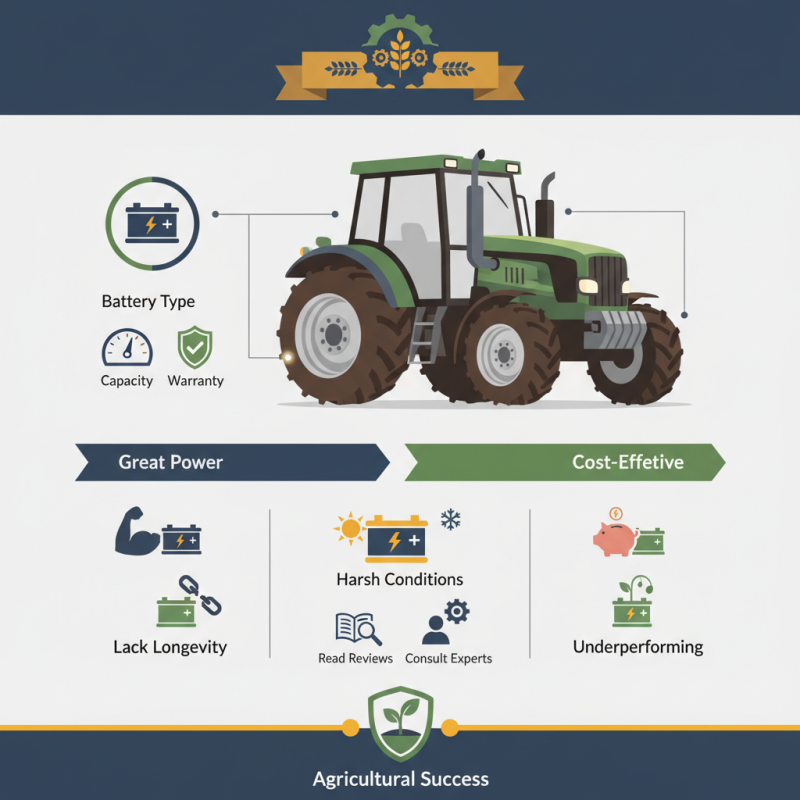
To make an informed decision, it’s essential to consider various factors. These include battery type, capacity, and warranty. Not every battery fits every tractor model. Some may offer great power, but lack longevity. Others could be cost-effective yet underperforming.
An ideal tractor battery should not only meet your power needs but should also withstand harsh conditions. Ensure to read reviews and consult with experts. This can prevent mistakes in purchasing. After all, a tractor battery is more than just a purchase; it's an investment in your agricultural success.
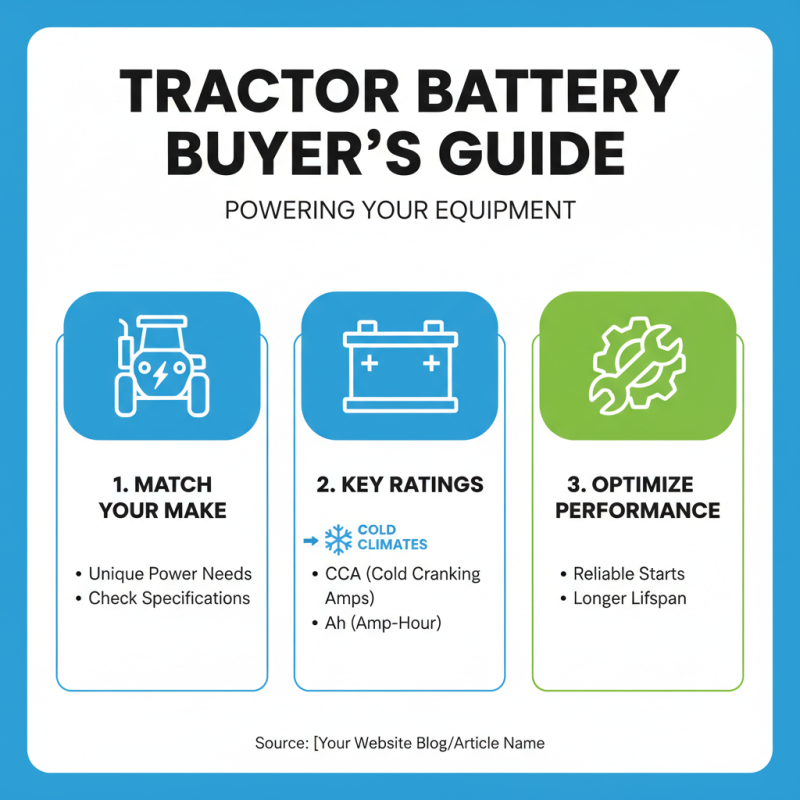
When choosing a tractor battery, consider the specific needs of your machine. Different makes have unique power requirements, which can affect performance. Match the battery's cold cranking amps (CCA) and amp-hour rating to your tractor's specifications. A higher CCA is vital for colder climates, ensuring reliable starts.
Compatibility is key. Check the battery dimensions and terminal configurations. A poor fit can lead to issues. Look for batteries with good vibration resistance, especially if your tractor operates on rough terrain. This durability will enhance longevity and reliability.
Do not overlook maintenance. Some batteries require regular checks and fluid refills, while others are maintenance-free. Be aware that a maintenance-free battery can require replacement sooner if not monitored. It’s also wise to consider environmental factors. Hot climates can shorten battery life, while cold weather can reduce efficiency.
When selecting a tractor battery, several key specifications are crucial for making an informed decision. Consider the Cold Cranking Amps (CCA), which indicate a battery’s ability to start an engine in cold temperatures. A reliable battery should provide at least 600 CCA for most tractor applications. Additionally, reserve capacity is vital. It reflects how long the battery can power essential systems during engine failure. Aim for a reserve capacity of at least 150 minutes.
Another critical aspect is the battery type. Lead-acid batteries are common and cost-effective, while absorbed glass mat (AGM) batteries offer superior performance and durability. AGM batteries often have lower self-discharge rates and a longer lifespan, making them more suitable for demanding conditions. Industry reports highlight that AGM models can last 2-3 times longer than traditional lead-acid batteries.
Additionally, pay attention to the dimensions and terminal types. A snug fit in the battery compartment is necessary for optimal performance. Ensure that the terminals can handle your tractor’s requirements without risking corrosion or poor connections. Overall, choosing the right tractor battery involves understanding these specifications and their implications for your equipment’s performance.
| Battery Type | Cold Cranking Amps (CCA) | Reserve Capacity (RC) | Voltage | Weight | Warranty Period |
|---|---|---|---|---|---|
| AGM | 800 CCA | 200 minutes | 12V | 50 lbs | 2 years |
| Flooded Lead Acid | 750 CCA | 180 minutes | 12V | 45 lbs | 1 year |
| Lithium Ion | 1000 CCA | 300 minutes | 12V | 30 lbs | 5 years |
| Gel Cell | 650 CCA | 150 minutes | 12V | 40 lbs | 2 years |
When choosing a tractor battery, performance ratings are crucial. Buyers often seek durability and reliability in their selections. Understanding the performance of different brands can guide decisions. Local weather and usage patterns also impact battery life and efficiency.
Battery longevity is a common concern. Some brands excel in cold-cranking amps, making them ideal for colder climates. Others perform better in heat, which is vital for warmer regions. This diversity highlights the importance of considering your specific needs.
Not every battery fits every tractor. Some users report early failures in heavy-duty applications. This feedback stresses the importance of research before purchasing. Each brand has its strengths and weaknesses. Knowing these can empower buyers to make informed choices. Selecting the right battery can lead to better operational performance and fewer headaches in the field.
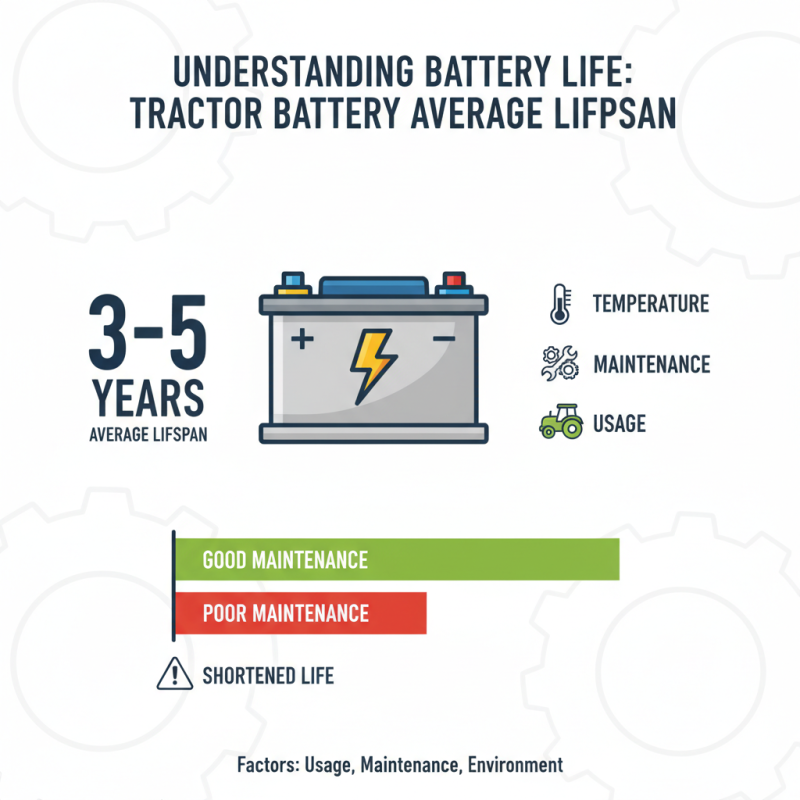
When considering tractor battery life, it’s essential to understand average lifespan statistics. Typically, tractor batteries last between three to five years, depending on usage and maintenance practices. Poor maintenance can lead to significantly shorter lifespans. Environmental factors, such as temperature, also affect performance.
Tip: Regularly check your battery terminals for corrosion. Clean terminals improve battery connectivity and overall lifespan.
In addition, the brand and type of battery play a crucial role in longevity. Lead-acid batteries are the most common choice among tractor owners. However, emerging technologies, like lithium-ion, may offer longer lifespans but come at a higher initial cost.
Tip: Store your battery in a dry, temperature-controlled environment. Extreme conditions can drain battery life much faster.
Choosing a reliable battery is a long-term investment for your tractor. Understanding these lifespan statistics and maintenance tips can help you make informed decisions.
When choosing a tractor battery, costs can vary greatly. Buyers from different regions should consider local prices and availability. For example, in North America, prices often range from $100 to $300. In Europe, prices can be slightly higher due to import duties. Understanding these costs helps in budgeting effectively.
It's essential to consider the quality of the battery as well. A cheaper option might save money upfront but could lead to more frequent replacements. This raises hidden costs. Conversely, spending more on a reliable battery can offer peace of mind and longevity.
Regional climate impacts battery performance too. In colder areas, a robust battery is necessary. In warmer climates, a different type of maintenance is required. These factors challenge buyers to make informed decisions, often requiring research and adjustment to their initial budget.