What is Battery Acid and How is it Used in Industry?
Battery acid, scientifically known as sulfuric acid, plays a vital role in various industrial applications. Its ability to store and manage energy makes it essential for lead-acid batteries. These batteries power countless devices, from automobiles to backup power systems. Understanding battery acid is crucial for anyone working with energy storage technologies.
The use of battery acid is not without risks. Proper handling is necessary to avoid dangerous spills and chemical burns. Industries have strict protocols for its use, ensuring safety and compliance. Knowledge about battery acid also includes awareness of environmental impacts. Mismanagement can lead to hazardous waste issues, prompting calls for responsible practices.
Despite its significance, battery acid often gets overlooked. Many people are unaware of its applications outside battery production. Various sectors, including manufacturing and agriculture, utilize battery acid for different processes. It’s essential to educate professionals about these uses while promoting safe handling practices. Understanding battery acid is needed, yet it calls for careful consideration of the associated risks.

Definition and Composition of Battery Acid
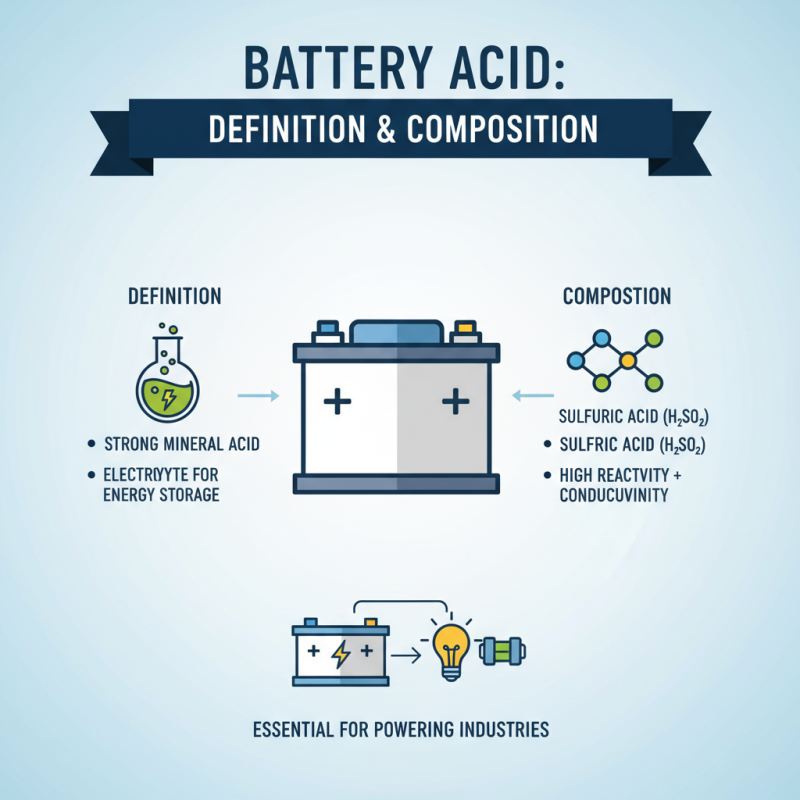
Battery acid, primarily composed of sulfuric acid, plays a critical role in various industries. Sulfuric acid is a strong mineral acid with a complex structure. Its high reactivity and ability to conduct electricity make it essential in battery manufacturing. Furthermore, its role as an electrolyte in lead-acid batteries aids in energy storage and delivery.
The concentration of sulfuric acid in battery acid typically ranges from 30% to 50%. This composition allows for efficient ion transport, which is vital for battery performance. However, handling battery acid requires caution. Its corrosive nature can lead to harmful reactions if not managed properly. In an industrial setting, proper safety protocols must be in place. Mishaps can have significant consequences, yet they also serve as reminders of the need for vigilance.
Industries utilize battery acid beyond batteries. It is involved in metal processing and wastewater treatment. While battery acid has various applications, it is crucial to remember its dangers. Continuous research and development improve handling techniques and safety measures. Innovations can enhance efficiency, but they should never compromise safety. Knowledge and awareness remain key in mitigating risks associated with battery acid usage in industry.
Common Types of Battery Acid Used in Industry
Battery acid plays a vital role in various industries. The two most common types are sulfuric acid and lithium-ion electrolytes. Sulfuric acid, often found in lead-acid batteries, is essential for energy storage systems. A report from the International Lead Association shows that around 75% of lead-acid batteries use this acid. This substance aids in both starting engines and sustaining power for renewable energy setups.
Lithium-ion batteries have gained popularity, especially in electric vehicles. They use lithium-based electrolytes, which provide higher energy density and longer life cycles. According to a 2022 market analysis by the International Energy Agency, the demand for lithium-ion batteries is projected to grow by over 30% annually. While the advantages are clear, the environmental impacts of lithium extraction raise concerns. Sustainable practices need attention.
Establishing reliable sources for battery acid is crucial. Sulfuric acid is relatively inexpensive, costing around $150 per ton. In contrast, lithium resources are subject to market volatility. Employing responsible sourcing and recycling methods is essential in minimizing risks. Industries must consider not only economic factors but also ecological footprints.
Applications of Battery Acid in Manufacturing Processes
Battery acid, primarily sulfuric acid, plays a crucial role in various manufacturing processes. In the automotive industry, it is essential for producing lead-acid batteries. These batteries are vital for vehicles, supplying power for engine starts and other functions. According to a report by Grand View Research, the lead-acid battery market is expected to reach USD 84.9 billion by 2025. This growth emphasizes the ongoing demand for battery acid.
Beyond automotive applications, battery acid is also used in the chemical and metal processing industries. It is involved in the production of phosphoric acid, a key ingredient in fertilizers. Additionally, in metal finishing, battery acid helps in cleaning and etching metals. Data from the International Lead Association suggests that up to 40% of sulfuric acid is consumed in lead production processes. However, reliance on battery acid poses environmental concerns. Proper disposal and recycling of sulfuric acid are necessary to minimize ecological harm.
While the benefits of battery acid in industry are clear, its handling and storage need careful attention. Mishandling can lead to hazardous situations, highlighting the importance of safety protocols. Companies must invest in training and equipment to ensure the safe use of battery acid in their operations.
Applications of Battery Acid in Industrial Manufacturing
Safety Measures and Handling Procedures for Battery Acid
Handling battery acid requires strict safety measures. This corrosive substance can cause severe injuries.
Protective gear is essential. Workers should wear acid-resistant gloves, goggles, and aprons. Skin exposure can lead to burns, while inhaling vapors may cause respiratory issues.
Proper storage is critical. Battery acid should be kept in designated containers. These containers must be clearly labeled. Areas where battery acid is used need ample ventilation. In case of spills, a neutralizing agent should be readily available.
It's vital to have emergency wash stations near work areas.
Training is necessary for all personnel. They need to understand the hazards associated with battery acid.
Regular drills and reviews of handling procedures are advisable.
Mistakes can happen, and acknowledging them fosters a safety culture.
By prioritizing education and preparedness, workplaces can better manage the risks of battery acid.
Environmental Impact and Disposal of Battery Acid
Battery acid, primarily sulfuric acid, poses considerable environmental challenges. Its disposal requires careful handling due to its corrosive nature. The improper release of battery acid can lead to soil and water contamination. According to the Environmental Protection Agency (EPA), industrial waste management shows that nearly 7% of hazardous waste is comprised of acid waste.
Regulations are vital for managing battery acid disposal. Treatment facilities must comply with strict guidelines to minimize environmental risks. Some facilities recycle sulfuric acid, reclaiming valuable materials. However, many batteries end up in landfills, raising concerns about leachate. The National Safety Council indicates that 90% of lead batteries are recycled, yet this highlights room for improvement in acid recycling processes.
Tips: Always use designated disposal sites for battery acid. Engage with licensed hazardous waste facilities for proper disposal methods. Exploring alternatives like battery recycling can ease the burden on landfills and boost sustainable practices. It’s essential for industries to adopt best practices and remain aware of evolving regulations. Continuing education on this topic can enhance compliance and community safety.
What is Battery Acid and How is it Used in Industry? - Environmental Impact and Disposal of Battery Acid
| Dimension |
Description |
Environmental Impact |
Disposal Methods |
| Chemical Composition |
Mainly sulfuric acid (H2SO4) with water |
Can lead to soil and water contamination if not handled properly |
Recycling through battery collection programs |
| Industrial Uses |
Used in lead-acid batteries, manufacturing processes, and electroplating |
If released, can harm local wildlife and ecosystems |
Neutralization and safe disposal at hazardous waste sites |
| Health Risks |
Corrosive to skin and eyes, harmful if inhaled |
Potential long-term health effects on workers |
Strict guidelines for handling and disposal |
| Regulatory Standards |
Regulated by environmental protection agencies |
Non-compliance can lead to fines and legal action |
Regular audits and compliance checks |