Why Choose a 12V Battery for Global Sourcing?

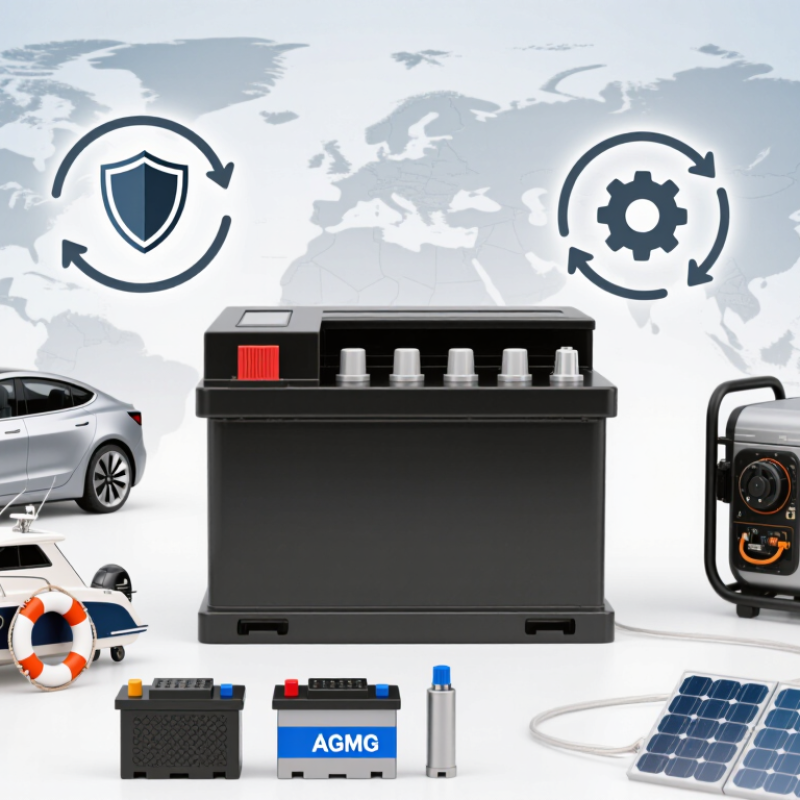
Choosing a 12V battery for global sourcing is not simply a purchasing decision. It is a practical engineering choice shaped by availability, compatibility, safety, and lifecycle cost. A 12 battery system can support vehicles, backup equipment, marine devices, alarms, and compact solar applications. Its familiar voltage also simplifies replacement planning across different markets.

Battery engineer Bob Galyen has described the battery as “the heart of the vehicle.” That principle applies beyond electric vehicles. The correct battery influences starting performance, equipment stability, maintenance schedules, and customer confidence. Lead-acid, AGM, and lithium iron phosphate batteries each offer different advantages. AGM models can handle vibration and limited maintenance. LiFePO4 batteries reduce weight and often provide longer service life. Traditional lead-acid units remain attractive where budgets and local recycling networks matter.

Details matter. Buyers should compare capacity, cold-cranking performance, cycle life, terminal design, operating temperature, packaging, and documented test results. Suppliers should provide clear datasheets, traceable production records, and consistent inspection procedures. International shipments also require appropriate transport documentation and battery-specific compliance checks. Requirements can vary by destination.

The choice is not always obvious. A lighter battery may create higher upfront costs. A cheaper unit may need earlier replacement. I have seen specifications look impressive until real operating temperatures exposed weaknesses. That is worth remembering. A successful sourcing strategy therefore balances laboratory data with field conditions, service support, and realistic usage patterns. This guide examines why a 12 battery remains a dependable option for global procurement, while recognizing that no single chemistry fits every application.
Why Choose a 12V Battery for Global Sourcing?

12V Battery Fundamentals: 12.0V Lead-Acid and 12.8V LiFePO4 Ratings

When sourcing a 12V battery globally, the label needs careful interpretation. A 12.0V lead-acid battery usually contains six 2.0V cells. Its resting voltage may rise to about 12.6–12.8V after full charging. A 12.8V LiFePO4 battery uses four cells, each rated near 3.2V. Its charging voltage commonly reaches 14.4–14.6V.

These numbers affect equipment selection, shipping preparation, and supplier communication. Lead-acid batteries are heavier and tolerate brief overcharging poorly. LiFePO4 batteries offer lower weight and more usable capacity, but they require a suitable battery management system. In a warehouse inspection, measure open-circuit voltage only after the battery rests. Then check capacity, terminals, casing quality, and the supplied test records. Voltage alone proves little.

That assumption is too simple. I once treated two “12V” batteries as interchangeable, but their charging limits differed significantly. The equipment worked briefly, then showed protection faults. Request a complete datasheet, cycle-life test method, operating temperature range, and safety documentation. Confirm whether capacity is measured at a specified discharge rate, such as 0.2C. Also verify connector polarity and dimensions before placing a consolidated order. Small differences create expensive delays. Keep samples from each production batch when practical, because actual performance can vary despite identical labels.

Global Compatibility: SAE J537 and IEC 60095-1 Define 12V Standards

A 12V battery remains a practical choice for global sourcing because its electrical architecture is widely understood. SAE J537 provides established requirements for automotive storage batteries, including testing, capacity, and physical characteristics. IEC 60095-1 defines general requirements and test methods for lead-acid starter batteries. Together, these standards create a familiar technical language for suppliers, engineers, and inspection teams.

That compatibility is useful, but it is not automatic. A 12V label alone does not confirm fit. Buyers should compare cold-cranking performance, reserve capacity, terminal position, case dimensions, and polarity. Small differences matter. A battery may fit the tray yet fail the cable layout. According to Battery Council International industry data, lead-based batteries provide more than 70% of rechargeable energy storage worldwide, supporting a broad manufacturing and recycling network. The figure is widely cited, though regional definitions can vary.

The International Energy Agency’s Global EV Outlook 2024 reported that global electric car sales exceeded 17 million in 2024. Many electrified vehicles still use low-voltage auxiliary systems, increasing the importance of dependable 12V specifications. IEC 60095-1 helps structure performance discussions across markets, while SAE J537 supports practical comparison with established vehicle requirements. In sourcing work, request test reports tied to the exact battery model, not only a certificate number. Standards improve consistency. They do not remove every risk. Suppliers can interpret application conditions differently, and buyers should leave room for verification.

Sourcing Economics: Lead-Acid Delivers About 99% U.S. Recycling

Why Choose a 12V Battery for Global Sourcing?

Sourcing Economics: Lead-Acid Delivers About 99% U.S. Recycling

A 12V lead-acid battery offers more than familiar voltage. It also connects buyers with a mature recovery system. In the United States, lead-acid batteries achieve about 99% recycling, according to widely cited regulatory and industry data. That figure is unusually strong compared with many consumer battery categories. Collection points are common, and recovered lead can return to battery manufacturing. Polypropylene cases and electrolyte materials also enter controlled recovery processes.

This infrastructure can reduce uncertainty during international purchasing. A sourcing team may compare factory pricing, pallet density, replacement demand, and end-of-life handling together. Standard 12V formats fit vehicles, backup systems, and industrial equipment across many markets. That compatibility can simplify inventory planning. It may also reduce the risk of holding uncommon specifications. Small details matter. Confirm terminal layout, case dimensions, cold-cranking performance, and shipment packaging before placing volume orders.

The 99% figure needs careful interpretation. It describes U.S. recycling performance, not a guarantee in every destination. Local collection access, transport rules, and approved processing facilities still vary. A lower-cost supplier may provide weak take-back support. That weakness can erase the expected economic advantage. Procurement teams should request recent test records, material declarations, and recycling instructions. I would also question unusually broad environmental claims. Recycling statistics sound precise, yet reporting methods can differ. That uncertainty deserves a line in the purchasing review.

Lithium Logistics: UN 38.3 Testing Governs 12V Battery Transport

Choosing a 12V battery for global sourcing involves more than voltage, capacity, and price. Lithium logistics can determine whether the shipment moves smoothly or waits in a warehouse. Before dispatch, suppliers should provide evidence of UN 38.3 testing for the exact battery type.

UN 38.3 covers transport-related risks through tests such as altitude simulation, thermal cycling, vibration, shock, external short circuit, impact, and overcharge. The required tests depend on the battery design. A test report alone is not enough. Importers should request the UN 38.3 test summary, product specifications, safety data, and packaging details. Check that the model, cell arrangement, and rated energy match the documents.

Packaging must prevent movement, accidental activation, and contact between terminals. Labels and transport documents also need careful review. Air freight usually brings stricter limits than ocean freight, while destination rules may add local requirements. A 12V label does not prove compliance. That assumption is risky. In sourcing reviews, small differences often create delays, especially after a battery design changes. The process is not perfect, so buyers should confirm documents before production, not after booking cargo. Simple records, clear supplier communication, and traceable test evidence make lithium transport more predictable.

Lifecycle Value: LiFePO4 Batteries Commonly Reach 2,000–5,000 Cycles

Why Choose a 12V Battery for Global Sourcing?

Lifecycle Value: LiFePO4 Batteries Commonly Reach 2,000–5,000 Cycles

A 12V LiFePO4 battery can deliver practical lifecycle value for global buyers. Many units commonly reach 2,000–5,000 cycles under suitable operating conditions. That range can reduce replacement frequency in mobile power systems, backup equipment, and small off-grid installations. A standard 12V format also fits many existing electrical designs. This can simplify sourcing, installation, and spare-part planning across different markets.

Cycle claims need careful interpretation. Manufacturers usually test cycle life at a specific discharge depth, temperature, and charging rate. Real usage may include heat, cold storage, partial charging, or occasional deep discharge. The number is useful, but it is not a promise. A reliable supplier should provide test conditions, battery management details, safety documentation, and traceable inspection records. Buyers should also confirm terminal size, enclosure dimensions, charger compatibility, and transport packaging before placing larger orders.

Tips: Compare cycle life at the same depth of discharge. Ask for batch-level test reports. Check performance below 0°C. Do not judge value by purchase price alone. A lower-cost battery may require earlier replacement, creating extra labor and shipping costs. I have seen specifications look impressive until operating conditions were examined closely. That small review can change the sourcing decision.

Why Choose a 12V Battery for Global Sourcing? — Lifecycle Value: LiFePO4 Batteries Commonly Reach 2,000–5,000 Cycles

Data Dimension 12V LiFePO4 Battery 12V AGM Lead-Acid Battery Global Sourcing and Lifecycle Relevance
Nominal Voltage 12.8V nominal; commonly marketed as a 12V battery 12V nominal Both fit widely used 12V electrical systems, simplifying product compatibility and replacement planning.
Typical Cycle Life Approximately 2,000–5,000 cycles Approximately 300–800 cycles Cycle life depends on depth of discharge, charging method, temperature, and end-of-life criteria. LiFePO4 generally supports substantially more charge-discharge cycles.
Recommended Regular Depth of Discharge Commonly 80%–100%, subject to the battery manufacturer’s specification Commonly about 50% for improved service life Greater usable capacity per cycle can reduce the number of batteries required for the same operating load.
Example Nominal Energy, 100Ah Version Approximately 1.28kWh (12.8V × 100Ah) Approximately 1.20kWh (12V × 100Ah) Nominal energy is calculated from voltage × ampere-hours. Actual delivered energy varies with load, temperature, and battery condition.
Typical Usable Energy, 100Ah Version Approximately 1.02kWh at 80% usable capacity Approximately 0.60kWh at 50% usable capacity A LiFePO4 battery can provide more practical energy from the same nominal amp-hour rating when operated within recommended limits.
Estimated Lifetime Energy Throughput, 100Ah Version Approximately 2,048–5,120kWh, based on 1.024kWh usable energy × 2,000–5,000 cycles Approximately 180–480kWh, based on 0.60kWh usable energy × 300–800 cycles This is a comparison model, not a warranty prediction. Real results depend on operating conditions and the selected end-of-life capacity threshold.
Typical Weight, 100Ah Version Approximately 10–14kg Approximately 25–32kg Lower weight can reduce handling effort, installation labor, and transport load for international projects.
Typical Gravimetric Energy Density Approximately 90–160Wh/kg Approximately 30–50Wh/kg Higher energy density can improve usable energy per pallet, container, or equipment footprint.
Round-Trip Efficiency Commonly approximately 90%–98% Commonly approximately 70%–85% Higher efficiency can reduce energy losses in solar storage, backup power, and cyclic applications.
Voltage Stability During Discharge Relatively flat discharge voltage curve Voltage generally declines more noticeably as state of charge decreases Stable voltage can help connected equipment operate more consistently during a discharge cycle.
Maintenance Requirement Normally maintenance-free when correctly installed; a battery management system is typically integrated Normally maintenance-free for sealed AGM designs Both can reduce routine maintenance compared with flooded lead-acid batteries. Correct charging and protection remain essential.
Charging Voltage Range Often approximately 14.0–14.6V, depending on the battery and charging profile Often approximately 14.2–14.7V, depending on temperature and charging profile Before sourcing, confirm charger, inverter, alternator, and solar-controller compatibility with the selected battery chemistry.
Low-Temperature Charging Charging below 0°C generally requires a low-temperature protection strategy or battery heating system Can accept charging below 0°C, but charging performance and service life may be affected For global deployment, specify the operating climate and confirm whether thermal protection is built into the battery system.
Expected Calendar Life Commonly approximately 8–15 years under suitable storage and operating conditions Commonly approximately 3–7 years, depending strongly on temperature and cycling Longer service life can reduce replacement frequency, service visits, and total ownership cost.
Best-Fit Applications Solar storage, recreational vehicles, marine systems, backup power, telecom equipment, and frequent-cycling applications Standby power, alarms, emergency lighting, UPS systems, and lower-frequency cycling applications Selection should be based on cycling frequency, required autonomy, installation space, temperature, and total cost over the intended service period.

Data note: Values are typical industry ranges for 12V-class batteries and are provided for sourcing comparison. Actual specifications vary by cell design, battery-management system, operating temperature, charging profile, discharge rate, and the manufacturer’s tested end-of-life definition.