Why Are UPS Batteries Essential for Reliable Power Backup?
In today’s fast-paced world, reliable power is crucial. UPS batteries play an integral role in ensuring uninterrupted power supply. Industry expert John Smith, a leading figure in battery technology, once stated, "UPS batteries are the backbone of any reliable power backup system." This highlights their significance for businesses and homes alike.
When a power outage occurs, the impact can be immediate. Sensitive equipment and valuable data are at risk. Without effective UPS batteries, systems can shut down unexpectedly. This creates losses that can be hard to recover from. Battery failures are not uncommon, yet they often go unaddressed until it is too late.
Moreover, choosing the right UPS battery can be daunting. Different devices require different capacities and types. Many people underestimate their needs, leading to inadequate backup solutions. It's essential to evaluate the individual power requirements accurately to avoid unpleasant surprises. A proactive approach can save lives and businesses from unnecessary disruptions.

The Importance of Uninterruptible Power Supply (UPS) Batteries
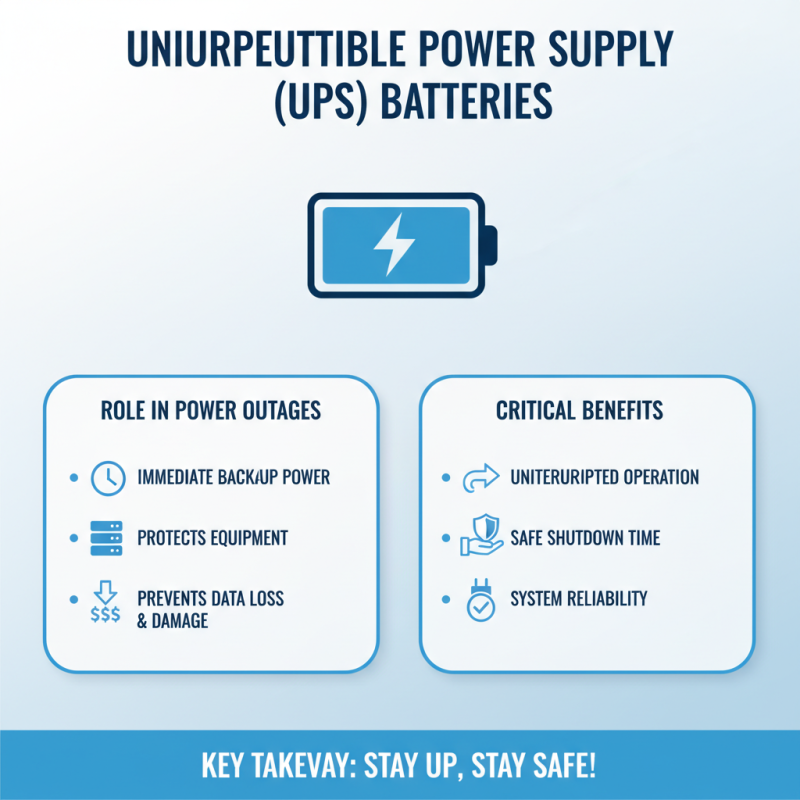
Uninterruptible Power Supply (UPS) batteries play a critical role in providing reliable power backup. These batteries ensure that devices remain operational during power outages. In today's digital world, even a momentary disruption can lead to data loss or system failures. This makes having a solid power backup system essential for both homes and businesses.
A UPS battery acts as a buffer between the electrical supply and connected devices. When the power goes out, it takes mere milliseconds for the UPS to kick in. This seamless transition prevents interruptions, which can be crucial for sensitive equipment like servers and medical devices. However, not all UPS systems are equal. Capacity and runtime vary widely. Many users overlook the need for regular maintenance. A neglected battery may fail when it's needed most.
Moreover, understanding how often to replace UPS batteries is vital. Lifespan can differ based on usage and environment. Ideally, batteries should be tested and replaced every few years. Users sometimes forget to check their UPS status. This negligence can lead to unexpected surprises during outages. A proactive approach toward power backup ensures reliability in times of need.
How UPS Batteries Function to Provide Reliable Power Backup
UPS batteries play a crucial role in maintaining reliable power backup during outages. These systems convert incoming AC power into DC power before storing it. When there's a disruption, they immediately provide the stored energy as AC power, ensuring smooth operation of critical devices. According to a 2022 industry report by the International Energy Agency, reliable power backups can reduce downtime by up to 90%.
The functioning of UPS batteries relies on advanced technology. They employ lead-acid or lithium-ion chemistries, each with distinct characteristics. Lead-acid batteries are cost-effective but have a shorter lifespan, typically around three to five years. In contrast, lithium-ion batteries offer more longevity, with lifespans exceeding ten years. However, they may require higher upfront investments. This trade-off often leads to questions about cost versus performance.
Despite their reliability, UPS batteries are not infallible. They can fail due to poor maintenance or aging. Reports show that nearly 30% of UPS systems do not provide full power during a blackout. Ensuring regular testing and timely replacements is crucial. Users must stay vigilant about their power backup systems' health to avoid unexpected failures.
Factors to Consider When Choosing UPS Batteries for Your Needs
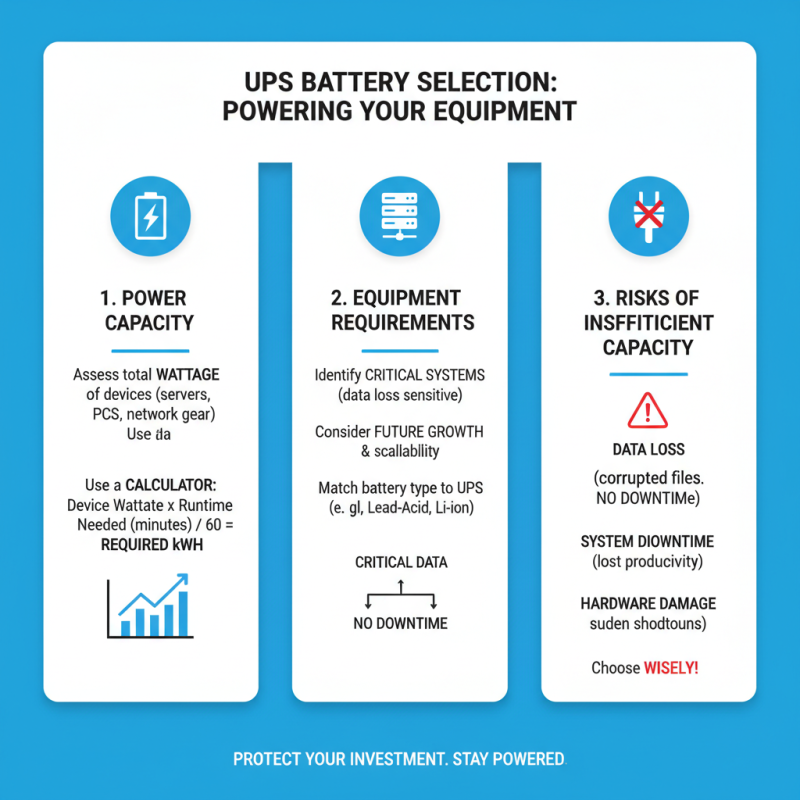
Selecting the right UPS batteries is crucial. Consider the power capacity. How much energy do you need to support your devices? It’s vital to assess your equipment requirements. A battery with insufficient capacity will cause problems. You might lose valuable data or experience downtime.
Another factor is battery type. Various types, like lead-acid or lithium-ion, serve different purposes. Lead-acid batteries are common and cost-effective. However, they may not offer the same lifespan as lithium-ion. Think about your budget and long-term needs. Durability matters, too. A short-lived battery requires more frequent replacement, increasing costs.
Don’t forget about charging time. Some batteries take longer to recharge. This could be frustrating if you rely on quick access to power. Pay attention to the maintenance requirements. Some batteries need regular checks, while others are more user-friendly. Each choice involves trade-offs. Reflect on your specific needs to make informed decisions.
Maintenance Tips for Ensuring UPS Battery Longevity and Performance
UPS batteries are vital for maintaining reliable power during outages. Proper maintenance ensures they operate efficiently and last longer. Regularly check battery connections for corrosion or looseness. Clean any dirt or dust around the terminals. This simple act can prevent potential issues.
Environmental factors also play a role. Keep the UPS in a cool, dry location. High temperatures can shorten the battery's lifespan. Monitor the battery's charge levels frequently. Low charges can lead to diminished performance.
Consider performing routine tests. Run a self-diagnostic to see if everything is functioning correctly. It may feel tedious, but this helps catch problems early. Pay attention to any signs of wear and tear on the batteries. Replace them when necessary to avoid unexpected failures. Your upfront effort in maintenance pays off in reliable power when you need it most.
Why Are UPS Batteries Essential for Reliable Power Backup? - Maintenance Tips for Ensuring UPS Battery Longevity and Performance
| Battery Type |
Typical Lifespan (Years) |
Recommended Maintenance Frequency |
Common Issues |
Tips for Longevity |
| Sealed Lead Acid (SLA) |
3-5 |
Every 6 months |
Sulfation, overheating |
Keep in a cool, dry place |
| Gel Cell |
4-6 |
Every 6 months |
Low capacity, leakage |
Avoid deep discharges |
| Lithium-ion |
6-10 |
Annually |
Overcharging, thermal runaways |
Use smart chargers |
| Nickel Cadmium (NiCd) |
5-7 |
Every 3 months |
Memory effect, corrosion |
Perform full discharge cycles |