How to Understand Your Battery Warranty and Its Benefits?
Understanding your battery warranty is crucial for any consumer. The battery warranty typically covers defects and performance issues, but it's often misunderstood. According to industry reports, over 30% of customers are unaware of their warranty terms. This lack of knowledge can lead to disputes and financial losses.
Battery warranties can vary significantly among manufacturers. Some last only a year, while others extend to eight years or more. Consumers need to recognize what is included. For example, factors like climate and usage can affect battery life, complicating claims. In fact, a study found that nearly 20% of warranty claims are rejected due to user error or lack of documentation. This highlights the importance of understanding your battery warranty.
Moreover, a well-informed consumer can save money. Many warranties offer services like free replacements or repairs. However, neglecting to read the fine print can mean missing out on these benefits. Take time to reflect on your battery purchase and warranty agreement. This knowledge empowers consumers and can prevent potential pitfalls down the road.

Understanding Battery Warranties: An Overview of Key Terms
Understanding battery warranties can be tricky. It's essential to familiarize yourself with key terms to grasp their benefits fully. A warranty typically covers defects in materials or workmanship. It also specifies the duration. Many warranties last four to five years. Some might provide more extended coverage, but this is less common.
When reading the warranty, look for phrases like "pro-rated" and "replacement." A pro-rated warranty means you might only receive partial compensation after a certain period. Replacement terms can vary significantly. Some batteries offer free replacements within the initial phase, while others only provide discounts after it expires.
Pay attention to exclusions. These might include misuse or installation errors. If your battery fails due to an accident, you could be out of luck. Not all batteries perform as expected, and many users encounter issues. It's vital to consider your battery's usage conditions. Different applications can lead to varied outcomes. Reflect on your needs. Knowing these aspects will help you make informed choices.
Types of Battery Warranties and Their Coverage
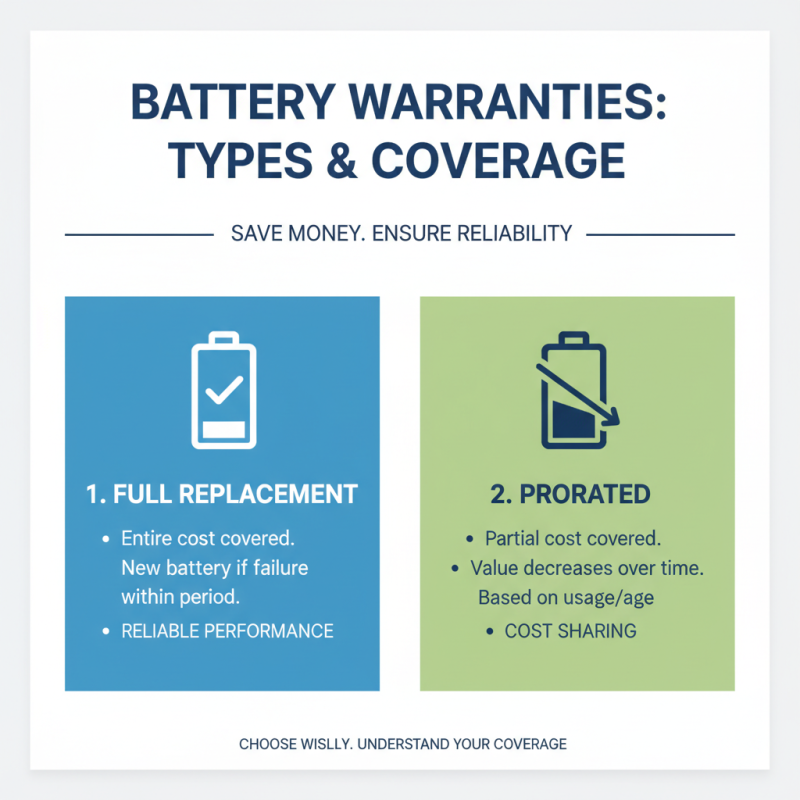
When it comes to battery warranties, understanding the different types and their coverage can save you money in the long run. There are generally two main types of battery warranties available: full replacement warranties and prorated warranties. A full replacement warranty covers the entire cost of a new battery if your current one fails within a specified period. This is often the most beneficial option for users who need reliable performance.
In contrast, prorated warranties decrease in value over time. After a certain period, you may only receive a percentage of the battery’s original cost. Industry reports indicate that around 30% of consumers unknowingly purchase prorated warranties, which can lead to unexpected expenses later. Ensuring clarity on what type you have is crucial.
Tips: Always read the fine print. Some warranties have specific usage limits that might surprise you. Ask questions if the terms are unclear. Consider the average lifespan of the battery you are purchasing. Not all batteries are created equal, and some might not last as long as expected, making a solid warranty essential for your peace of mind. Also, think about how often you use the battery. Heavy use can lead to earlier failure, and understanding this can guide your warranty choices.
How to Assess Battery Warranty Duration and Limits
Understanding battery warranties is crucial for anyone using modern technology. Battery warranties typically cover a limited duration, often between two to ten years, depending on the type and usage. According to industry reports, an average battery retains about 70% of its capacity after two years of usual use. This reality highlights the importance of assessing the specific terms of your battery warranty.
When evaluating warranty limits, consider the conditions under which the warranty is valid. Some warranties require regular maintenance, while others only cover defects. A study suggested that up to 30% of users are unaware of the specific limitations of their battery warranty. Lack of awareness can lead to insufficient protection when issues arise. For example, if a battery fails just outside the warranty period, users may face significant replacement costs. Also, keep in mind that not all issues are covered, leading to unexpected expenses.
Furthermore, not all warranties are created equal. Some may provide full replacements, while others offer partial refunds. The varying terms can be confusing. A report from the Battery Association indicates that many consumers overestimate their warranties’ coverage. This misunderstanding can lead to disappointment when a battery underperforms or fails. Knowing the limits helps in making informed decisions and managing expectations effectively.
Battery Warranty Duration and Coverage Limits
This chart illustrates the distribution of warranty coverage percentages based on the duration of battery warranties. As can be seen, the majority of warranties provide coverage for 1 to 2 years, with significant drops in percentage after that period.
Common Exclusions in Battery Warranties: What to Watch For
When dealing with battery warranties, understanding exclusions is crucial. Many warranties do not cover specific situations that may arise during usage. For instance, accidental damage often voids the warranty. Dropping the battery or exposing it to extreme temperatures are common issues. These scenarios highlight the importance of careful handling and storage.
Furthermore, warranties typically exclude damage caused by improper installation. If a battery is not fitted correctly, it can lead to severe complications. This mistake could lead to battery failure, leaving users unprotected. Another crucial factor is the timeframe for warranty claims. Some terms may only last a year, or less for certain conditions. Users must keep track of these details to avoid becoming vulnerable.
It's essential to read the fine print. Many people overlook aspects like maintenance requirements. Regular check-ups might be necessary to maintain warranty validity. Failing to do so might lead to disappointment later. This serves as a reminder to stay informed and proactive. Understanding your battery warranty can save time, effort, and money.
Maximizing Your Benefits: Filing Claims and Warranty Tips
Understanding your battery warranty can be daunting. Many people overlook the details. When purchasing a new battery, read the warranty carefully. It usually covers defects but not normal wear. Get clarity on what is included.
Filing a claim can be straightforward. Keep your receipts and any documentation. Take photos of the battery if it shows signs of problems. Document any issues accurately. Many claims are denied simply due to missing information. Be proactive and organized.
Regular maintenance can also maximize your warranty benefits. Clean contacts and monitor battery health. If you notice a decline in performance, don’t wait. Act quickly before it’s too late. Sometimes, we fail to assess our battery’s needs. It’s essential to stay informed to avoid surprises. Reflect on your usage habits; they can impact the longevity of your battery.