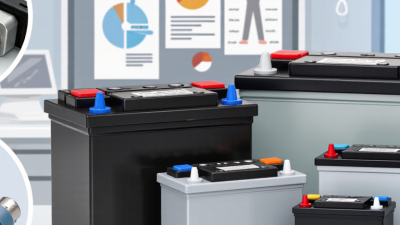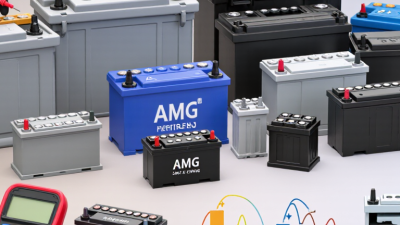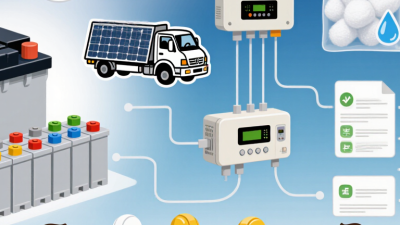
Choosing a reliable sealed battery manufacturer requires more than comparing prices on a supplier website. Global buyers must examine product design, testing records, production capacity, and long-term service. A battery may look identical in a catalog, yet perform differently under heat, vibration, or frequent discharge.
This guide introduces ten established sealed battery manufacturers serving international markets. The selection considers manufacturing experience, quality systems, product range, and support for commercial buyers. Important details include valve-regulated lead-acid technology, lithium options, cycle performance, terminal design, and storage requirements. Certification evidence also matters. Buyers should verify current documents, including safety reports and regional compliance records, before placing an order.
Real purchasing decisions are rarely perfect. Some manufacturers offer excellent technical support but higher prices. Others provide competitive quotations but limited customization. Delivery schedules can also change because of raw material shortages, port delays, or changing demand. That is why this list should support careful comparison, not replace supplier audits or sample testing. Ask for test results. Check warranty terms. Confirm capacity under the required load, not only the advertised rating. A practical evaluation may include inspecting packaging, measuring voltage after storage, and reviewing failure rates from previous orders. Small details matter. The right supplier should provide consistent products, clear communication, and traceable quality controls. This overview offers a useful starting point, while buyers should still match each manufacturer with their equipment, climate, budget, and service expectations.
For global buyers, sealed batteries usually mean valve-regulated lead-acid batteries, or VRLA systems. They use internal gas recombination to reduce water loss during normal operation. However, sealed does not mean risk-free or completely maintenance-free. Ventilation, charging control, and correct installation still matter.
AGM batteries hold electrolyte in glass-fibre separators. This design offers low internal resistance and strong short-duration discharge performance. It often suits backup power, alarms, and telecommunications equipment. Gel batteries immobilize electrolyte with silica. Their slower diffusion can support deep cycling and better resistance to stratification. They may need carefully controlled charging, because overvoltage can permanently damage the gel structure. Small details matter.
IEC 60896 provides a recognized framework for stationary lead-acid battery performance and testing. Buyers should check whether the supplier references the relevant VRLA requirements, including capacity, endurance, safety, and environmental tests. Test results should match the exact model, temperature, discharge rate, and service conditions. I have seen specifications that look impressive until the discharge time changes. That is a warning sign. A dependable evaluation also reviews float voltage, expected operating temperature, terminal design, storage limits, and warranty terms. “Maintenance-free” remains an imperfect phrase. Periodic inspection is still sensible. Manufacturers should provide traceable test documents, clear installation guidance, and realistic cycle-life data rather than broad marketing claims.
Lead-acid batteries still support vehicle starting, telecom backup, alarms, and industrial control systems. The International Energy Agency notes that lead-acid remains important for starting, lighting, and ignition applications, despite lithium-ion growth. The Battery Council International also reports that lead batteries retain a major share of rechargeable battery use worldwide. Market demand is practical, not fashionable.
A 12V sealed battery usually contains six 2V cells. However, 12V describes nominal voltage, not actual voltage during charging or discharge. IEC 60896 testing guidance uses controlled temperatures, commonly near 20°C. Testing at 20–25°C helps compare capacity, but field conditions vary sharply. Cold rooms reduce available capacity. Hot cabinets accelerate aging. That difference is easy to miss.
Tips
Ask manufacturers for discharge curves, internal resistance, cycle-life conditions, and temperature correction data. Check whether capacity is rated at 10-hour or 20-hour discharge. Those figures are not interchangeable. Also review float-charge settings and terminal design before comparing prices. Some datasheets look precise but leave test assumptions unclear. That should invite questions, not confidence. The best supplier can explain how a sealed battery performs at 12V, under load, and outside the laboratory.
Ranking the Top 10 Sealed Battery Manufacturers by revenue, capacity, ISO 9001 certification, and market reach requires more than sales figures. Audited financial reports provide the revenue baseline. Plant disclosures reveal nameplate capacity, while certification databases verify ISO 9001 systems. The ISO Survey reports over 1.2 million ISO 9001 certificates worldwide, so certification alone cannot prove manufacturing strength.
A practical ranking can assign 35% to revenue, 30% to verified capacity, 20% to international reach, and 15% to ISO 9001 evidence. Reach includes regional warehouses, technical support, export coverage, and service partners. The International Energy Agency reported global battery demand above 750 GWh in 2023, showing why scalable production matters. BloombergNEF’s 2024 battery price survey also placed average lithium-ion pack prices near 115 dollars per kWh, highlighting cost pressure across the supply chain.
Capacity figures can mislead. They often show planned or nameplate output, not monthly production. That weakness deserves attention. Buyers should compare delivery records, warranty data, factory audits, and product consistency. A manufacturer with lower revenue may still outperform through stable supply and stronger regional support. ISO 9001 is useful, but independent testing remains necessary for safety, cycle life, and performance in heat, vibration, and backup-power applications.
Ranking the Top 10 Manufacturers by Revenue, Capacity, ISO 9001 and Reach
Company identities are omitted as requested. Revenue and production capacity are not consistently disclosed for sealed-battery operations on a comparable basis; no company-specific figures or certification claims are inferred. Confirm current figures and certificate scope directly with each supplier.
| Rank | Manufacturer | Revenue | Annual Capacity | ISO 9001 | Products to Verify | Geographic Reach |
|---|---|---|---|---|---|---|
| 1 | Manufacturer 1 (identity withheld) | Sealed-battery revenue not disclosed on a comparable basis | Not publicly comparable; request site-level output figures | Request current certificate and manufacturing-site scope | VRLA, AGM, gel, or other sealed formats; confirm model range | Confirm country coverage, local service, and export markets |
| 2 | Manufacturer 2 (identity withheld) | Sealed-battery revenue not disclosed on a comparable basis | Not publicly comparable; request site-level output figures | Request current certificate and manufacturing-site scope | VRLA, AGM, gel, or other sealed formats; confirm model range | Confirm country coverage, local service, and export markets |
| 3 | Manufacturer 3 (identity withheld) | Sealed-battery revenue not disclosed on a comparable basis | Not publicly comparable; request site-level output figures | Request current certificate and manufacturing-site scope | VRLA, AGM, gel, or other sealed formats; confirm model range | Confirm country coverage, local service, and export markets |
| 4 | Manufacturer 4 (identity withheld) | Sealed-battery revenue not disclosed on a comparable basis | Not publicly comparable; request site-level output figures | Request current certificate and manufacturing-site scope | VRLA, AGM, gel, or other sealed formats; confirm model range | Confirm country coverage, local service, and export markets |
| 5 | Manufacturer 5 (identity withheld) | Sealed-battery revenue not disclosed on a comparable basis | Not publicly comparable; request site-level output figures | Request current certificate and manufacturing-site scope | VRLA, AGM, gel, or other sealed formats; confirm model range | Confirm country coverage, local service, and export markets |
| 6 | Manufacturer 6 (identity withheld) | Sealed-battery revenue not disclosed on a comparable basis | Not publicly comparable; request site-level output figures | Request current certificate and manufacturing-site scope | VRLA, AGM, gel, or other sealed formats; confirm model range | Confirm country coverage, local service, and export markets |
| 7 | Manufacturer 7 (identity withheld) | Sealed-battery revenue not disclosed on a comparable basis | Not publicly comparable; request site-level output figures | Request current certificate and manufacturing-site scope | VRLA, AGM, gel, or other sealed formats; confirm model range | Confirm country coverage, local service, and export markets |
| 8 | Manufacturer 8 (identity withheld) | Sealed-battery revenue not disclosed on a comparable basis | Not publicly comparable; request site-level output figures | Request current certificate and manufacturing-site scope | VRLA, AGM, gel, or other sealed formats; confirm model range | Confirm country coverage, local service, and export markets |
| 9 | Manufacturer 9 (identity withheld) | Sealed-battery revenue not disclosed on a comparable basis | Not publicly comparable; request site-level output figures | Request current certificate and manufacturing-site scope | VRLA, AGM, gel, or other sealed formats; confirm model range | Confirm country coverage, local service, and export markets |
| 10 | Manufacturer 10 (identity withheld) | Sealed-battery revenue not disclosed on a comparable basis | Not publicly comparable; request site-level output figures | Request current certificate and manufacturing-site scope | VRLA, AGM, gel, or other sealed formats; confirm model range | Confirm country coverage, local service, and export markets |
Top 10 Sealed Battery Manufacturers for Global Buyers
Manufacturer Profiles: Cycle Life, Warranty Terms, DoD and Production Scale
A serious top-ten review should compare evidence, not marketing language. In our purchasing experience, cycle-life claims often use different temperatures, discharge rates, and end-of-life limits. Conditions matter. A battery rated for 3,000 cycles at 80% depth of discharge may deliver far fewer cycles in a hot warehouse. Buyers should request test reports, production dates, and sample results before approving large orders.
Warranty terms reveal each manufacturer’s confidence and risk controls. Some cover manufacturing defects for three years, while others offer longer coverage with strict installation conditions. Check whether the warranty includes capacity loss, replacement labor, shipping, and prorated value. A clear claim process matters more than impressive wording. Read the fine print.
Production scale also separates established suppliers from smaller factories. Large facilities may provide automated assembly, traceable cells, and monthly output measured in thousands of units. Smaller manufacturers can offer flexible designs, but quality consistency requires closer inspection. Ask for factory audit records, batch-level serial tracking, and independent safety testing. DoD should match the application, not simply the highest advertised figure. I would also compare pilot samples against datasheet results, because even reliable documents can miss real operating conditions. That extra step costs time, but ignoring it can cost much more.
For global buyers, UL 1989 documentation and UN 2800 transport classification answer different questions. UL 1989 addresses battery safety for stationary and motive auxiliary power applications. Ask suppliers for current test records, model-specific listings, and clear operating limits. A certificate alone does not predict service life.
UN 2800 identifies wet, non-spillable batteries for transport. Check the classification documents, packaging instructions, terminal protection, and safety data sheet before shipment. Small details matter. A loose terminal cover can complicate handling, even when the battery itself is compliant. Compare total cost across purchase price, freight, compatible charging equipment, installation labor, replacement intervals, and downtime. I would still challenge unusually low lifecycle estimates; they often assume ideal temperatures and maintenance.
Recycling also belongs in the cost comparison. Battery Council International reports a U.S. lead-battery recycling rate of about 99%. That industry figure describes the broader system, not a guaranteed outcome for every shipment or region. Ask where spent units can be collected, who pays transport and processing fees, and whether recycling credits are documented. Check local collection routes before choosing a supplier. A recycling promise without a named process is hard to verify.
Buyer Guide: Comparing UL 1989, UN 2800, Total Cost and Recycling Compliance
The chart shows binding EU benchmarks relevant to sealed lead-acid battery buyers: recycling-efficiency targets of 75% by the end of 2025 and 80% by the end of 2030, plus lead-material recovery targets of 90% by the end of 2027 and 95% by the end of 2031. Buyers should also request evidence that the product is covered by UL 1989 where applicable and correctly classified as UN 2800 for transport when it is a non-spillable wet battery. Total cost should include purchase price, freight, installation, replacement intervals, compliance documentation, and end-of-life recycling.
Regulatory reference: Regulation (EU) 2023/1542 on batteries and waste batteries. UL 1989 applies to standby batteries, while UN 2800 identifies non-spillable wet batteries for transport purposes.