Top 5 Artificial Lift Technologies You Should Know About?
Artificial Lift Technologies play a crucial role in the oil and gas industry. These methods enhance the extraction of fluids from reservoirs, especially when natural pressure is insufficient. Without these technologies, many wells would be less productive.
Five key artificial lift technologies stand out in today’s market. Each technology offers distinct benefits and challenges. Some methods are well-established, while others are innovative and evolving. Understanding these technologies is essential for any industry professional. They can dramatically impact production rates and operational costs.
However, reliance on these technologies raises concerns. Are we prioritizing efficiency over environmental impact? Some technologies may lead to unintended consequences. Reflection on their long-term sustainability is vital. Balancing productivity with responsibility is a complex task. As we explore the top five artificial lift technologies, let’s keep these considerations in mind.
Understanding Artificial Lift Technologies in Oil and Gas Industry
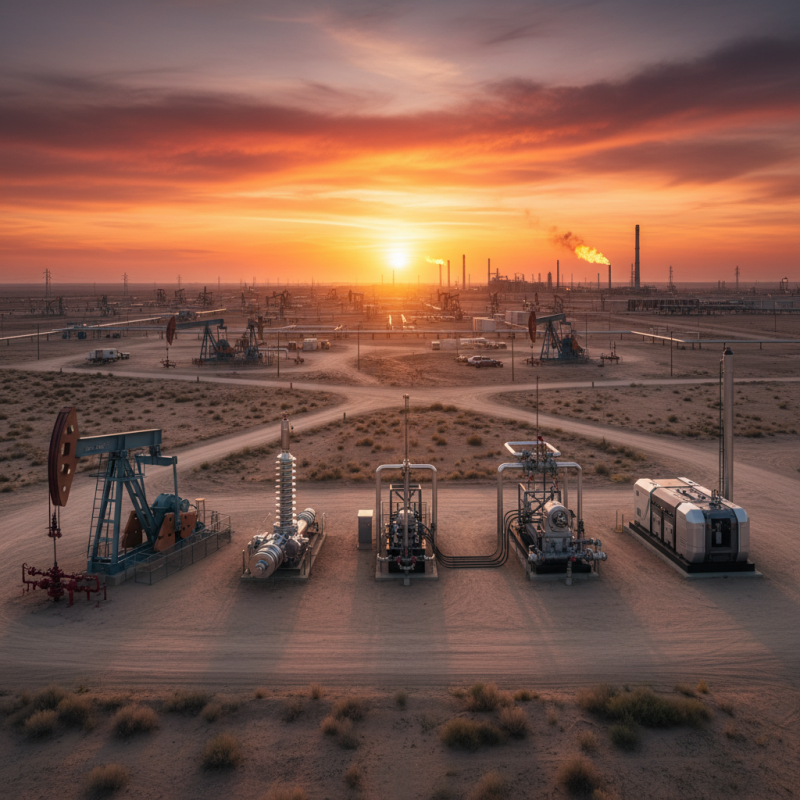
Artificial lift technologies play a crucial role in the oil and gas industry. They help extract fluids from wells, particularly in challenging conditions.
Common types include rod pumps, gas lift, and electrical submersible pumps. Each technology has its advantages and limitations, impacting operational efficiency.
Tip: Always evaluate the well conditions closely before selecting a lift method. Factors like depth, pressure, and fluid properties matter significantly. Ignoring these can lead to costly mistakes.
For instance, rod pumps are simple and effective but may struggle in deeper wells. Gas lift can be more efficient but needs a reliable gas source. Understanding the specific needs of each well is essential. Choose wisely.
Tip: Keep equipment maintenance as a priority. Regular checks reduce unexpected breakdowns. It will save time and money. Small issues can escalate quickly if ignored.
Analyze performance data consistently. This practice uncovers patterns that lead to better decision-making.
Overview of Common Artificial Lift Methods and Their Applications
Artificial lift methods are vital in oil and gas extraction. They enhance production rates from wells that may otherwise not flow naturally. Various options are available, each suited for specific conditions.
One common method is the use of sucker rod pumps. These mechanical devices operate by converting rotary motion into linear motion. This pump type is reliable and efficient in shallow wells. However, they may struggle in deep wells or highly gassy environments. Electric submersible pumps (ESPs) provide another option. They are effective in high-production scenarios. Still, maintenance can be demanding, and they risk failure in abrasive environments.
Gas lift is another technique, using gas injection to reduce fluid density in the well. It is effective in producing high-viscosity fluids. Yet, the need for gas availability can limit its application. Progressive cavity pumps offer continuous flow but can have wear issues that require attention. Ultimately, choosing the right artificial lift method can be complex and requires careful consideration of the well conditions and production needs.
Top 5 Artificial Lift Technologies
This bar chart displays the most common artificial lift technologies and their respective application effectiveness measured on a scale of 1 to 10.
In-depth Analysis of Rod Pump Systems and Their Advantages
Rod pump systems are crucial in the oil extraction industry. They utilize a series of mechanical components to lift fluids from deep underground reservoirs. According to recent industry reports, rod pumps account for approximately 55% of artificial lift methods currently in use. This highlights their popularity due to reliability and efficiency.
One notable advantage of rod pump systems is their relatively low operational costs. Reports indicate that their maintenance costs can be up to 30% lower than other methods. This makes them an attractive option for many operators. However, rod pumps can face challenges related to wear and tear. Mechanical failures can occur, leading to downtime and lost production. Implementing a proactive maintenance schedule can combat this issue.
Moreover, rod pump systems work effectively in varied fluid conditions, handling everything from viscous to light oils. They can be employed in both vertical and horizontal wells. Data shows that these pumps can operate successfully at depths of up to 15,000 feet. This versatility is a significant asset. However, not every well is suited for a rod pump system, presenting some limitations based on reservoir conditions and fluid properties. This makes careful site evaluation vital.
Exploring Electrical Submersible Pumps and Their Operating Principles
Electrical submersible pumps (ESPs) are critical in the oil and gas industry. They are submerged in the production fluid. This method allows for efficient extraction from deep wells. ESPs consist of multiple components that work together. The main parts are the motor, pump, and seal. Each part has a specific role and must function properly to ensure optimal performance.
Operating principles of ESPs revolve around converting electrical energy into mechanical energy. The motor spins the pump, which creates pressure. As a result, fluids are lifted to the surface. Interesting to note, if the motor overheats, it can fail. Regular maintenance is crucial to prevent such failures. Moreover, choosing the right pump size and type is vital. An incorrect choice may lead to inefficient operations.
ESPs can struggle in certain conditions. High viscosity fluids or sand production can cause issues. In challenging environments, the pump may require modifications. Operators should be prepared to adjust the system. This adaptability can make a significant difference in productivity. A successful operation is often a result of careful planning and execution. Each scenario demands a unique approach.
Comparative Study of Progressive Cavity Pumps and Gas Lift Systems
In the ongoing debate between progressive cavity pumps (PCPs) and gas lift systems, the choice is not straightforward. Each technology has its strengths and weaknesses. For instance, PCPs are known for their efficiency in handling viscous fluids, operating effectively in high-viscosity environments. According to a recent industry report, they can maintain a production rate of approximately 1000-5000 barrels per day in such settings. However, they may also see wear and require regular maintenance, which can increase operational costs.
On the other hand, gas lift systems excel in gas and oil well applications, especially in low-viscosity scenarios. Their ability to inject gas to lift fluids helps to optimize production rates. Industry comparisons indicate that gas lift systems can enhance production by up to 25% in certain conditions. Yet, they can also lead to issues with gas availability and may struggle with varying fluid densities, which can complicate operations and decision-making.
Ultimately, neither solution is perfect. The choice between PCPs and gas lift systems often requires careful consideration of specific conditions and production goals. Understanding their limitations is critical for optimizing performance in the field.