What Is an SLA Battery and Which Type Is Best?
A sla battery is a rechargeable lead-acid battery designed to limit routine electrolyte maintenance. You may find one inside an emergency light, alarm panel, mobility scooter, or backup power unit. The familiar rectangular case can look simple, but its chemistry and charging needs matter. “Sealed” does not mean indestructible, and it does not mean the battery never needs attention. Age, heat, deep discharges, and an unsuitable charger can all shorten its useful life.
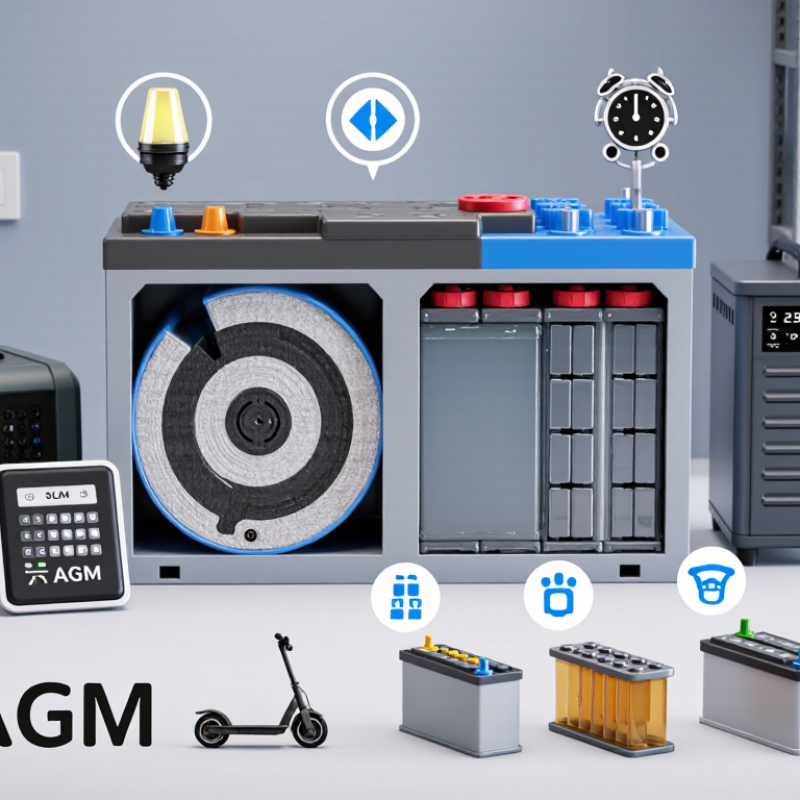
Two common sealed designs are AGM and gel. AGM batteries hold electrolyte in absorbent glass mat separators and are widely used where dependable starting or backup power is needed. Gel batteries use a thickened electrolyte and can suit some deep-cycle applications, but they require compatible charging settings. Neither type is best for every job. A battery that works well in a security system may be a poor fit for frequent cycling or an exposed, hot location. Check the equipment maker’s voltage, capacity, charging, and replacement specifications before choosing.
Details matter. A lot. This guide explains how SLA batteries work, compares AGM and gel options, and outlines practical selection factors, including runtime, cycle demands, storage, and cost. Battery labels can be confusing, and product claims do not always describe real-world service life. That deserves a second look. Use the manufacturer’s datasheet as the primary reference, and treat general comparisons as a starting point—not a guarantee.
What an SLA Battery Is and How It Is Built
An SLA, or sealed lead-acid, battery contains positive plates made of lead dioxide and negative plates of porous, sponge-like lead. Sulfuric acid provides the electrolyte. Between the plates, porous separators prevent contact while allowing ions to move. The cell sits inside a tough plastic case. A 12-volt unit typically links six cells, each rated at about 2 volts. Simple, but not crude.
“Sla” describes a valve-regulated design, not a battery that is airtight. During normal operation, internal gases recombine; pressure-relief valves can release gas if pressure rises too far. In AGM batteries, the electrolyte is held in absorbent glass-fibre mats. Gel versions use a thickened electrolyte instead. IEC 60896-21 and IEC 60896-22 specify test methods and requirements for stationary valve-regulated lead-acid batteries, though portable SLA designs may differ. Details matter. The U.S. Environmental Protection Agency reports that nearly 99% of lead-acid batteries are recycled in the United States, underscoring the value of keeping damaged or spent units in appropriate recycling channels. Still, “sealed” can sound more reassuring than it is: a cracked case, swelling, or unusual heat calls for careful handling, not casual inspection.
What Is an SLA Battery and Which Type Is Best? - What an SLA Battery Is and How It Is Built
| Topic | Details | Practical Significance |
|---|---|---|
| What “SLA” means | SLA stands for sealed lead-acid. Most SLA batteries use valve-regulated lead-acid (VRLA) construction: the case is sealed under normal operation, while pressure-relief valves can vent excess gas. | They are designed to limit routine water loss and reduce maintenance, but they are not hermetically sealed and should not be exposed to excessive charging or heat. |
| Basic construction | Each cell contains a positive plate made of lead dioxide, a negative plate made of porous (sponge) lead, an electrolyte containing sulfuric acid, separators between the plates, and a container with terminals and a pressure-relief valve. | The electrochemical reaction between the plates and electrolyte stores and releases electrical energy. Separators prevent direct contact between opposite-polarity plates while allowing ionic movement. |
| Cell and battery voltage | A lead-acid cell has a nominal voltage of about 2 volts. A common 12-volt SLA battery connects six cells in series. | Battery voltage alone does not indicate capacity. Check the rated amp-hours (Ah), discharge conditions, and the equipment’s voltage requirements. |
| How VRLA operation works | During normal charging, oxygen generated at the positive plate can travel through the separator and recombine at the negative plate. The valve helps regulate internal pressure and releases gas if pressure becomes excessive. | Correct charging is important. Overcharging can increase heat and gas generation, while unsuitable charging can reduce capacity and service life. |
| AGM type | Absorbent glass mat (AGM): A porous glass-fibre mat holds the electrolyte between the plates. | Often a good choice for standby power, backup systems, and applications needing a relatively high discharge rate. Use a compatible charger and follow the battery’s specified charging limits. |
| Gel type | Gel: Silica is added to the electrolyte to form a gel that immobilizes it. | Can suit applications involving repeated cycling when paired with an appropriate charging profile. It is generally sensitive to excessive charging voltage, so charger compatibility matters. |
| Flooded lead-acid comparison | Flooded batteries have liquid electrolyte and are not sealed SLA/VRLA batteries. Some designs require electrolyte-level checks and ventilation because gas can be released during charging. | They may be suitable where maintenance, ventilation, and the correct upright installation can be provided, but they are not a direct maintenance-free SLA substitute. |
| Choosing the best type | There is no single best SLA type for every use. AGM is commonly selected for standby and higher-rate discharge needs; gel may be preferred for compatible cyclic applications. Confirm the battery’s duty rating and charging specifications. | Compare required runtime, discharge rate, recharge method, operating temperature, installation orientation, and expected cycle frequency before choosing. |
| Service-life factors | Actual service life depends on temperature, depth and frequency of discharge, charging accuracy, storage conditions, and the battery’s design. High temperatures generally accelerate ageing. | Use the specified charger, avoid prolonged discharge, and store and operate the battery within its stated temperature limits. Replace damaged or swollen batteries promptly. |
| Safety and recycling | Lead-acid batteries contain lead and corrosive sulfuric acid. Their cases should not be opened or disposed of with household waste. | Keep terminals from short-circuiting, follow handling instructions, and take spent batteries to an approved battery collection or recycling facility. |
Related Posts
-

The Ultimate Guide to the 10 Best SLA Batteries for Your Needs
-
10 Best SLA Battery Manufacturers for Global Buyers
-
Best Sealed Lead Acid Battery Manufacturers in China
-
2026 Best Maintenance Free Sealed Lead Acid Battery?
-
How to Choose a Sealed Battery for Global Sourcing?
-
Unlocking the Benefits: Why Rechargeable Sealed Lead Acid Batteries Are the Future of Power Storage