What is a cooling tower and how does it work?
cooling towers play a crucial role in modern industrial processes. They help dissipate heat from various systems, improving efficiency and performance. According to the International Energy Agency, cooling towers account for nearly 20% of total industrial energy consumption. This highlights their importance in energy management strategies.
Dr. Emily Hart, an expert in thermal engineering, stated, "cooling towers are vital for sustainable operations." Her insights underline the need for effective cooling solutions in various industries. Despite their significance, many cooling towers suffer from inefficiencies. Maintenance challenges and water quality issues often lower their effectiveness.
The technology behind cooling towers is evolving. However, many still rely on outdated methods. This can lead to wasted energy and increased operational costs. Understanding how cooling towers function is essential for improving their design and efficiency.
What is a Cooling Tower?
A cooling tower is an essential component in various industrial processes. It removes heat from water by transferring it to the atmosphere. This process is vital in maintaining equipment efficiency and operational costs. According to a report by the American Society of Heating, Refrigerating and Air-Conditioning Engineers (ASHRAE), cooling towers can help reduce energy usage by up to 30%.
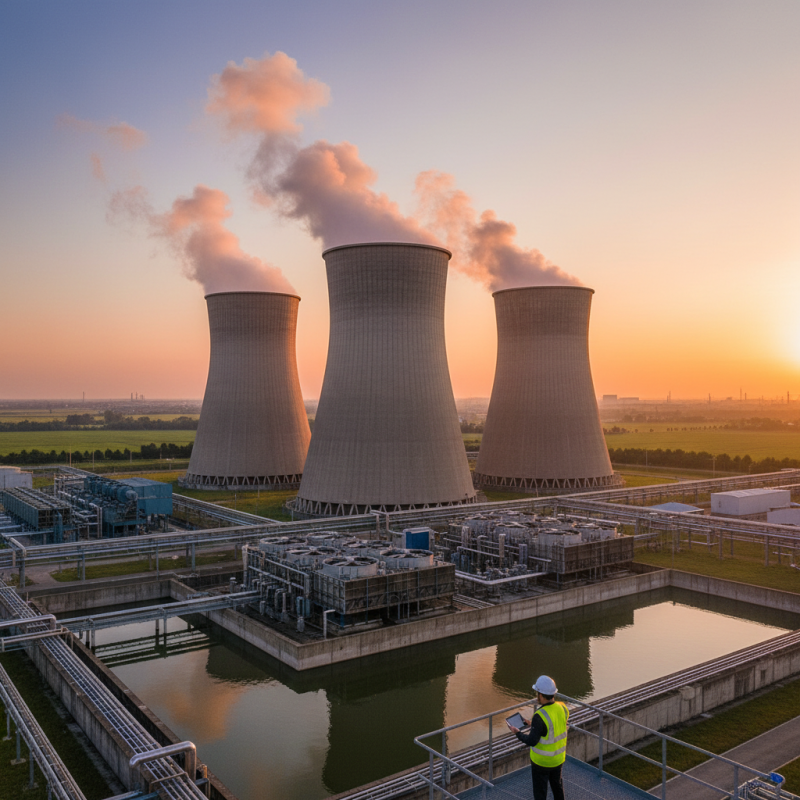
Cooling towers come in several types, including natural draft and mechanical draft. Each type has a unique way of moving air through the system. In a natural draft cooling tower, warm air rises and creates a vacuum that draws in cooler air. In contrast, mechanical draft towers use fans to force air through the system. The choice of the type can significantly affect efficiency and maintenance needs. A poorly chosen cooling tower can lead to increased energy consumption and higher maintenance costs.
While cooling towers are effective, they are not without drawbacks. They can contribute to water evaporation, which might raise water consumption levels. Furthermore, inadequate maintenance can lead to algae growth, which lowers efficiency. According to the U.S. Department of Energy, poorly maintained cooling systems can lead to energy penalties of about 20% or more. Regular inspections and proper upkeep can mitigate these issues. Thus, understanding the functioning and maintenance of cooling towers is crucial for optimal industrial performance.
Key Components of Cooling Towers
Cooling towers are essential for dissipating heat from various industrial processes and HVAC systems. Understanding their key components helps us appreciate their functionality. A typical cooling tower includes the fill, drift eliminators, and fans.
The fill increases the surface area for air and water contact, maximizing heat transfer. This part is crucial for the cooling process. Drift eliminators capture water droplets carried by airflow, preventing wastage. They enhance efficiency, ensuring that most water returns to the system. The fans create airflow, pushing hot air out and drawing cooler air in. This circulation is vital for temperature regulation.
Clogged fills can hinder performance. Keeping these parts clean is often overlooked. Some systems struggle when components wear out. Regular maintenance is essential. Understanding these details can be complex, but they significantly affect cooling efficiency. Regular assessment can lead to improved operations. Each component plays a specific role, and neglecting one can lead to larger issues.
The Working Principle of Cooling Towers
Cooling towers play a vital role in industrial cooling systems. They help dissipate heat absorbed from various processes. Understanding their working principle is essential for effective operation.
When warm water enters a cooling tower, it spreads across a fill media. This media increases the water's surface area, allowing a greater amount of heat to transfer. As air flows through the tower, it cools the water by evaporating a small portion. This continuous cycle ensures efficient cooling.
Tip: Regular maintenance is key. Check for blockages in the fill media and ensure proper airflow. Clean the system to maintain efficiency.
The effectiveness of a cooling tower can vary. External factors, like ambient temperature, play a significant role. During colder months, the cooling effect can be less significant. It's essential to monitor these conditions for optimal performance.
Tip: Use temperature sensors to track performance variations. Adjust system settings based on real-time data for better efficiency.
Despite their importance, cooling towers can face issues like scaling or algae growth. Neglecting these problems can decrease efficiency. It’s crucial to proactively manage these concerns to maintain effective cooling.
Different Types of Cooling Towers
Cooling towers play a crucial role in various industrial processes. They come in different types, each tailored to specific cooling needs. The two main categories are open and closed circuit cooling towers.
Open circuit cooling towers are widely used. They operate by allowing water from the system to flow through fill media. This media increases surface area, promoting evaporation. Reports indicate that these towers can reduce water temperature significantly, sometimes by as much as 15 to 20 degrees Fahrenheit. However, they require regular maintenance to prevent scaling and biological growth.
Closed circuit cooling towers are another option. They circulate water within a closed system, reducing direct exposure to the environment. This design lowers the risk of contamination. A typical efficiency range for closed systems can be around 75-90%. Still, they can be less efficient in high ambient temperatures.
**Tip**: Regularly check water quality. This helps prevent issues that can arise from contaminants. Make sure to schedule routine cleanings to maintain optimal function.
**Tip**: Understand the specific cooling needs of your process before selecting a tower. This can prevent oversizing or undersizing, both of which can lead to inefficiency.
Applications of Cooling Towers in Various Industries
Cooling towers play a crucial role in various industries. They disperse heat from industrial processes, ensuring equipment operates efficiently. Factories, power plants, and HVAC systems often rely on these structures to maintain optimal temperatures.
In manufacturing, cooling towers are vital for cooling machinery and minimizing downtime. Processes like metalworking and chemical production generate excessive heat. If unchecked, this heat can lead to equipment failure. A well-functioning cooling tower helps manage this risk, prolonging equipment life.
In hospitals, cooling towers maintain controlled environments for patient care. They help regulate temperatures in operating rooms and laboratories. However, maintenance is essential. Poorly maintained towers may lead to issues like algae growth. Regular checks can mitigate these problems and ensure a reliable cooling source.
What is a cooling tower and how does it work? - Applications of Cooling Towers in Various Industries
| Industry | Application | Cooling Tower Type | Cooling Capacity (MW) | Key Benefits |
| Power Generation | Condensing steam from turbines | Natural Draft | 300 | High efficiency, minimal energy use |
| HVAC | Cooling building spaces | Horizontal Flow | 5 | Compact design, space-efficient |
| Chemical Processing | Cooling reactors and heat exchangers | Crossflow | 10 | Durable design, resistant to chemicals |
| Food & Beverage | Cooling during production processes | Forced Draft | 2 | Hygienic, easy maintenance |
| Manufacturing | Cooling machinery and equipment | Modular | 15 | Flexible installation, scalability |