Top Tips for Choosing the Right Alarm Battery?
Choosing the right alarm battery is crucial for maintaining safety. Experts like John Stevens, a leading voice in the alarm battery industry, emphasize, “A reliable battery can make the difference between safety and danger.” An effective alarm system relies heavily on a good battery.
When selecting an alarm battery, consider its lifespan and compatibility. Some batteries last longer than others. A cheaper option might seem appealing, but it can cost more in the long run. Your alarm is only as good as the energy powering it.
Pay attention to the battery type. Lithium or alkaline can impact performance. It’s important to reflect on your choices as even small decisions matter. A forgotten battery can lead to decreased functionality. Aligning quality and reliability is essential for your peace of mind.
Understanding Different Types of Alarm Batteries Available
When choosing an alarm battery, understanding the types available is crucial. There are several options. Common battery types include alkaline, lithium, and rechargeable batteries. Each has unique benefits and drawbacks.
Alkaline batteries are widely used. They are affordable and readily available. However, they can drain quickly, especially in high-drain devices. Consider how often you need to replace them.
Lithium batteries offer a longer lifespan. They endure extreme temperatures and have a lower self-discharge rate. The cost is higher, though.
Rechargeable batteries can save money over time. They are eco-friendly but can be less convenient. Don’t forget to check compatibility with your alarm system. If unsure, consult the manual.
Always consider your specific needs. Evaluate cost versus longevity. The perfect fit may take some trial and error.
Evaluating Battery Size and Compatibility with Your Alarm System
When selecting an alarm battery, evaluating size and compatibility is crucial. Different alarm systems require specific battery types. Check the user manual for dimensions. Fit matters; a battery that's too big won't fit. Conversely, a battery that's too small may not make proper contact.
Consider the voltage rating as well. Most systems operate on standard voltages, like 6V or 12V. Using the right voltage ensures optimal performance. Sometimes, batteries may seem interchangeable, but they often aren't. Misfits can lead to malfunctions. Always double-check compatibility before purchasing.
Don't overlook the importance of quality. Not all batteries are created equal. Some may last longer than others. Poor-quality batteries can cause your alarm to fail. It’s vital to invest time in research. Take the extra step to read user reviews. Sometimes, the cheapest option isn't the best choice.
Top Tips for Choosing the Right Alarm Battery
| Battery Type |
Size (mm) |
Voltage (V) |
Compatibility |
Average Lifespan (years) |
| AA Alkaline |
14.5 x 50.5 |
1.5 |
Most standard alarm systems |
2-5 |
| 9V Lithium |
26.5 x 48.5 |
9 |
Smoke detectors, surveillance cameras |
5-10 |
| CR123A Lithium |
17 x 34.5 |
3 |
Photoelectric smoke alarms, security cameras |
5-10 |
| AAA NiMH Rechargeable |
10.5 x 44.5 |
1.2 |
Alarm systems with rechargeable options |
3-5 |
| 12V Lead Acid |
151 x 65 x 94 |
12 |
Burglar alarm systems, larger setups |
3-5 |
Assessing Battery Life Expectancy and Performance Ratings
Choosing the right alarm battery is essential for ensuring safety. Evaluating battery life expectancy and performance ratings can be tricky. It's not always straightforward. Some batteries perform well initially but degrade quickly.
Consider checking the expected lifespan printed on the packaging. This can give you a rough idea of how long the battery may last. However, individual usage can vary. A battery that claims to last three years might only last one year in a high-use situation. Always note your usage habits.
Look for performance ratings. High ratings often indicate better quality. But remember, they aren't foolproof. Sometimes, a battery with a good rating fails unexpectedly. It’s wise to read consumer reviews too. These can reveal potential issues others have faced. Don't rely solely on what is promised on the label. Always be cautious and test your alarms regularly for optimal function.
Considering Environmental Conditions for Battery Selection
When selecting an alarm battery, environmental conditions are crucial. Extreme temperatures can affect battery performance. High heat may accelerate battery aging. Cold weather can lead to diminished capacity. If your alarm system is outdoors, choose a battery designed for such conditions. Usually, these batteries have better thermal stability.
Consider humidity levels too. A humid environment can cause corrosion. It is wise to select batteries that offer moisture resistance. This will prolong the battery life and ensure reliability. Also, think about the altitude. In higher places, battery efficiency might decrease. Some batteries perform poorly under low-pressure conditions.
Don't overlook maintenance. Regular checks are essential. Even the best batteries can fail unexpectedly. Look for signs of wear, leaks, or corrosion. If you notice anything unusual, it’s better to replace the battery. Trusting a battery blindly can be a mistake. Regular monitoring helps avoid unexpected failures.
Top Tips for Choosing the Right Alarm Battery
This chart illustrates different criteria for selecting the right alarm battery. The blue bars represent optimal values for various environmental conditions, while the red bars depict common values often encountered. It highlights the importance of considering temperature range, humidity level, battery life, and discharge rate when making a selection.
DIY vs. Professional Battery Replacement for Alarm Systems
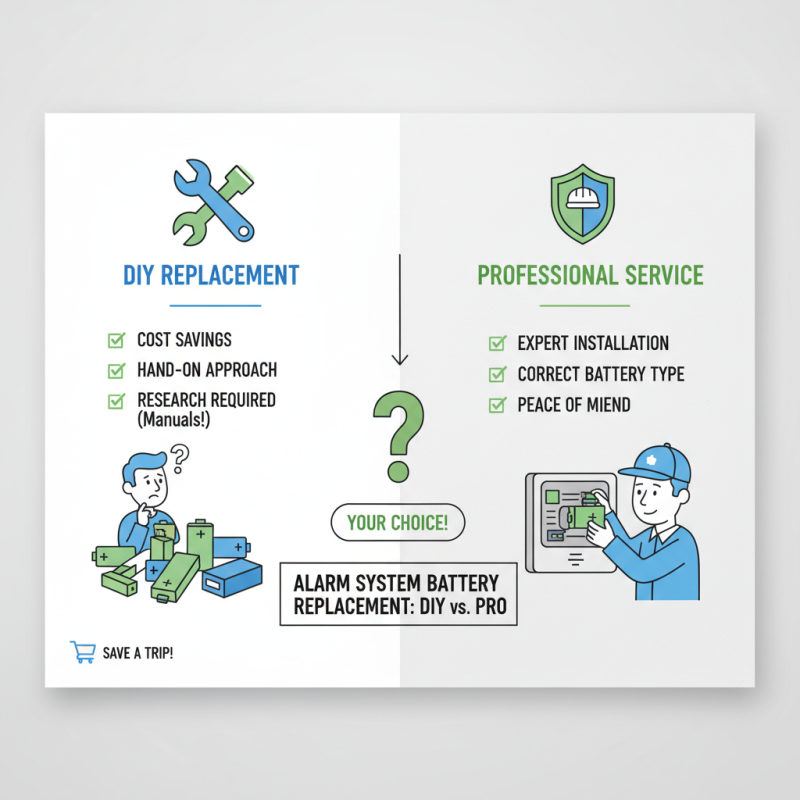
When it comes to battery replacement for alarm systems, one key choice is between DIY and professional services. Many opt for DIY due to cost savings. It’s appealing to tackle it yourself. However, do you know which battery you need? You might get confused with different types available. Make sure to read the manuals. This can save you a trip back to the store.
On the other hand, professionals ensure proper installation. They have experience and tools not typically found at home. Some people find it stressful to handle electrical components. Mistakes can lead to alarm failures. A professional will check the entire system, not just the battery. This comprehensive service can provide peace of mind.
Ultimately, consider your comfort level with tools and electricity. Assess your knowledge. If unsure, seeking a professional may be a better choice. It’s not just about changing a battery; it involves understanding the entire system. Making the right choice can enhance your home security effectively.