How to Choose the Best SLA AGM Battery for Your Energy Needs
When it comes to selecting the right SLA AGM battery for your energy needs, the process can be overwhelming due to the myriad of options available on the market. As an expert in the industry, Dr. Emily Carter emphasizes the importance of aligning battery specifications with individual requirements, stating, "Choosing the right SLA AGM battery involves understanding your power requirements and the specific characteristics of the battery." This approach ensures that you make informed decisions tailored to your unique energy demands.
SLA AGM batteries, known for their reliability and maintenance-free operation, are suitable for various applications, from renewable energy systems to backup power solutions. As technological advancements continue to shape this industry, understanding the essential factors—such as capacity, longevity, and discharge rates—is crucial for optimizing performance and efficiency. In this guide, we will delve into key elements that will help you navigate the selection process, ensuring that you find the ideal SLA AGM battery that meets your specific energy needs effectively.

Choosing the Right SLA AGM Battery: Key Considerations
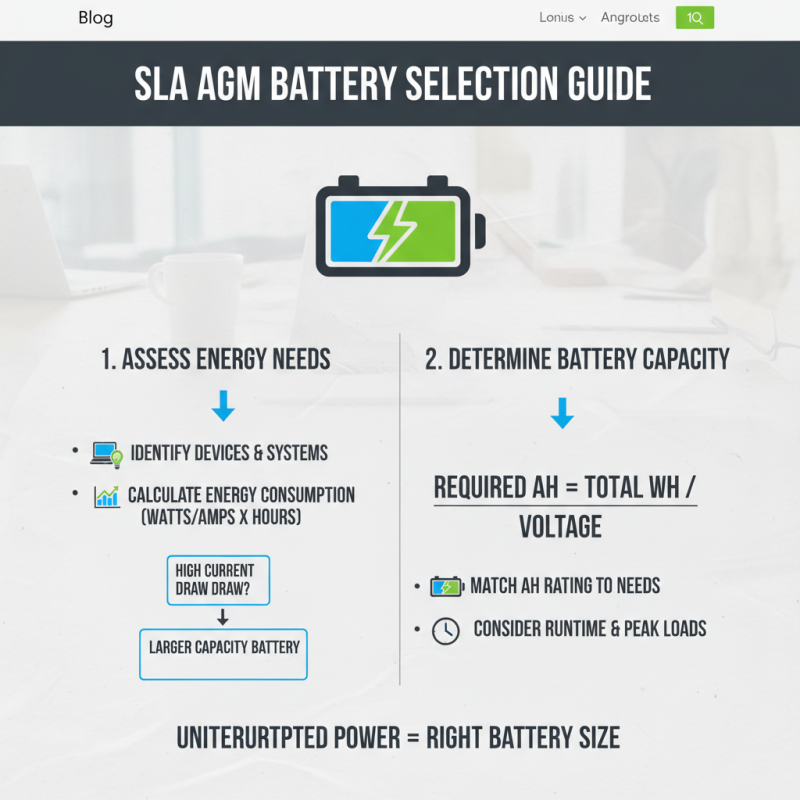
When selecting the right SLA AGM battery for your energy needs, several key considerations should guide your decision-making process. First and foremost, understanding your power requirements is essential. This includes determining the voltage and capacity necessary for your applications. Consider the total watt-hours needed, as well as the discharge rate. A battery that can provide the required energy efficiently over a specified duration will enhance the performance of your devices, whether they're used in renewable energy systems, emergency backups, or other electronics.
Another crucial factor is the battery's lifespan and maintenance needs. AGM batteries are known for their durability; however, different models may have varying cycles of charge and discharge. Look for batteries rated for longer life cycles to ensure a good return on investment. Additionally, think about installation and operational conditions. If the battery will be used in extreme temperatures or infrequently charged, suitability for these conditions is vital. Choosing a battery that can tolerate specific environmental factors will further enhance reliability and performance over time. This thoughtful approach will ensure that the selected SLA AGM battery meets your precise energy demands.
Understanding SLA AGM Battery Types and Their Performance
SLA AGM (Sealed Lead Acid Absorbed Glass Mat) batteries are known for their reliability and efficient performance, making them a popular choice for various energy applications. Understanding the types of SLA AGM batteries available is crucial for selecting the right one for your specific needs. These batteries come in different configurations, such as deep cycle and starting batteries, each designed to handle distinct tasks. Deep cycle AGM batteries are optimized for extended discharge periods and are ideal for applications like renewable energy storage, electric vehicles, or marine use. In contrast, starting batteries are engineered for delivering a high burst of power in a short duration, making them suitable for emergency backup systems.
Performance metrics also play a significant role in evaluating SLA AGM batteries. Factors such as capacity, discharge rate, and cycle life are vital for determining how well a battery can meet energy demands. For instance, a battery with a higher amp-hour rating indicates greater energy storage capacity, which is beneficial for applications requiring prolonged usage without frequent recharging. Additionally, the discharge rate, which refers to how quickly the battery can release its stored energy, affects its suitability for various applications. Ensuring that the chosen SLA AGM battery aligns with these performance criteria will help you achieve optimal efficiency and longevity in your energy solutions.
Evaluating Battery Capacity and Energy Requirements for Your Needs
When selecting the best SLA AGM battery for your energy needs, it is crucial to evaluate your battery capacity and energy requirements meticulously. Start by identifying the devices or systems that require power and their energy consumption rates. This will help determine how much energy you will need over a specific time frame. For instance, if you plan to run several appliances that draw a high amount of current, you will need a battery with a larger capacity to ensure uninterrupted performance.
Next, consider the duration for which you require power. Calculate the total watt-hours required by multiplying the wattage of your devices by the hours of operation per day. This figure will provide a clearer picture of your total energy needs. Choosing a battery with a capacity that exceeds this requirement by a comfortable margin can help account for inefficiencies and ensure reliability. Additionally, understanding the discharge rates and cycle life of the battery will aid in making an informed decision, as these factors influence how well the battery will meet your energy demands over time.
Analyzing Lifespan and Maintenance Needs of SLA AGM Batteries
When choosing a Sealed Lead Acid Absorbent Glass Mat (SLA AGM) battery, understanding its lifespan and maintenance needs is crucial for achieving optimal performance. SLA AGM batteries are designed with longevity in mind, typically having a lifespan of 3 to 5 years, depending on usage and environmental conditions. To maximize their lifespan, it is essential to maintain proper charging practices. Overcharging or undercharging can significantly shorten the battery's life. Regularly checking the battery's charge level and ensuring it remains within the recommended range helps prevent any potential issues.
Maintenance of SLA AGM batteries is relatively low compared to other types of batteries. These batteries are sealed and do not require the addition of water, making them worry-free in that aspect. However, it is still important to inspect terminals and connections periodically to prevent corrosion and ensure good conductivity. Additionally, the operating temperature can impact performance; keeping the battery in a cool, dry area can help maintain its efficiency and prolong its lifespan. By paying attention to these factors, users can ensure their SLA AGM battery meets their energy needs effectively over time.
How to Choose the Best SLA AGM Battery for Your Energy Needs
Cost vs. Quality: Finding the Best Value in SLA AGM Batteries
When selecting the best SLA AGM (Sealed Lead Acid Absorbent Glass Mat) battery for your energy needs, it’s crucial to strike the right balance between cost and quality. Cheaper options may seem appealing, but they often come with compromises in performance and longevity. Investing in a higher-quality battery can save you money in the long run by providing more reliable energy storage and reducing the frequency of replacements. Durability and warranty terms are important indicators of quality, so it's wise to consider these factors alongside the price.
Moreover, it’s essential to evaluate your specific energy requirements. This means understanding the voltage, capacity, and discharge rates that suit your application. While a lower-priced battery may meet your immediate needs, it might not perform well under rigorous demands or extended usage, leading to higher overall costs through inefficiency and failures. Conversely, a well-reviewed battery that fits your energy profile can enhance your system's performance, justifying the upfront investment. By carefully assessing both cost and quality, you can identify the best value for your needs in the SLA AGM battery market.
How to Choose the Best SLA AGM Battery for Your Energy Needs - Cost vs. Quality: Finding the Best Value in SLA AGM Batteries
| Battery Type |
Capacity (Ah) |
Voltage (V) |
Cost ($) |
Average Lifespan (Years) |
Warranty Period (Years) |
| SLA AGM 12V 35Ah |
35 |
12 |
120 |
3-5 |
1 |
| SLA AGM 12V 65Ah |
65 |
12 |
190 |
4-6 |
1 |
| SLA AGM 12V 100Ah |
100 |
12 |
250 |
4-7 |
1 |
| SLA AGM 12V 150Ah |
150 |
12 |
350 |
5-8 |
2 |