Choosing the right 12 battery can be challenging. It requires careful consideration of your specific needs. The market is filled with various types and brands. Each battery has unique features and specifications. You may feel overwhelmed by all options.
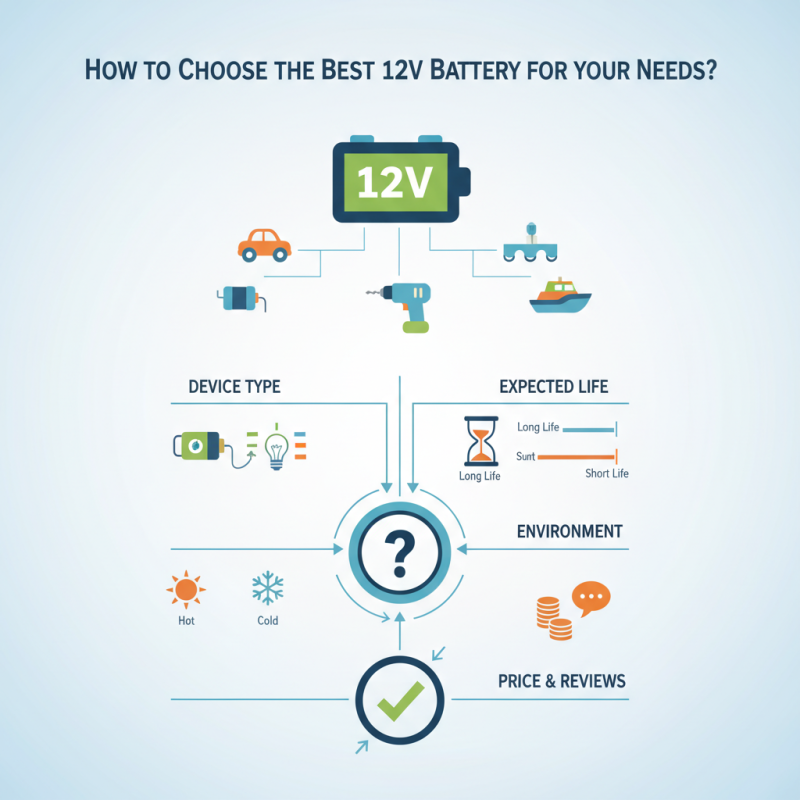
Start by identifying the device that requires the battery. For example, is it for a toy, a remote, or a power tool? Different devices demand different power levels. Think about the battery life you expect. Some batteries last longer than others.
Consider the environment where you'll use the battery. Temperature extremes can affect performance. Price is another critical factor. Cheap options may not always deliver reliability. Reflect on user reviews and expert opinions. Are they consistent? Choosing the right 12 battery matters for performance and safety. Take your time to make an informed decision.
Choosing the right 12-volt battery starts with understanding your power needs. Consider how you'll use the battery. Will it power a car, an RV, or perhaps some tools? Each application demands different energy levels. Think about how much current you require. This can vary from a few amps for small devices to hundreds for larger systems.
Estimate the duration for which you'll need power. For short trips, a smaller capacity might suffice. Longer outings may need a larger battery. Take note of your devices' wattage. Knowing how long you want to run them will help you calculate the necessary battery capacity. It’s crucial to get this right. A battery that’s too small won't deliver the required power. A larger battery might be heavier and cumbersome.
Reflect on recharge times and maintenance. Some batteries need regular upkeep, while others are low maintenance. Storage conditions also matter. Poor storage can reduce battery life. Do you have space for a heavier option? Make a list of your specific needs. This helps narrow down choices. Adjust your expectations based on your findings. Ultimately, knowing exactly what you need can greatly simplify the selection process.
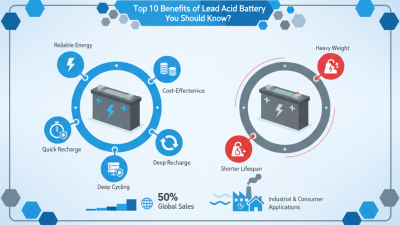
When selecting a 12-volt battery, it's essential to understand the different types available. Lead-acid batteries are the most common. They are reliable and cost-effective, ideal for starting engines and providing backup power. The global lead-acid battery market was valued at approximately $51 billion in 2020 and is expected to grow steadily.
Lithium-ion batteries are becoming popular due to their light weight and high efficiency. They have a longer lifespan, often lasting more than 10 years. These batteries are commonly used in solar energy systems and electric vehicles. However, their price can be a barrier for some. According to industry reports, lithium-ion batteries made up about 33% of the battery market in 2021.
Gel and AGM (Absorbent Glass Mat) batteries offer maintenance-free options. They are safer than traditional lead-acid types since they can be used in various positions without leaking. Yet, users often debate their longevity compared to lithium-ion counterparts. With all these choices, users sometimes feel overwhelmed. Balancing cost, application, and lifespan is crucial. Consider your needs carefully to make an informed choice.
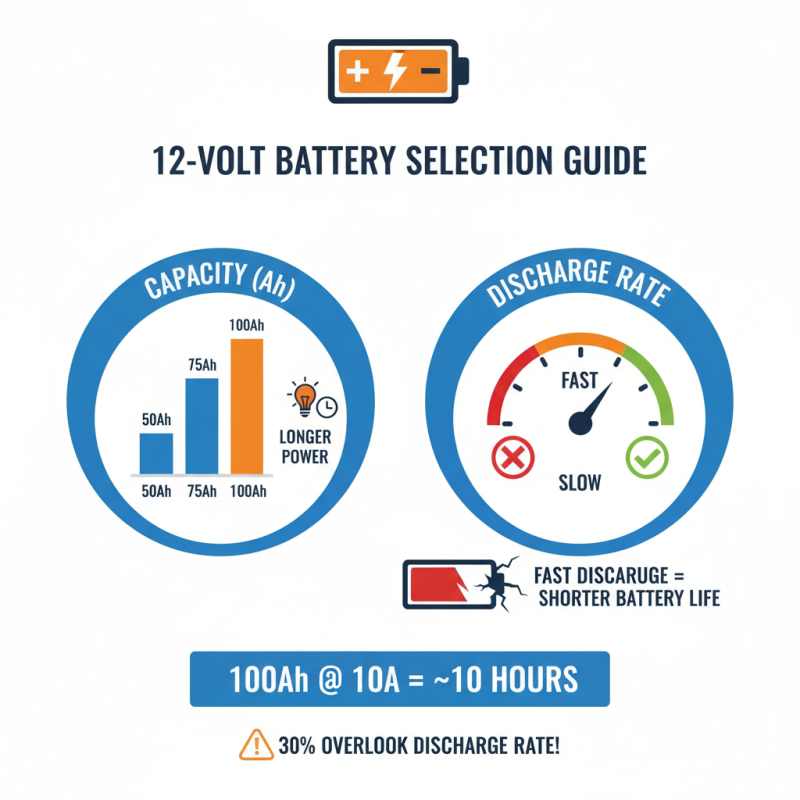
When selecting a 12-volt battery, key features matter greatly. Consider capacity, measured in amp-hours (Ah). Higher Ah ratings indicate longer usage time between charges. A battery with a capacity of 100Ah, for example, can power a device drawing 10A for about ten hours. Yet, if the discharge is too fast, overall battery life can shorten drastically. Data shows that 30% of users overlook the impact of discharge rates.
Next, think about the battery type. Lead-acid batteries are typically cheaper but have shorter lifespans. Lithium-ion batteries cost more upfront but can last up to twice as long. Reports from industry experts indicate that lithium-ion batteries can endure over 2,000 charge cycles, compared to around 500 for lead-acid variants. This difference is crucial when weighing long-term costs against initial investment.
Weight and size also influence the choice. A heavier battery may indicate robust construction but can be hard to transport. Some users find it challenging to balance the need for portability with battery performance. Additionally, environmental factors, such as temperature, can affect battery efficiency. A battery may perform poorly in extreme heat or cold. Such concerns reveal the complexities when considering all aspects of selecting the right battery.
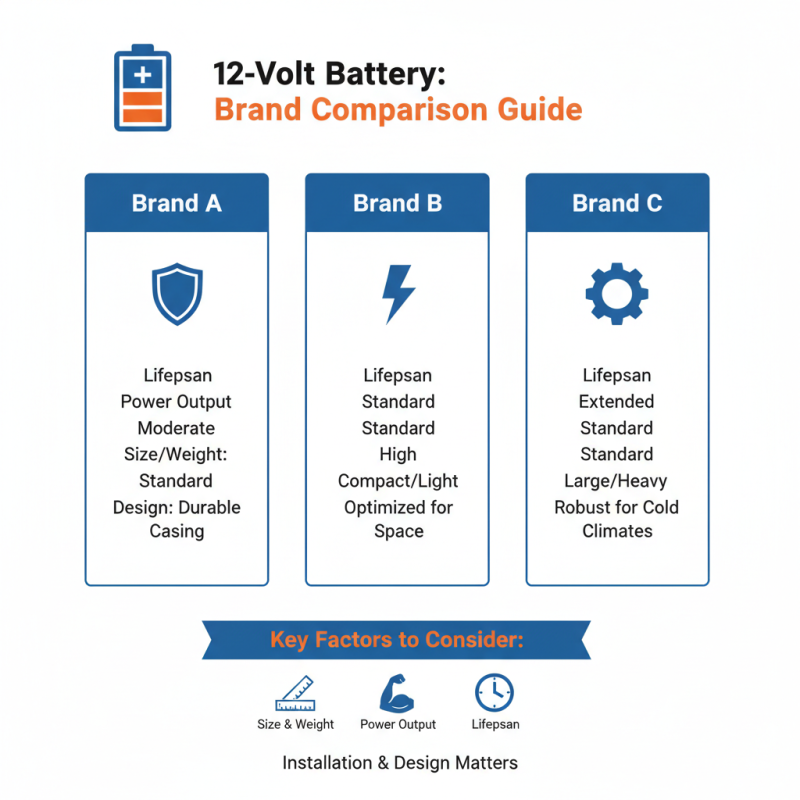
When choosing a 12-volt battery, comparing different brands and models is crucial. Each brand has distinct features. Some might offer longer lifespans, while others excel in power output. Look at the size, weight, and design. These factors can influence installation.
Tips for selecting a battery include checking the battery's capacity. A higher amp-hour (Ah) rating usually means more power. Look for warranties. A longer warranty often indicates the manufacturer's confidence in their product. Don’t ignore customer reviews. They provide real-world insights, sometimes highlighting issues you may not consider.
Another area to explore is maintenance. Some batteries require more upkeep than others. Sealed batteries are convenient but may be pricier. Know your usage. If you're using it in a seasonal vehicle, it might not need the same features as one for daily use. Assess your needs closely to avoid future troubles.
Maintaining your battery properly can significantly enhance its lifespan. Start by keeping your battery clean. Dust and grime buildup can hinder performance. Regularly inspect your battery terminals and connections. Corrosion can impede energy flow. Use a mixture of baking soda and water to clean any corrosion. Remember, prevention is key.
Temperature control is crucial, too. Batteries thrive in moderate temperatures. Exposing them to extreme heat or cold can lead to damage. If possible, store batteries in a climate-controlled space. Be mindful that overcharging can also shorten a battery’s life. Charge it only when necessary.
Finally, pay attention to usage patterns. Try to avoid completely draining your battery before recharging. This habit can harm the overall health of the battery. Using your battery frequently, within recommended limits, will generally improve its longevity. Never forget that small actions can lead to substantial results over time. Keep these tips in mind to ensure you’re getting the most out of your battery.
| Battery Type | Capacity (Ah) | Voltage (V) | Lifespan (Years) | Maintenance Tips |
|---|---|---|---|---|
| Lead Acid | 100 | 12 | 3-5 | Keep charged, clean terminals regularly |
| Lithium-ion | 50 | 12 | 8-10 | Avoid deep discharges, keep at moderate temperatures |
| Nickel-Metal Hydride | 70 | 12 | 5-7 | Charge regularly, avoid overcharging |
| Gel Cell | 80 | 12 | 4-6 | Store upright, maintain proper charging levels |
| AGM (Absorbed Glass Mat) | 90 | 12 | 5-8 | Regularly check charging, avoid excessive heat |