Choosing the right Air Release Valve is a hydraulic decision, not merely a purchasing exercise. Inside a rising pipeline, trapped air can reduce flow, increase energy demand, and create damaging pressure changes. A small valve on a high point may protect kilometres of pipe, yet the wrong size can perform poorly. It happens more often than buyers expect.
The American Water Works Association’s AWWA Manual M51 explains how air-release, air-vacuum, and combination valves serve different operating conditions. The U.S. Environmental Protection Agency also links effective asset management with reliable water-system performance. Meanwhile, the ASCE 2021 Infrastructure Report Card estimates that U.S. drinking-water infrastructure needs exceed $1 trillion over 25 years. These reports underline a practical reality: valve selection affects long-term resilience, maintenance, and operating cost.
Water engineer Thomas M. Walski offers a useful principle: “Good hydraulic design begins with understanding what the water is trying to do.” Buyers should examine pipeline profile, flow rate, pressure range, fluid quality, valve-orifice size, discharge capacity, corrosion resistance, and maintenance access. A stainless-steel body beside a muddy valve chamber tells a different story from a clean laboratory specification. Do not trust catalogue pressure alone. Confirm air-release performance under filling, draining, and normal operation.
A perfect checklist does not exist. Site conditions are often incomplete, and assumptions can fail. This guide compares the main valve types, explains technical data, and highlights purchasing questions that support safer, more economical decisions.
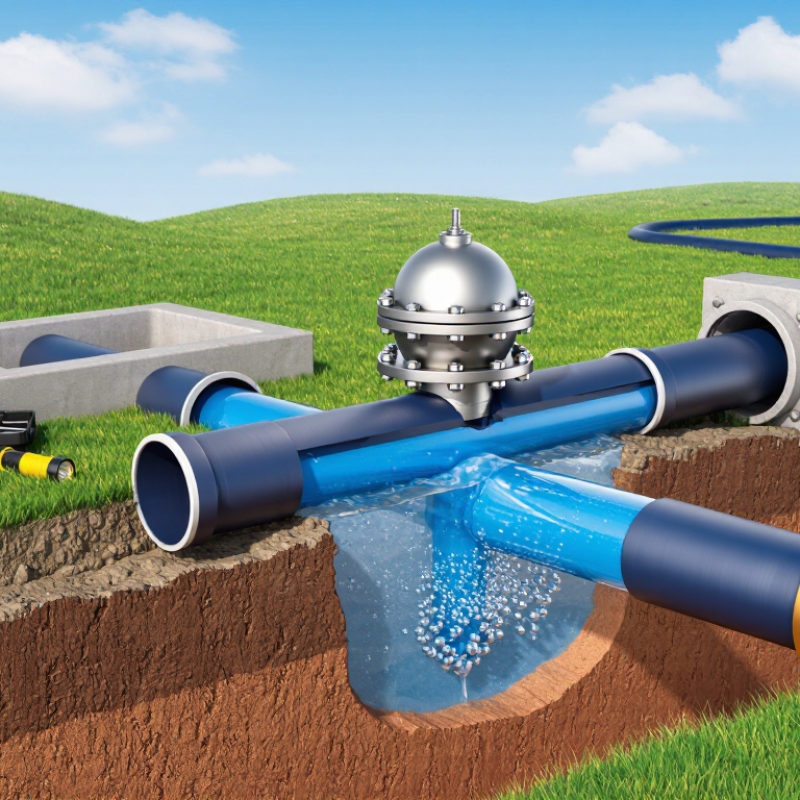
Air release valves manage trapped air inside pressurized piping systems. Air pockets can reduce flow, increase pumping costs, and create damaging pressure surges. The U.S. Environmental Protection Agency estimates about 240,000 water-main breaks occur annually in the United States. Poor air management is not the only cause, but it can increase operational stress. The World Bank also reports that roughly one-third of supplied water may be lost in distribution systems worldwide. Reliable valve selection therefore supports efficiency, maintenance, and network resilience.
Buyers should match the valve type to the pipeline’s operating conditions. Small continuous air pockets need automatic air-release performance. Large air volumes during filling or draining require air-and-vacuum protection. Combination valves address both conditions. Review maximum and minimum pressure, pipe diameter, flow rate, water quality, installation angle, and discharge safety. AWWA Manual M51 emphasizes locating air valves at high points and other locations where air can collect. A neat calculation can still mislead. Field elevation changes and irregular flow often reveal problems that drawings miss.
Tips: Ask for tested flow curves, pressure ratings, material certificates, and maintenance instructions. Confirm whether the valve suits sewage, raw water, or treated water. Keep access clear around the chamber. Inspect vents for blockage, corrosion, and leakage during routine maintenance. Choose corrosion-resistant materials when water chemistry is uncertain. The cheapest valve may cost more later. Look beyond purchase price.
Selecting an air release valve begins with the pipeline, not the valve catalogue. Map every crest, long downhill run, pump discharge, and isolation point. A 600 mm water main can trap a surprisingly large air pocket at a minor elevation change. During filling, that pocket may compress rapidly and create dangerous pressure surges. During draining, the line may need controlled air entry to prevent vacuum collapse.
AWWA M51 recommends evaluating air release, air/vacuum, and combination valves according to operating conditions. Record pipe diameter, profile, flow rate, maximum and minimum pressure, water temperature, and expected filling or draining speed. A pump trip also matters. The valve must admit or discharge air without restricting normal water flow. EPA’s 2023 Drinking Water Infrastructure Needs Survey estimates that the United States requires 625 billion dollars in drinking-water investment over 20 years. Aging networks make retrofit access and maintenance space practical design requirements, not minor details.
Check the valve’s pressure rating, orifice capacity, float material, discharge piping, and isolation arrangement. Confirm performance under dirty water conditions. Laboratory data can look perfect. Field sediment may disagree. ASCE’s 2021 Infrastructure Report Card rated U.S. drinking-water infrastructure C−, reminding buyers that installation quality and inspection deserve equal attention. One imperfect assumption can undermine the selection. Recheck the hydraulic profile with operators before approval. Small omissions become expensive failures.
Selecting an air release valve begins with understanding how air enters and leaves the pipeline. A single automatic air release valve removes small air pockets during normal pressurized operation. Its float mechanism responds to accumulated air, even when water continues flowing.
Kinetic air valves use a larger opening during pipeline filling or draining. They discharge substantial air quickly and help limit vacuum formation. However, they may not handle every surge condition safely. Combination valves integrate both functions, making them useful where filling, draining, and routine air removal occur within one system. The choice depends on air volume, not simply pipe diameter.
Operating conditions require careful field judgment. Install valves at high points, long uphill sections, and sudden profile changes. Check working pressure, vacuum risk, temperature, flow velocity, and the water’s solids content. Wastewater systems may need a protected or non-clogging design. Clean water service usually permits more compact internal components.
In practice, I compare pipeline drawings with site elevations before selecting a valve. A drawing can hide a troublesome pocket. It happens. Valve sizing should consider filling speed, draining speed, and possible pipe rupture scenarios. Excessive discharge may create water hammer, while an undersized valve leaves trapped air behind. Maintenance access matters too, especially in buried chambers. I also review installation orientation and isolation arrangements with the operator, because a technically correct valve can still perform poorly when access is neglected.
| Valve Type | Primary Function | Air-Release Behavior | Vacuum Protection | Typical Operating Conditions | Common Applications | Main Advantages | Key Limitations | Buyer Selection Notes |
|---|---|---|---|---|---|---|---|---|
| Small Orifice Air Release Valve | Continuously removes small pockets of accumulated air from a pressurized pipeline. | Releases entrained air while the pipeline remains full and pressurized. | Normally does not provide adequate high-volume vacuum admission. | Pressurized water systems with relatively stable flow and low to moderate air accumulation. | Water transmission lines, distribution networks, irrigation piping, and pump discharge lines. | Compact design, continuous air removal, and reduced risk of air binding. | Small orifice capacity may be insufficient during pipeline filling, draining, or severe transient conditions. | Select the orifice size according to expected air accumulation and operating pressure; do not use it as the sole vacuum-protection device unless specifically rated for that duty. |
| Large Orifice Air and Vacuum Valve | Admits and exhausts large volumes of air during pipeline filling, draining, and vacuum formation. | Exhausts air rapidly during filling and admits air rapidly during draining or negative-pressure events. | Yes; designed to reduce the risk of pipe collapse caused by excessive vacuum. | Long pipelines, steep profiles, pump shutdowns, emergency drainage, and rapid changes in flow. | Raw-water mains, rising mains, sewer force mains, irrigation systems, and large-diameter pipelines. | High air-flow capacity and effective protection during filling and draining operations. | May not continuously remove small air pockets under normal pressurized operation unless it includes a small-orifice function. | Check both air-inlet and air-exhaust capacity, not only the nominal valve size. Confirm that the pressure rating matches the pipeline design pressure. |
| Combination Air Valve | Combines continuous air release with large-volume air admission and exhaust. | Removes small air pockets during normal operation and handles large air volumes during filling or draining. | Yes, when the large-orifice section is correctly sized for the system transient. | Systems exposed to both routine air accumulation and transient vacuum conditions. | Municipal water mains, pumping systems, treatment plants, industrial process-water lines, and long pipelines. | Broadest functional coverage and often the most versatile choice for general water-service applications. | Usually larger and more expensive than a single-function valve; incorrect sizing can cause premature closure or water hammer. | Use hydraulic calculations or manufacturer sizing data to coordinate air-flow capacity, pipeline profile, filling rate, draining rate, and transient pressure. |
| Wastewater Air Release Valve | Controls air in sewage or contaminated fluid pipelines while reducing the risk of wastewater leakage. | Releases accumulated air through a wastewater-oriented mechanism that is less prone to clogging than a narrow water-service passage. | Some designs admit air during draining, but vacuum-protection capability must be confirmed for the specific model. | Sewage force mains, low-pressure wastewater lines, and fluids containing suspended solids or gases. | Sewer rising mains, wastewater pumping stations, and sewage treatment facilities. | Suitable materials and internal geometry can improve reliability in dirty, corrosive, or gas-producing service. | Requires attention to odor control, fouling, cleaning access, corrosion resistance, and discharge containment. | Confirm wastewater compatibility, minimum operating pressure, sewage-gas requirements, flushing provisions, and whether a separate vacuum valve is required. |
| Pressure-Sustaining or Controlled Air Valve | Manages air movement more gradually to limit sudden pressure changes. | Controls the rate of air release or admission rather than allowing an unrestricted exchange. | May reduce transient effects, but vacuum protection depends on the valve configuration and capacity. | Pipelines where rapid valve closure, high flow velocity, or pump trips create a water-hammer concern. | High-head pumping systems, steep pipelines, industrial water systems, and systems with frequent operational changes. | Can provide better control of transient pressure when properly engineered. | More complex sizing and adjustment; throttling air flow without hydraulic analysis may worsen system performance. | Require a transient study when water hammer is significant. Review closing characteristics, control settings, and maintenance requirements. |
| High-Pressure Air Release Valve | Releases accumulated air in systems operating at elevated pressure. | Uses a pressure-rated small orifice to discharge air while limiting water loss under normal conditions. | Vacuum admission is not automatically included and must be verified separately. | High-pressure water, industrial utilities, pump discharge piping, and process systems within the valve pressure class. | High-lift water conveyance, industrial cooling-water systems, and pressurized process-water pipelines. | Maintains air-release capability where ordinary low-pressure construction is unsuitable. | Higher pressure can reduce air-discharge capacity through a small orifice; the body, cover, float, seals, and connections all require suitable ratings. | Compare maximum allowable working pressure, test pressure, air-release capacity at operating pressure, and connection standard. |
How to Choose the Best Air Release Valve for Buyers
Material selection begins with the fluid, not the catalog photograph. Ductile iron suits many water pipelines, while stainless steel handles corrosive environments better. Plastic components can reduce weight, but temperature and ultraviolet exposure need careful review. The gasket matters too. EPDM may suit potable water, while other fluids require different elastomers. A small mismatch can cause swelling, leakage, or premature failure.
Pressure ratings need more than a single maximum number. Compare working pressure, surge pressure, vacuum conditions, and test pressure. The valve should tolerate transient events during pump starts and sudden shutdowns. EPA’s 2023 Drinking Water Infrastructure Needs Survey estimates $625 billion in U.S. drinking-water investment over 20 years. Aging networks make dependable air management increasingly important. Still, infrastructure age alone does not justify oversizing a valve.
Performance data should include air-release capacity, air-admission capacity, closing speed, and leakage results. Check testing against recognized requirements, such as ISO 5208 or relevant waterworks standards. A valve with high capacity may perform poorly if its float sticks under debris. I would request test curves, not only nominal flow figures. Field experience shows that installation angle, pipe elevation, and maintenance access can change results. Datasheets can look precise. They are not always complete. Evaluate the full operating cycle, including filling, draining, vacuum protection, and pressure surges.
Choosing an air release valve starts with installation conditions, not catalogue size. Map every pipeline high point, long rising section, and pump discharge. Confirm pipe diameter, operating pressure, filling speed, draining rate, and water quality. AWWA Manual M51 recommends separating air-release, air-vacuum, and combination valve duties. The wrong duty can cause water hammer, vacuum damage, or continuous leakage. Keep the valve accessible, upright, and protected from flooding. Provide a nearby isolation valve, but prevent accidental closure through clear labeling and operating controls. Small details matter.
Maintenance planning should begin before purchase. Request a service schedule, inspection checklist, spare-part list, and written commissioning procedure. Ask the supplier to explain float cleaning, screen inspection, gasket replacement, and corrosion checks. A useful supplier should also provide sizing calculations and technical support during startup. The U.S. EPA’s 2023 Drinking Water Infrastructure Needs Survey estimates $625 billion in drinking-water investment needs over 20 years. That figure reinforces the value of extending asset life, rather than replacing poorly maintained valves. Keep inspection records with pressure readings, leak observations, and repair dates. A spreadsheet helps, but it can hide field conditions. I would require a site review for critical pipelines. Supplier response times, technician availability, and training quality deserve the same attention as purchase price. Some maintenance intervals may need adjustment after real operating experience.