How to Choose the Right Lawnmower Batteries for Your Needs?
Choosing the right lawnmower batteries can greatly impact your gardening experience. With increasing awareness of sustainable practices, more users are shifting towards electric lawnmowers. According to a report by IBISWorld, the lawnmower battery market is expected to grow at a CAGR of 5.8% from 2021 to 2026. This shift emphasizes the importance of selecting the appropriate battery type for your specific mower model.
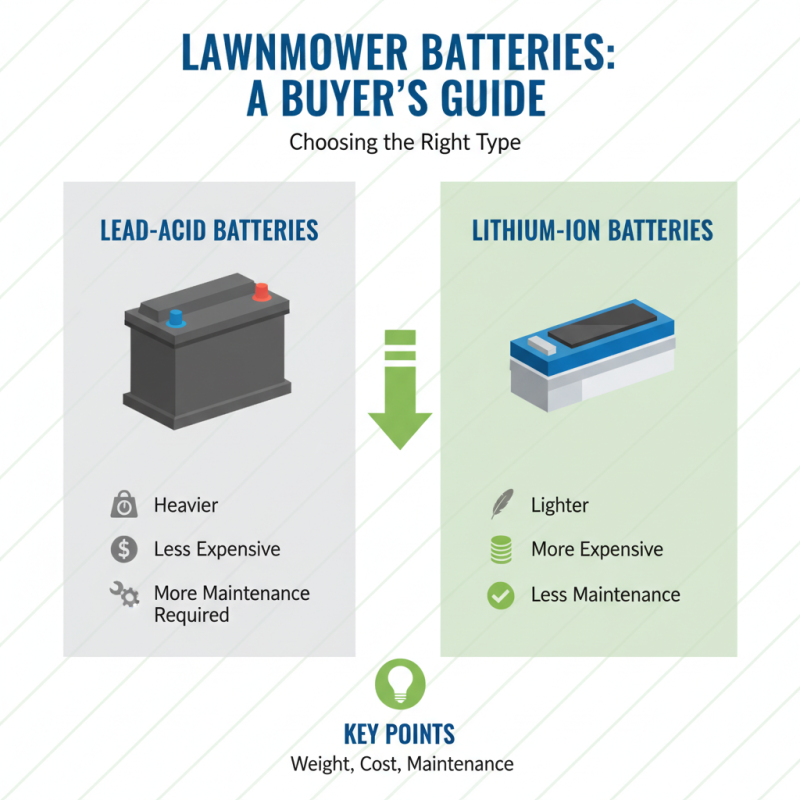
Understanding the different types of lawnmower batteries—like lead-acid and lithium-ion—can be challenging. Lead-acid batteries are often cheaper but may require more maintenance. In contrast, lithium-ion options are lighter and provide longer runtimes. Many users overlook the importance of capacity ratings. Selecting a battery with inadequate capacity can lead to frustrating interruptions during mowing.
Furthermore, users should consider how often they mow. A person mowing weekly may need a more robust battery. However, less frequent users may overlook battery quality, leading to potential drawbacks. Each choice has its trade-offs, making careful consideration essential. Ultimately, being informed helps ensure optimal performance and longevity of your lawnmower batteries.

Understanding the Types of Lawnmower Batteries Available
Choosing the right lawnmower batteries begins with understanding the types available. Most lawnmowers use either lead-acid batteries or lithium-ion batteries. Lead-acid batteries are the traditional choice. They are heavier and often less expensive. However, they require more maintenance compared to other options.
Lithium-ion batteries are becoming increasingly popular. They are lighter and offer longer runtimes. Additionally, they charge faster than lead-acid varieties. Nevertheless, their initial cost can be a drawback for many users. It’s important to assess your lawn size and frequency of use. A larger yard may benefit from a more powerful battery.
Consider the climate where you live. Extreme temperatures can affect battery performance. For instance, cold weather may reduce battery life significantly. Monitoring usage patterns can also help optimize battery choice. Remember that a higher price does not always guarantee durability and efficiency.
Assessing Your Specific Lawn Care Needs and Requirements
When choosing a lawnmower battery, consider your specific lawn care needs. Your lawn size and terrain are crucial factors. A small, flat lawn may only need a battery with lower voltage. However, hilly or large areas often require more powerful batteries to avoid running out of charge mid-mow. According to industry reports, a battery's performance can drastically decline after two years, impacting your lawn care efficiency.
Assessing your lawn's care routine is vital. Do you mow frequently or occasionally? If you have a large garden, a battery with longer run time becomes essential. For lighter mowing tasks, a smaller capacity battery may suffice. Remember, the wrong choice can lead to frustration. A report from the American Gardening Association suggests that nearly 30% of homeowners face issues due to incorrect battery selection.
Tip: Always keep an eye on the battery's weight. Heavier batteries can deliver more power but make maneuverability harder.
Tip: Regularly check battery health, especially in older models. Poor maintenance can lead to unexpected failures.
Evaluate your needs carefully. The battery should complement your lawn care approach, not hinder it.
Evaluating Battery Specifications and Performance Ratings
When selecting lawnmower batteries, evaluating battery specifications is crucial for optimal performance. Capacity ratings, measured in amp-hours (Ah), indicate how long a battery can run before needing a recharge. For instance, a battery with a 12Ah rating might run a mower for up to two hours on a single charge, depending on the mower's energy consumption.
Another aspect to consider is discharge rates. Batteries must efficiently release energy, especially during peak usage. The constant current draw, expressed in amps, reflects how well a battery maintains power under load. Research indicates that batteries with higher discharge rates exhibit better performance in demanding conditions. This can lead to significant benefits in terms of efficiency and overall runtime.
However, specifications alone don't tell the whole story. Real-world performance can vary widely. Factors like temperature and charging cycles affect longevity. Reports note that some batteries degrade faster when frequently recharged, leading to a shorter lifespan. Reflecting on these aspects can ensure you choose a battery that meets your lawnmower's unique demands.
Considering Budget and Price Range for Lawn Batteries
When considering lawnmower batteries, budget plays a crucial role.
Industry reports indicate that standard lawn batteries range from $50 to $300. The price often reflects the battery's lifespan and power capacity. Cheaper batteries may need frequent replacement and lead to higher long-term costs. Evaluate your typical mowing area and power needs before making a choice.
Many people overlook the importance of battery specifications. For instance, a lithium-ion battery offers up to three times the lifespan of traditional lead-acid models. However, they can cost significantly more upfront. A study found that homeowners often underestimate their need for high-capacity batteries. Many users ended up with inadequate power, causing interruptions during mowing. This can be frustrating and waste time.
Additionally, consider the warranty and support. Some low-cost batteries lack robust service guarantees. A three-year warranty may sound appealing, but if the battery fails early, it fails to be a cost-effective choice. Research reveals that many users face issues with battery performance after just one season. Balancing the initial cost with potential long-term value is essential.
Maintenance Tips for Longevity of Your Lawnmower Battery
To extend the life of your lawnmower battery, regular maintenance is key. Check the terminals for corrosion and clean them as needed. Corroded terminals can lead to poor connections. Store the battery in a cool, dry place during the off-season. Extreme temperatures can damage battery cells. A simple cleaning and proper storage can really boost battery life.
Another crucial aspect is regular charging. Overcharging or undercharging can harm the battery. It’s wise to develop a routine for charging. Understanding the specific charging needs of your battery can prevent issues. Always monitor the charge level; falling below recommended levels can reduce performance.
Don’t forget about the battery's physical condition. Look for signs of wear, such as bulges or leaks. These indicate that the battery might be nearing the end of its life. If you find any damages, it might be time for a replacement. Ultimately, consistent attention to your lawnmower battery greatly enhances its lifespan.
Battery Capacity Comparison for Lawnmowers
This chart displays the varying capacities of different 12V lawnmower batteries, which can help you determine the right battery for your needs based on the power requirements of your lawnmower.