How to Choose the Best Maintenance Free Battery for Your Needs
Choosing the right maintenance free battery for your needs can be a daunting task, especially with the myriad of options available in the market today. A leading expert in the field, Dr. John Miles, once said, "Selecting the appropriate maintenance free battery is crucial for ensuring reliability and performance, especially in demanding applications." This highlights the importance of understanding your specific requirements in order to make an informed decision.
Maintenance free batteries offer the advantage of convenience, eliminating the need for regular upkeep while providing reliable power. However, not all maintenance free batteries are created equal, and factors such as capacity, longevity, and environmental conditions must be considered. In this guide, we will delve into the essential aspects of selecting the best maintenance free battery for your unique needs, empowering you to choose wisely and confidently.
As advancements in battery technology continue to evolve, the selection process may seem more complex. Nevertheless, arming yourself with the right knowledge will simplify your choices and enhance your experience. Whether you require a battery for automotive use, renewable energy systems, or other applications, a thorough understanding of maintenance free batteries will ensure you find the perfect match.

Understanding Maintenance Free Batteries and Their Advantages
Maintenance-free batteries have gained popularity for their convenience and reliable performance across various applications. Unlike traditional lead-acid batteries, which require regular electrolyte checks and water refills, maintenance-free batteries utilize sealed designs that prevent leakage and evaporation of the electrolyte. This feature not only saves time and effort but also enhances safety by reducing the risk of battery spills and corrosive damage.
One of the primary advantages of maintenance-free batteries is their ability to provide a consistent power supply without the burdens of routine upkeep. They are often designed with advanced technologies, such as absorbed glass mat (AGM) or gel electrolyte systems, that allow them to withstand deeper discharges and have longer lifespans. Additionally, maintenance-free batteries can hold charge better during periods of inactivity, making them ideal for seasonal vehicles or equipment that may not be used frequently. Their robust construction also means they are generally resistant to vibrations and extreme temperatures, making them suitable for a wide range of environments.
Identifying Your Power Requirements for Battery Selection
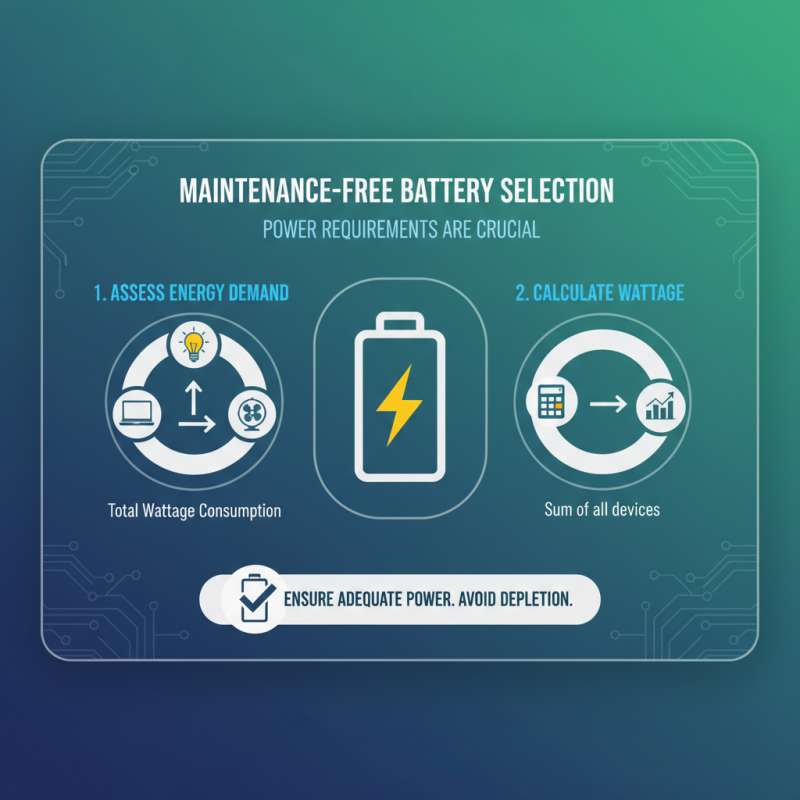
When choosing the best maintenance-free battery, understanding your power requirements is crucial. Begin by assessing the total energy demand of your devices or systems. Calculate the wattage consumption by summing up the power drawn by each device that will be powered by the battery. This step is essential to ensure that the battery you choose can provide adequate energy for your needs without risk of depletion.
Next, consider the duration for which you need the power supply. This involves determining how long you will need the battery to sustain the devices before needing a recharge. By multiplying the total wattage by the expected usage time, you can determine the necessary capacity of the battery in watt-hours. Additionally, think about the peak load that your system may require, as some devices may demand higher power temporarily. Recognizing these parameters will guide you in selecting a battery that not only meets your power requirements but also enhances the longevity and performance of your devices.
Evaluating Battery Types: AGM vs. Gel vs. Lithium
When considering a maintenance-free battery, it’s essential to evaluate the various types available, notably AGM (Absorbent Glass Mat), Gel, and Lithium.
 AGM batteries are known for their robustness and efficiency, utilizing a glass mat to absorb the electrolyte. This construction not only makes them spill-proof but also allows for a faster discharge rate, making them suitable for high-demand applications.
Additionally, AGM batteries have a longer lifespan compared to traditional lead-acid batteries, making them a popular choice for consumers looking for reliability without frequent maintenance.
AGM batteries are known for their robustness and efficiency, utilizing a glass mat to absorb the electrolyte. This construction not only makes them spill-proof but also allows for a faster discharge rate, making them suitable for high-demand applications.
Additionally, AGM batteries have a longer lifespan compared to traditional lead-acid batteries, making them a popular choice for consumers looking for reliability without frequent maintenance.
 On the other hand, Gel batteries offer distinct advantages in specific environments. They contain a silicone additive that turns the electrolyte into a gel, providing excellent resistance to vibrations and temperature extremes. This makes gel batteries particularly advantageous for use in off-road vehicles or marine applications.
However, they generally have lower discharge rates compared to AGM batteries, which may limit their suitability for high-drain applications.
On the other hand, Gel batteries offer distinct advantages in specific environments. They contain a silicone additive that turns the electrolyte into a gel, providing excellent resistance to vibrations and temperature extremes. This makes gel batteries particularly advantageous for use in off-road vehicles or marine applications.
However, they generally have lower discharge rates compared to AGM batteries, which may limit their suitability for high-drain applications.
 Lithium batteries, emerging as a more modern alternative, provide significant benefits in weight and energy density. They charge faster and have a higher capacity compared to both AGM and Gel options, making them ideal for applications requiring a lightweight power source.
Furthermore, lithium batteries have a long cycle life, translating to fewer replacements and potentially lower long-term costs. However, they may come with a higher initial investment, which is an important consideration for users looking to balance performance with budget.
Lithium batteries, emerging as a more modern alternative, provide significant benefits in weight and energy density. They charge faster and have a higher capacity compared to both AGM and Gel options, making them ideal for applications requiring a lightweight power source.
Furthermore, lithium batteries have a long cycle life, translating to fewer replacements and potentially lower long-term costs. However, they may come with a higher initial investment, which is an important consideration for users looking to balance performance with budget.
Key Features to Consider When Choosing a Maintenance Free Battery
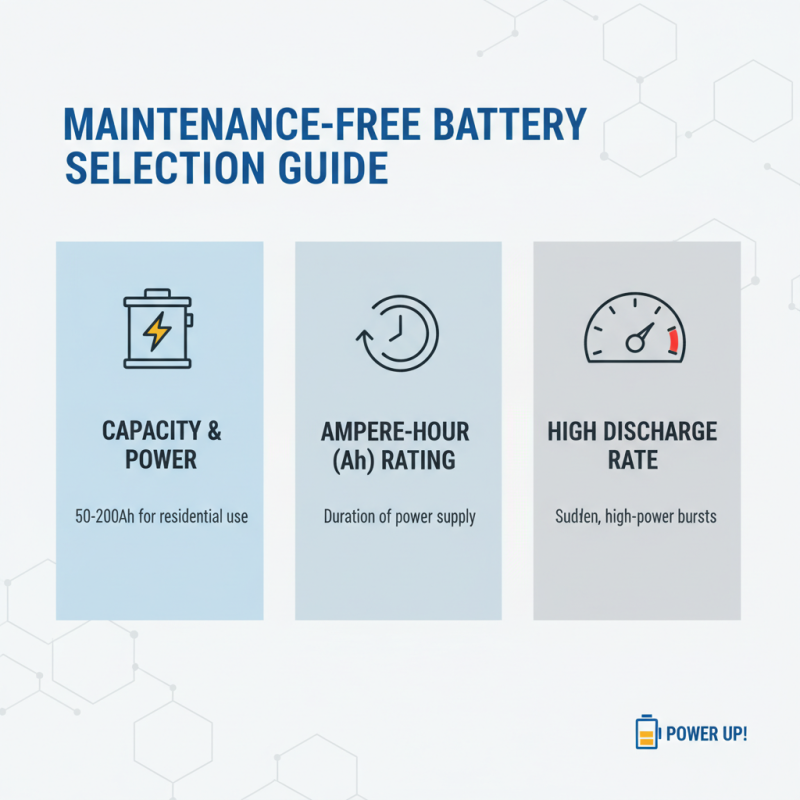
When selecting a maintenance-free battery, several key features should guide your decision. First and foremost, capacity and power ratings are crucial; they determine how well the battery can support your devices. For example, the ampere-hour (Ah) rating indicates how long the battery can supply a certain amount of current. According to a recent industry report, the optimal capacity for residential applications typically ranges from 50Ah to 200Ah, ensuring that devices remain powered throughout their operational life. Additionally, consider the battery's discharge rate—many maintenance-free batteries offer high discharge rates, which can be essential for applications requiring sudden, high power bursts.
Another significant factor is the cycle life of the battery, which indicates how many charging and discharging cycles it can undergo before its capacity drops below 80%. Reports suggest that high-quality maintenance-free batteries can achieve up to 3000 cycles, making them a more sustainable option compared to their conventional counterparts. Furthermore, examine the temperature resilience of the battery. Many reliable models can operate efficiently in extreme temperatures, which is essential for outdoor or industrial environments where conditions fluctuate widely.
Tips: When assessing your needs, always factor in the specific environmental conditions your battery will encounter. For optimal performance, invest in a battery with a temperature range suited to your typical usage scenario. Additionally, consult technical datasheets for details on self-discharge rates, as a lower rate signifies that the battery will retain charge longer when not in use. Remember, a thorough understanding of these features can lead to informed decisions, maximizing the longevity and efficacy of your maintenance-free battery.
Tips for Proper Use and Longevity of Your Selected Battery
When selecting a maintenance-free battery, understanding the proper use and care can significantly extend its lifespan. A maintenance-free battery typically requires less intervention, but that doesn't mean it can be neglected. Regularly checking the battery's charge level and ensuring clean terminals can greatly enhance performance.
One useful tip is to avoid deep discharges. Maintaining a charge above 50% can prevent damage and prolong the life of your battery. Additionally, storing the battery in a stable temperature environment helps preserve its integrity. Extreme temperatures can lead to reduced capacity and efficiency, so try to keep the battery in a cool, dry place when not in use.
Lastly, consider the frequency of use. If your application involves intermittent usage, be sure to recharge the battery after a period of inactivity. Doing so can prevent sulfation, a condition that occurs when lead sulfate crystals build up, reducing the battery's capacity. By following these tips, you can ensure your maintenance-free battery remains reliable and effective for years to come.