China Top 10 Twin Screw Air Compressor Manufacturers
A Twin Screw Air Compressor can look simple on a sales sheet: two rotors, a motor, and a stated flow rate. Real performance is less tidy. Duty cycle, inlet conditions, cooling, controls, and maintenance access all affect the air delivered at the plant. A unit that suits a quiet workshop may struggle in a hot factory running several shifts.
Swedish engineer Alf Lysholm was a pioneer of screw-compressor development. A practical principle inspired by his work, paraphrased rather than presented as a verified quotation, is this: “Choose for the real air-demand profile, not the headline capacity.” That distinction matters when comparing manufacturers. Buyers should examine measured efficiency, pressure stability, service coverage, parts availability, and published test conditions. Look closely at the details: a filter’s replacement interval, the controller’s load response, and the space needed to pull a motor for service.
This guide examines ten Chinese manufacturers through those practical questions, rather than treating a ranking as proof of quality. Company specifications are useful, but they do not replace independent testing or a site-specific assessment. No ranking is perfect. Some comparisons may miss regional service differences or model changes, so verify current data before making a purchase decision. The aim is a clearer shortlist—and better questions for the supplier—before a compressor enters the plant.
Twin Screw Air Compressors and Their Industrial Applications
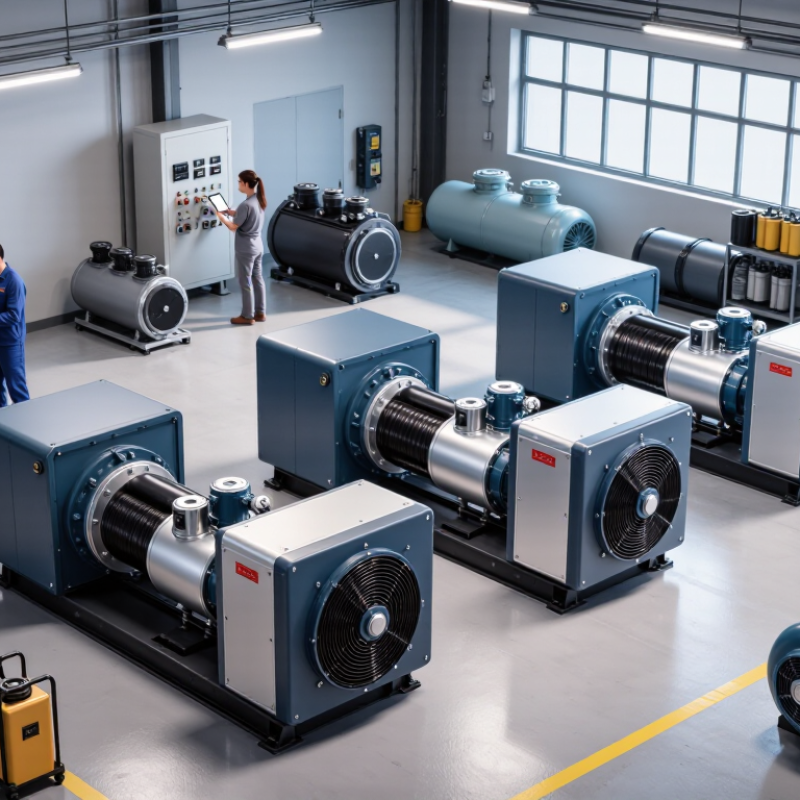
Twin-screw air compressors use two rotating, intermeshing rotors to deliver a steady supply of compressed air. Their continuous-duty design suits factories where production lines run for long shifts. Common applications include automotive assembly, metalworking, packaging, textiles, and general plant utilities. A machine shop may use compressed air to power pneumatic tools, clear chips, or operate automated equipment. Different jobs need different pressure, airflow, and air quality. There is no universal setup.
Energy matters. The U.S. Department of Energy’s 2016 Improving Compressed Air System Performance sourcebook reports that compressed air uses about 10% of industrial electricity, with some facilities reaching 30% or more. That makes leaks, poor controls, and oversized equipment costly. Still, a high-capacity compressor is not automatically the right choice. Actual demand changes across shifts, and a pressure drop at a distant workstation can disrupt production. Track operating pressure and airflow before selecting equipment, then check performance under real load.
Tips: Ask for measured flow data, not just motor power. Inspect filters, drains, and pipe connections regularly; a small leak can waste air all day. For sensitive processes, confirm the required air-quality class and treatment equipment. Maintenance plans help, but they cannot fix a system designed around inaccurate demand estimates.
Criteria for Ranking Chinese Twin Screw Air Compressor Manufacturers
A useful ranking of Chinese twin screw air compressor manufacturers should begin with verifiable operating data, not catalogue claims. Compare delivered airflow and specific power at the same pressure, inlet temperature, and test conditions. Ask for test reports and check whether figures describe the complete package or only the air end. Small differences matter. A unit may look efficient on paper but consume more energy after filters, cooling fans, and controls are included.
Reliability needs evidence from production and field use. Review inspection records, rotor-clearance controls, vibration checks, and the availability of replacement bearings, filters, and seals. Look closely at service response times and technical documentation; a clear wiring diagram can save hours during installation. Noise readings, cooling requirements, and oil carryover data also help buyers judge whether a compressor suits a real workshop. These details are easy to overlook.
A fair ranking should also consider customization, warranty terms, and support for commissioning. However, assigning fixed weights is imperfect: a food plant and a small metal shop do not value the same features. Buyers should compare like-for-like models and confirm claims with a site trial where practical. One gap often remains: public data may not reveal long-term failure rates. Treat missing evidence as uncertainty, not proof of poor quality.
China Twin Screw Air Compressor Manufacturers: Suggested Ranking Criteria
A weighted evaluation framework for comparing manufacturers. These suggested weights are criteria—not measured scores for any company.
The framework prioritizes energy efficiency and reliability, while also considering product range, after-sales service, and relevant certifications. Apply the same evidence-based scoring method to each manufacturer for a fair comparison.
Profiles of China's Top 10 Twin Screw Air Compressor Manufacturers
China’s twin screw air compressor manufacturers serve different operating needs, so a useful profile looks beyond production volume. One group focuses on oil-injected units for general factory air, while another builds oil-free systems for applications with stricter air-quality requirements. Some suppliers emphasize compact packages for workshops; others design high-capacity equipment for continuous industrial duty. There is no single best fit.
Several manufacturers stand out for engineering depth, offering variable-speed drives, integrated dryers, and control systems that help match output to demand. Others compete through locally available parts and responsive service networks. A few specialize in quieter enclosures for indoor installation, while some provide customized configurations for demanding temperatures or dusty sites. Details matter. Ask how performance is measured, and under what conditions.
The remaining profiles include export-oriented producers with multilingual documentation, established factories with broad product ranges, and smaller specialists that adapt equipment quickly. Some combine these strengths; others do not. Buyers should compare delivered-air flow, pressure, power consumption, service intervals, and warranty coverage using consistent test conditions. Request maintenance records and confirm spare-part availability in the intended region. A polished brochure helps, but it cannot replace operating data. Even a strong manufacturer may be a poor match for a particular plant.
Comparison of Products, Technologies, and Services
China’s twin screw air compressor manufacturers should be compared on measured performance, not headline capacity alone. The U.S. Department of Energy’s 2016 sourcebook, Improving Compressed Air System Performance, notes that compressed air can use about 10% of electricity in manufacturing facilities. That makes specific power—input kilowatts per unit of delivered air—a useful comparison point. Ask for test conditions, pressure, and flow data. Numbers without context mislead.
Product choices also matter. Oil-injected models often suit general industrial duty, while oil-free designs serve processes with stricter air-quality needs. Variable-speed control can reduce waste when demand fluctuates, but it is not automatically efficient at every operating point. Check turndown range, cooling design, noise, and maintenance access. Small details count. A crowded service panel can turn routine filter work into downtime.
Technology claims need practical verification. Request an acceptance test, a clear warranty, spare-parts lead times, and service coverage for the installation location. Compare operating costs using the same annual hours and electricity assumptions. Ask whether performance figures include dryers and filters; these can affect delivered-air efficiency. I would also inspect the control interface and drain arrangement in person, where possible. Catalogues rarely show the awkward bits. I may still miss something: factory testing does not fully reproduce a dusty, hot plant room.
How to Choose a Suitable Chinese Manufacturer
Choosing a suitable Chinese twin screw air compressor manufacturer starts with your operating data, not catalogue claims. Record required flow, discharge pressure, inlet temperature, duty cycle, and air quality. The U.S. Department of Energy’s 2016 Improving Compressed Air System Performance sourcebook says compressed air can consume about 10% of industrial electricity, and over 30% at some facilities. Efficiency deserves close scrutiny. Ask for measured package input power and free air delivery at your actual pressure. Compare like with like.
Request test records, not just a rated-capacity table. ISO 1217 provides methods for testing compressor performance; confirm which method and conditions the supplier used. Check rotor machining, assembly cleanliness, vibration limits, and the oil-separation design. A polished factory tour proves little. Ask for a witnessed acceptance test or an independent test report, where practical. The comparison is imperfect: test conditions can differ, and published figures may not reflect your plant.
Service capacity matters after installation. Ask where critical spares are stocked, how quickly technicians can respond, and what the warranty excludes. The DOE sourcebook also notes that leaks commonly waste 20–30% of compressor output in industrial systems, so reliable controls and leak-support guidance have practical value. Request customer references for similar pressure, flow, and operating hours. I would not trust a brochure alone. Check drawings, manuals, and delivery commitments before signing.