Choosing a reliable battery supplier can shape project safety, uptime, and long-term operating costs. This guide examines China’s top 10 AGM battery manufacturers for global buyers, focusing on production capability, product consistency, export experience, and technical support.
AGM batteries use Absorbent Glass Mat technology to hold electrolyte between lead plates. This design supports sealed operation, vibration resistance, and stable performance in backup power, telecommunications, solar storage, vehicles, and marine systems. However, similar specifications can hide major differences. Plate design, separator quality, charging limits, cycle testing, and temperature performance deserve careful review.
The manufacturers included here are assessed through practical purchasing criteria. These include factory capacity, quality-management systems, certifications, warranty terms, test documentation, customization options, and communication reliability. Buyers should request recent datasheets, safety information, inspection records, and samples before placing large orders. A polished website is not proof of dependable production.
Details matter.
A useful comparison should also consider minimum order quantities, packaging strength, lead times, replacement policies, and after-sales response. Some suppliers perform well in high-volume projects but offer limited flexibility for smaller buyers. Others provide strong customization but need closer quality supervision. That difference can affect total cost more than the quoted unit price.
This ranking is a starting point, not an unquestionable verdict. Supplier capabilities change, and public information may be incomplete. Independent audits, sample testing, and clear contractual specifications remain essential. By examining these companies with a balanced, evidence-based approach, global purchasers can reduce uncertainty and identify partners suited to their technical, commercial, and compliance requirements.
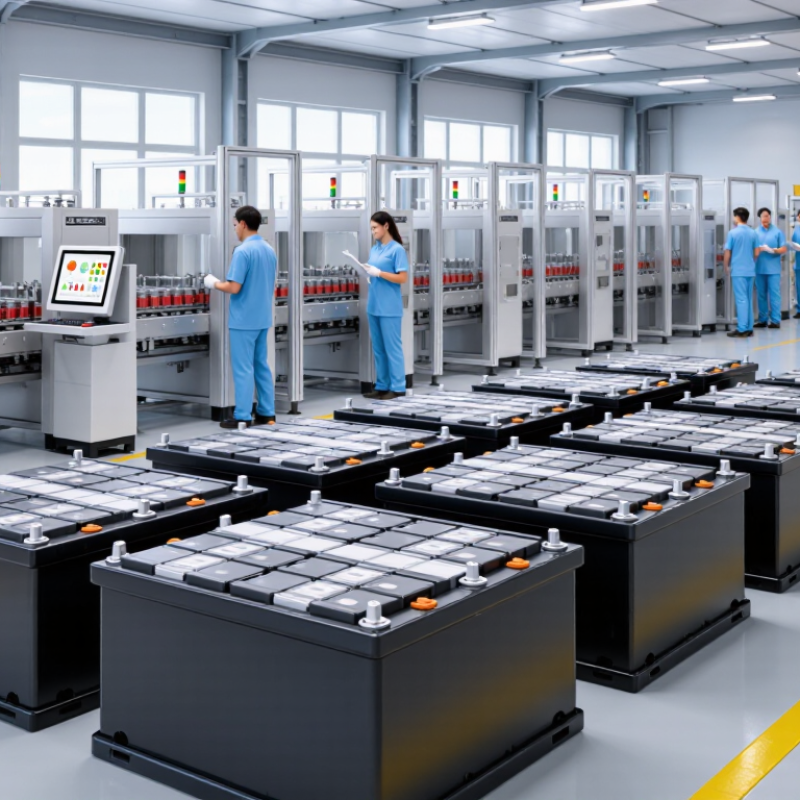
AGM battery technology remains important in global energy storage because it combines sealed construction with dependable lead-acid performance. Its absorbent glass mat holds the electrolyte in place, reducing leakage during transport and installation. This design supports use in telecom cabinets, emergency lighting systems, solar backup units, and small data rooms.
In supplier audits, I look beyond catalog capacity. A reliable manufacturer should provide cycle-life data, float-charge guidance, temperature limits, and traceable production records. A 12-volt, 100-ampere-hour unit may look suitable, yet its real performance depends on discharge depth, charging accuracy, and cabinet ventilation.
Small details matter. Buyers should also check testing standards, warranty terms, recycling arrangements, and export documentation.
AGM batteries deliver strong starting current and require little routine maintenance. They also tolerate short interruptions well. However, they are not perfect for every storage project. Frequent deep cycling, high ambient heat, or poor charging control can shorten service life sharply.
I have seen installations fail because capacity was selected from paper specifications alone. That mistake is easy to repeat. Global buyers comparing the top ten AGM battery manufacturers should examine field experience, quality consistency, and after-sales technical support, not only the lowest quoted price.
Fresh production dates and careful warehouse rotation can prevent avoidable capacity loss before installation.
China’s AGM battery industry is judged by measurable production evidence, not factory size. Grand View Research estimated the global lead-acid battery market at about US$52 billion in 2023. Its forecast indicates steady growth through 2030. This demand increases pressure on Chinese factories to control materials, automation, and delivery consistency.
A serious evaluation starts with compliance. Buyers should request test results aligned with IEC 60896-21 and IEC 60896-22. These standards cover valve-regulated lead-acid battery performance and test methods. Key figures include cold-cranking power, reserve capacity, cycle life, internal resistance, and self-discharge. Factory records should also show plate thickness, electrolyte absorption, welding temperature, and final leak testing.
Production traceability matters. Each pallet should connect to batch numbers, raw-material records, and inspection data. In practical audits, clean samples can hide weak process discipline. The uncomfortable part is this. A certificate does not prove every shipment performs equally. Buyers should compare laboratory results with random warehouse samples. They should also inspect formation rooms, aging racks, and temperature controls.
The 2024 USGS Mineral Commodity Summaries identifies China as the world’s leading refined-lead producer. That supply advantage supports scale, but it does not guarantee quality. Strong manufacturers usually provide stable capacity, transparent failure analysis, recyclable packaging, and documented warranty procedures. Some suppliers still report cycle life under ideal conditions only. That weakness deserves closer questioning.
China’s leading AGM battery manufacturers serve automotive, telecom, UPS, and renewable-energy buyers. This profile reviews ten major producer types rather than relying only on export volume. Market estimates vary, but MarketsandMarkets valued the global lead-acid battery market at about USD 48 billion in 2023. Demand remains linked to backup power and vehicle start-stop systems.
The first group includes large industrial producers with automated plate casting and long-cycle testing. Several export-focused factories offer 12-volt batteries from 35Ah to 200Ah. Telecom specialists emphasize low self-discharge and stable cabinet installation. Automotive suppliers focus on vibration resistance, cold cranking, and frequent engine restarts. UPS-oriented manufacturers usually provide front-terminal designs for dense server rooms.
Solar-storage producers often highlight deep-cycle performance, although real results depend on temperature and charging control. Motorcycle battery makers compete through compact cases and flexible private-label production. Custom manufacturers adjust terminals, dimensions, and labels for overseas distributors. Recycling-integrated companies can improve lead traceability and material recovery. Regional factories may offer attractive prices, but their testing records require closer review.
Look for IEC 60896-21 and IEC 60896-22 testing, ISO 9001 systems, production traceability, and transparent warranty terms. The Battery Council International reports that lead batteries maintain a recycling rate above 95% in North America, but regional practices differ. This comparison has a limitation: public rankings rarely disclose failure rates or warranty claims. A factory tour and sample test still matter. Supplier claims are not evidence.
Anonymized comparison of representative Chinese AGM battery manufacturing profiles and commonly published product specifications
| No. | Manufacturing Region | Primary AGM Product Focus | Common Nominal Voltage | Typical Capacity Range | Typical Design Life | Relevant Standards | Common Applications | Export and Customization Capabilities |
|---|---|---|---|---|---|---|---|---|
| 1 | East China | General-purpose valve-regulated lead-acid AGM batteries | 6 V and 12 V | 4 Ah–200 Ah | Approximately 3–5 years in standby service, depending on model and conditions | IEC 60896-21/22; common RoHS and CE compliance for export models | UPS systems, emergency lighting, security systems, telecommunications | Private-label production, carton customization, international pallet packing and mixed-container orders |
| 2 | South China | Small and medium sealed AGM batteries for backup power | 6 V and 12 V | 1.3 Ah–100 Ah | Approximately 3–5 years in standby service | IEC 60896-21/22; UN 2800 transport classification for non-spillable batteries when applicable | Alarm panels, access control, medical equipment, consumer backup devices | Low-to-medium minimum order quantities, customized terminals, labels and packaging |
| 3 | Central China | High-rate AGM batteries designed for short-duration discharge | 12 V | 7 Ah–200 Ah | Approximately 3–5 years in standby service | IEC 60896-21/22; product-specific UL, CE or RoHS documentation may be available | Data centers, UPS cabinets, network equipment and emergency power systems | High-rate discharge testing, rack-compatible dimensions and engineering support for system integrators |
| 4 | East China | Front-terminal AGM batteries for telecom and data infrastructure | 12 V and 2 V cells | 33 Ah–1000 Ah | Approximately 8–12 years for selected long-life standby designs | IEC 60896-21/22; telecom installation requirements vary by destination market | Telecom networks, outdoor cabinets, renewable-energy backup and utility controls | Front-access terminals, 19-inch and 23-inch rack formats, monitoring-compatible options |
| 5 | South China | Deep-cycle AGM batteries for cyclic and hybrid applications | 6 V and 12 V | 12 Ah–250 Ah | Approximately 400–800 cycles at moderate depth of discharge | IEC 61427-1 for applicable renewable-energy use; IEC 60896-21/22 | Solar storage, mobility equipment, floor machines, golf carts and marine auxiliaries | Capacity matching, terminal selection, series-parallel configuration guidance and export packaging |
| 6 | North China | Heavy-duty AGM batteries for industrial standby systems | 2 V, 6 V and 12 V | 100 Ah–3000 Ah | Approximately 10–15 years for selected 2 V long-life designs | IEC 60896-21/22; installation and fire-safety requirements depend on the project | Railway signaling, power substations, industrial automation and control rooms | Large-format cell assembly, project-based technical documentation and container-scale logistics |
| 7 | East China | AGM batteries for security, access-control and low-power equipment | 6 V and 12 V | 1.2 Ah–40 Ah | Approximately 3–5 years in standby service | IEC 60896-21/22; CE and RoHS documentation commonly requested by distributors | CCTV systems, fire alarms, access control, automatic gates and alarm equipment | Retail-ready packaging, barcode support, terminal customization and distributor-oriented batches |
| 8 | Southwest China | Temperature-tolerant AGM batteries for remote and outdoor installations | 12 V and 2 V | 18 Ah–800 Ah | Approximately 5–12 years, depending on temperature and operating profile | IEC 60896-21/22; environmental testing should be verified for each model | Off-grid solar, remote monitoring, telecommunications and traffic equipment | Reinforced cases, low-temperature options, custom cable assemblies and outdoor cabinet integration |
| 9 | Central China | AGM batteries for electric mobility and light traction equipment | 6 V and 12 V | 20 Ah–250 Ah | Approximately 300–600 cycles at moderate depth of discharge | IEC 60254-1 for applicable traction use; transport and safety requirements vary by market | Electric wheelchairs, mobility scooters, cleaning machines and small utility vehicles | Terminal orientation options, matched battery sets, protective packaging and OEM assembly support |
| 10 | East China | OEM-oriented AGM batteries for specialized equipment | 2 V, 6 V and 12 V | 2 Ah–500 Ah | Approximately 3–12 years, depending on the product series | IEC 60896-21/22; destination-specific certifications should be confirmed before ordering | Vending machines, telecommunications, medical devices, renewable energy and industrial equipment | Custom dimensions, connectors, labels, molded cases, technical drawings and contract manufacturing |
Note: Capacity ranges, service-life figures and cycle estimates are typical industry ranges rather than guarantees for every model. Buyers should verify the current datasheet, test reports, certification status, warranty terms, minimum order quantity and applicable transport documentation before purchase.
When comparing China’s top ten AGM battery manufacturers, performance should come before marketing claims. Check rated capacity, internal resistance, cycle life, and discharge results at 25°C. A 12V, 100Ah battery may deliver different usable energy under real loads.
Application Focus High-rate models suit UPS systems and emergency lighting. Deep-cycle designs fit solar storage, electric mobility, and off-grid equipment better. Telecom installations often require stable standby performance, low self-discharge, and reliable operation in cabinets with limited ventilation.
Applications reveal important differences. Some factories focus on compact batteries for security systems, while others produce larger units for data centers or renewable energy projects. Review test conditions carefully. A claimed 800-cycle life may use shallow discharges, not daily 80% depth of discharge.
Certification Evidence Certification evidence also matters. Request current documents for IEC or UL testing, relevant transport requirements, and ISO quality systems.
Certificates should match the exact model, factory, and production site. They are not interchangeable.
Tips
Ask for three recent test reports, not one sales sheet. Compare warranty terms, temperature ranges, and replacement procedures. Inspect samples before ordering. A factory audit can expose weak labeling or inconsistent assembly. I would also verify capacity after storage; this step is easy to miss. A low price may look efficient, yet shorter service life can increase total ownership cost. Note every assumption in the comparison table. That makes the final decision more honest.
International AGM battery buyers should judge more than the quoted ampere-hour rating. Confirm capacity at the correct discharge rate, usually shown beside a specific testing period. A 100Ah label does not guarantee 100Ah in every application. Request test reports, production dates, and temperature conditions. Ask whether the battery supports standby service, deep cycling, or engine starting. These duties require different designs.
Supplier quality deserves equal attention. Review factory testing procedures, plate formation controls, electrolyte absorption, terminal strength, and sealing performance. Independent inspection can verify dimensions, weight, voltage, and internal resistance before shipment. Check applicable certifications for the destination market, including transport, electrical safety, and environmental requirements. Documentation should be traceable to a batch number. Vague paperwork is a warning sign.
Logistics can quietly damage a good product. Confirm pallet design, container ventilation, storage temperature, and maximum warehouse period. Lead time matters during replacement projects. So does warranty handling. Ask for failure definitions, evidence requirements, and response times before signing a contract. In field evaluations, small differences in charging voltage have caused large differences in service life. This is easy to overlook. A supplier may promise ten years, but actual life depends on temperature, charging discipline, and standby conditions. I would also compare total ownership cost, not only the lowest purchase price. My own assessment could still miss local installation problems, so pilot testing remains worthwhile.
Typical charging-voltage references for a 12 V AGM battery at approximately 25°C. Float and cyclic charging settings vary by battery design, so international buyers should confirm the manufacturer’s datasheet, temperature compensation requirements, certification, warranty, and application-specific limits before purchasing.