What Are the Best Types of Batteries for All Applications?
In the ever-evolving world of batteries, understanding the best types for all applications is crucial. Dr. Anna Chen, a renowned expert in battery technology, states, "Selecting the right battery is essential for optimal performance across all batteries." This highlights the importance of choosing the right battery to meet various needs.
Batteries provide power for devices in different sectors, from consumer electronics to electric vehicles. Each application requires specific characteristics, such as energy density or lifespan. For instance, lithium-ion batteries are popular in smartphones due to their high energy density. Meanwhile, lead-acid batteries excel in automotive applications because of their cost-effectiveness.
However, not all batteries fit every situation perfectly. It’s essential to recognize the strengths and limitations of each type. The right choice can enhance efficiency, yet many users overlook crucial aspects. By thoughtfully considering battery types and their intended applications, we can better harness the potential of all batteries.

Types of Batteries and Their General Applications
Batteries are a critical component in modern technology. Understanding their types and applications can help in selecting the right one. Lead-acid batteries are commonly used for automotive applications. They are reliable and cost-effective. An industry report reveals they dominate around 40% of the global market share.
Lithium-ion batteries lead the market for portable electronics. They are lightweight and have a high energy density. Research indicates that these batteries are expected to drive 70% of the growth in the battery sector through 2025. Their applications extend beyond consumer electronics to electric vehicles and renewable energy storage.
Nickel-metal hydride batteries serve niche markets, such as hybrid vehicles. They offer good performance but are heavier than lithium-ion. Despite this, their recycling process is less developed. This raises concerns about environmental impact. Battery technology continues to evolve, but challenges remain in sustainability and efficiency.
Comparison of Lithium-Ion, Lead-Acid, and Nickel-Metal Hydride Batteries
When it comes to batteries, choosing between lithium-ion, lead-acid, and nickel-metal hydride (NiMH) can be crucial. Lithium-ion batteries dominate the market, boasting an energy density of approximately 150-200 Wh/kg. This enables them to power devices from smartphones to electric vehicles efficiently. Moreover, they have a low self-discharge rate, retaining around 90% of their charge after a month of inactivity. However, they come with a drawback; their production is energy-intensive and they pose recycling challenges.
Lead-acid batteries have been a staple for years, especially in automotive applications. They offer lower energy density, around 30-50 Wh/kg, but excel in low-cost manufacturing. With a lifespan of three to five years, they are reliable yet heavy and prone to sulfation if left discharged. While they are well-understood, their bulkiness can be a limitation in portable applications.
Nickel-metal hydride batteries present a middle ground. They provide an energy density of 60-120 Wh/kg, making them suitable for hybrid vehicles and some consumer electronics. Despite their advantages, NiMH batteries have a lower cycle life compared to lithium-ion. They also suffer from memory effect, which can reduce usable capacity. The choice between these battery types depends on specific applications, highlighting the need for careful consideration of trade-offs.
Factors to Consider When Selecting a Battery for Specific Uses
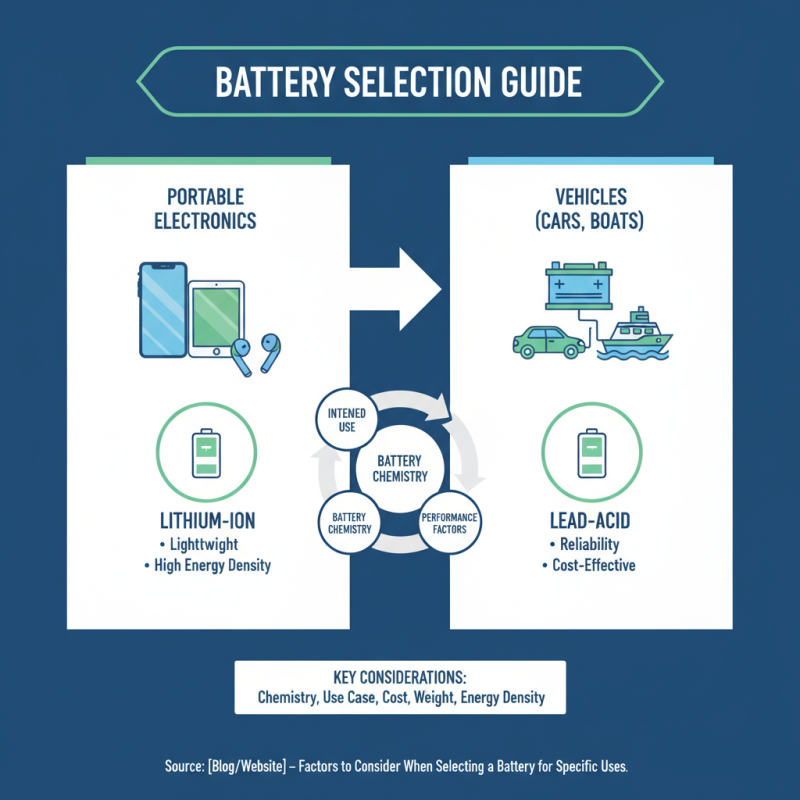
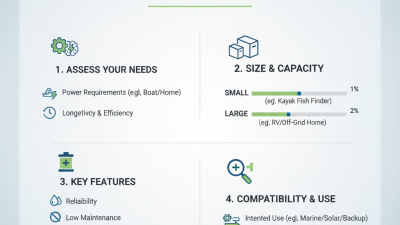
When selecting a battery for specific applications, several factors come into play. Battery chemistry is crucial. Lithium-ion batteries are popular for portable electronics due to their lightweight and high energy density. On the other hand, lead-acid batteries are often used in vehicles because of their reliability and cost-effectiveness. Understanding the intended use can guide the choice.
Capacity is another vital consideration. It refers to the amount of energy a battery can store. If you're powering a small device, a lower capacity may suffice. For larger applications, such as electric vehicles or renewable energy systems, a higher capacity is necessary. Additionally, think about the discharge rate. Some devices need quick bursts of energy, while others may require a steady supply over time.
Lifespan and charging cycles also affect battery choice. Certain batteries can last for years before needing replacement. However, frequent charging may degrade battery performance over time. Users should reflect on their specific needs and usage habits. Aligning these factors with the battery's characteristics can lead to smart purchasing decisions.
Emerging Battery Technologies and Their Potential Applications
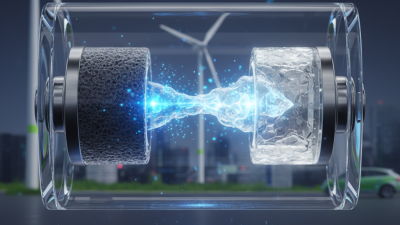
Emerging battery technologies are reshaping various sectors, enhancing efficiency and sustainability. Solid-state batteries, for example, promise higher energy density and improved safety compared to traditional lithium-ion options. Their solid electrolytes reduce the risk of leaks and fires, making them an attractive choice for electric vehicles and portable electronics.
Another promising technology is lithium-sulfur batteries. These batteries can potentially store more energy, which could provide longer usage times. However, they also face challenges regarding lifespan and stability. Researchers are exploring new materials to overcome these limitations, but practical solutions are still a work in progress.
Flow batteries are also gaining attention, especially for renewable energy applications. They allow for easier scalability and longer lifespans. Yet, their lower energy density compared to solid-state options raises questions about their suitability for small devices. The balancing act between efficiency and practicality continues to be a critical aspect as these technologies evolve.
Environmental Impact and Sustainability of Different Battery Types
The environmental impact of batteries varies significantly among different types. Lithium-ion batteries, widely used today, are more efficient but pose challenges. Their mining processes can cause habitat destruction and water depletion. Recycling technologies exist but are not well-established for all battery types.
Lead-acid batteries have been around for decades. They are recyclable, yet their production emits lead and sulfur dioxide. Even with a long history, we continue to grapple with their environmental footprint. While they are cheaper, the longer-term sustainability remains questionable.
Emerging technologies, like solid-state batteries, show promise. They may reduce safety risks and improve longevity. However, the materials used still need evaluation for their ecological effects. As innovation continues, understanding and addressing these impacts will be crucial. Balancing efficiency and sustainability is a challenge that requires ongoing reflection and action.