Top Benefits of Using Maintenance Free Battery for Your Vehicles?
The rise of maintenance free batteries has transformed vehicle performance and reliability. Dr. Emily Carter, a leading expert in battery technology, emphasizes their advantages by stating, "Maintenance free batteries simplify vehicle care, making them perfect for busy lifestyles." This innovation reduces regular maintenance tasks, allowing drivers to focus more on the road than on battery upkeep.
Many vehicle owners struggle with traditional batteries that require constant monitoring. Maintenance free batteries mitigate this issue, providing peace of mind. These batteries are designed to be durable and long-lasting. Their sealed construction prevents leakage and corrosion, which can significantly extend their lifespan. However, some consumers remain skeptical about long-term performance.
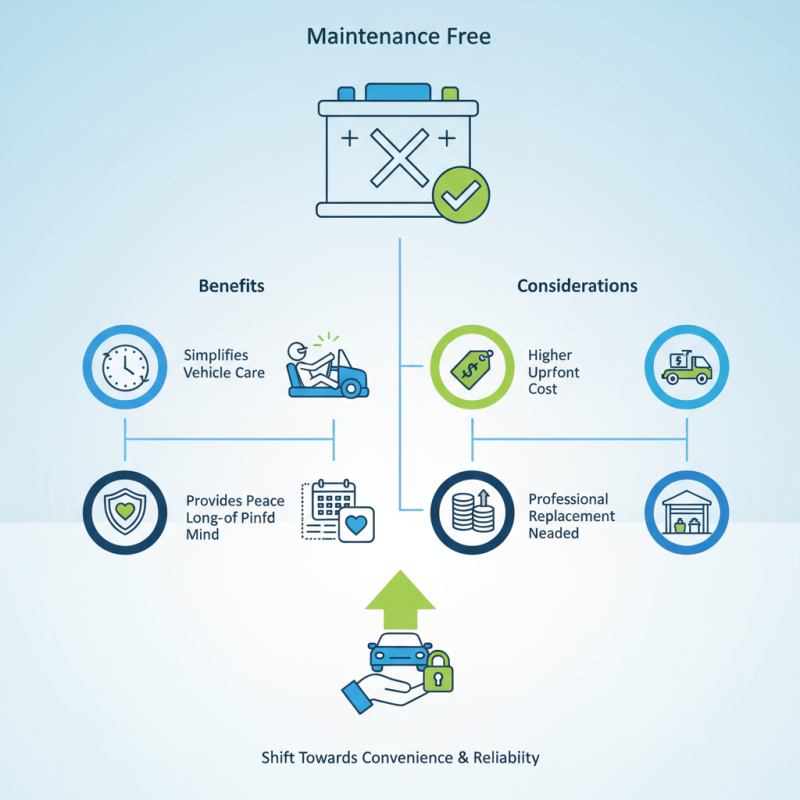
While maintenance free batteries offer numerous benefits, there are considerations to keep in mind. They can be more expensive upfront compared to conventional options. Additionally, once a maintenance free battery fails, replacement often requires professional assistance. Despite these drawbacks, the growing popularity of this technology showcases a shift in consumer preferences towards convenience and reliability in vehicle maintenance.
Understanding Maintenance Free Batteries: What Are They?
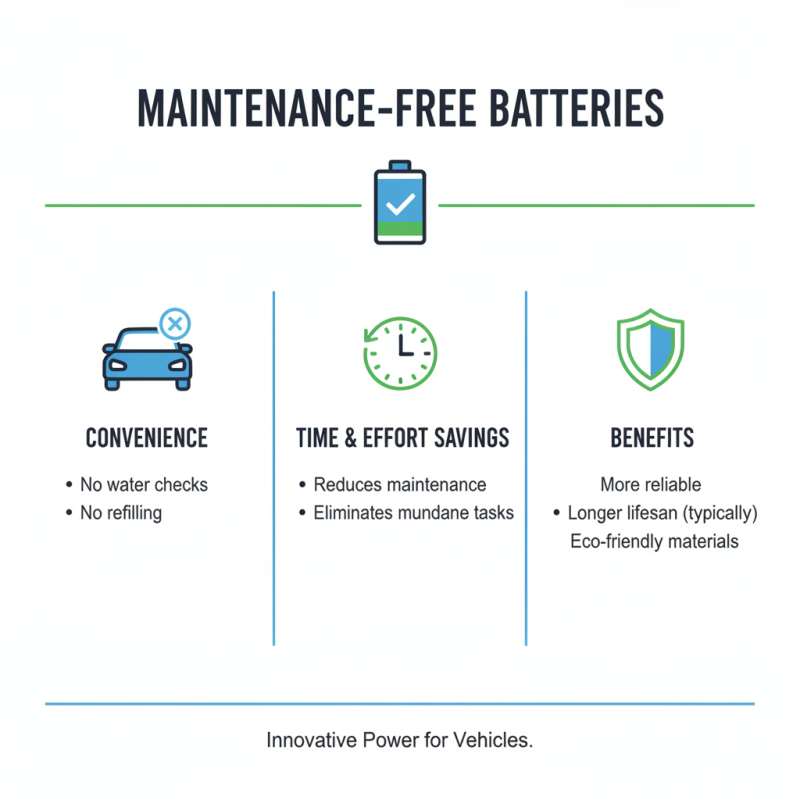
Maintenance free batteries are an innovative solution for vehicle owners seeking convenience. Unlike traditional batteries, they do not require regular water checks or refilling. This feature significantly reduces the amount of maintenance needed. Drivers can save time and effort by eliminating mundane tasks like opening hood latches and inspecting fluid levels.
Understanding how these batteries work is essential. They typically use a sealed design, allowing gases to recombine during the charging process. This reduces the chances of acid leaks and minimizes evaporation. Consequently, these batteries can last longer under varying temperature conditions. However, installation can be tricky. Some users may find it challenging to choose the right model for their vehicle. Research and careful selection are important steps.
While maintenance-free batteries are convenient, they may not always show clear signs when they are failing. This requires drivers to be observant. Regular checks on battery performance are still necessary, even with reduced maintenance. It’s critical to monitor for any signs of struggling to start the vehicle. Being proactive can prevent unexpected breakdowns. A balance between convenience and awareness is crucial.
Key Advantages of Maintenance Free Batteries for Vehicles
Maintenance-free batteries have become a crucial component in the automotive industry. They offer consumers noticeable advantages. According to a report by the International Battery Association, maintenance-free batteries can last up to 30% longer than traditional lead-acid batteries. This extended lifespan reduces the frequency of battery replacements, leading to significant cost savings for vehicle owners.
Another key benefit is their low self-discharge rate. Statistics show that maintenance-free batteries retain up to 70% of their charge after six months of non-use. This feature is particularly useful for drivers who don’t use their vehicles daily. It can be frustrating to return to a car only to find the battery dead. Maintenance-free options help alleviate this concern.
However, there are still considerations to keep in mind. These batteries may require specialized chargers and adjustments during installation, which can complicate DIY replacements. Moreover, some users report difficulty in monitoring the health of these batteries due to their sealed nature. Balancing convenience with monitoring might require some reflection before making the switch.
Top Benefits of Using Maintenance Free Battery for Your Vehicles
Comparing Maintenance Free Batteries with Traditional Lead-Acid Options
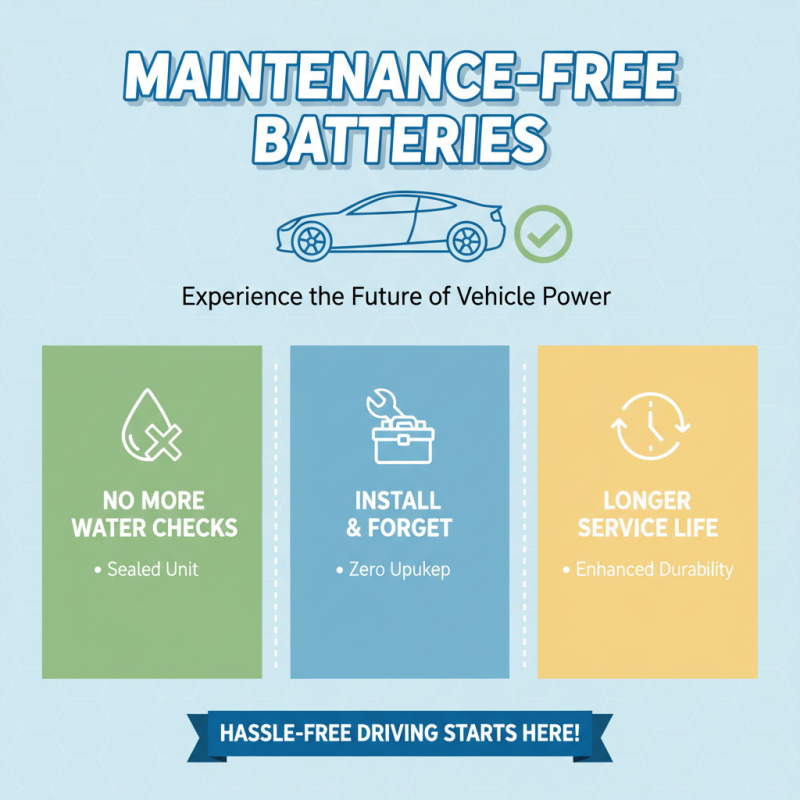
Maintenance-free batteries are gaining popularity among vehicle owners. They offer significant advantages over traditional lead-acid options. One major benefit is the elimination of water checks. This reduces the hassle for drivers. You simply install them and forget about regular maintenance. That sounds appealing, right?
Additionally, maintenance-free batteries are often sealed. This prevents leaks and reduces the risk of corrosion. In contrast, lead-acid batteries can spill. This spills may damage surrounding components and require cleanup. However, a common concern is that maintenance-free batteries might not last as long as traditional ones. Some users report mixed experiences with battery lifespan.
Weight is another factor to consider. Maintenance-free batteries can be lighter, which may improve fuel efficiency. But, the performance in extreme weather conditions can be variable. Some users have faced challenges during cold weather. It's crucial to weigh the pros and cons before making a decision.
Cost-Effectiveness: Long-Term Savings with Maintenance Free Batteries
Many vehicle owners search for ways to save money. One often-overlooked option is the maintenance-free battery. These batteries can lead to long-term savings. They do not require regular checks or fluid top-ups. This means fewer trips to the mechanic. You can spend your time and money on other things.
Choosing a maintenance-free battery can yield significant cost-effectiveness. Traditional batteries may fail or degrade faster. Replacing them brings additional expenses. In contrast, maintenance-free batteries last longer, reducing replacement frequency. This can mean more savings over the years. You won't have to worry about sudden failures while on the road.
To ensure the best performance, check your battery regularly for signs of wear. Use a multi-meter to measure voltage. This simple device can help in identifying any issues early. Remember, choosing a maintenance-free battery is a smart investment. It is wise to explore your options thoroughly before making a purchase.
Top Benefits of Using Maintenance Free Battery for Your Vehicles
| Benefit |
Description |
Long-Term Savings ($) |
| No Regular Maintenance |
Eliminates the need for regular fluid checks and top-ups. |
$200 |
| Extended Lifespan |
Typically lasts longer than traditional batteries, reducing replacement costs. |
$150 |
| Temperature Resistance |
Performs well in extreme temperatures, decreasing risk of failure. |
$100 |
| Higher Reliability |
Less prone to leakage and damage, ensuring less hassle. |
$80 |
| Weight Reduction |
Lighter than traditional batteries, improving vehicle efficiency. |
$50 |
| Eco-Friendly Options |
Some maintenance free batteries are designed to be more environmentally friendly. |
$30 |
Environmental Impact of Using Maintenance Free Batteries in Vehicles
The environmental impact of using maintenance-free batteries in vehicles is significant. These batteries eliminate the need for regular top-ups, reducing hazardous electrolyte waste. They are sealed, so they prevent leaks, protecting soil and water sources from contamination. This contributes positively to a cleaner ecosystem.
Moreover, maintenance-free batteries typically last longer than traditional options. Their lifespan reduces the frequency of disposal. However, it is important to reflect on proper recycling methods. Improper disposal can still lead to environmental damage. Awareness of recycling options is essential to mitigate risks.
Despite their advantages, there are concerns surrounding manufacturing processes. The materials used to create these batteries can be harmful. Transitioning to sustainable production is crucial. Consumers should be informed about the entire lifecycle of the batteries they choose. This knowledge can guide better purchasing decisions for the environment.