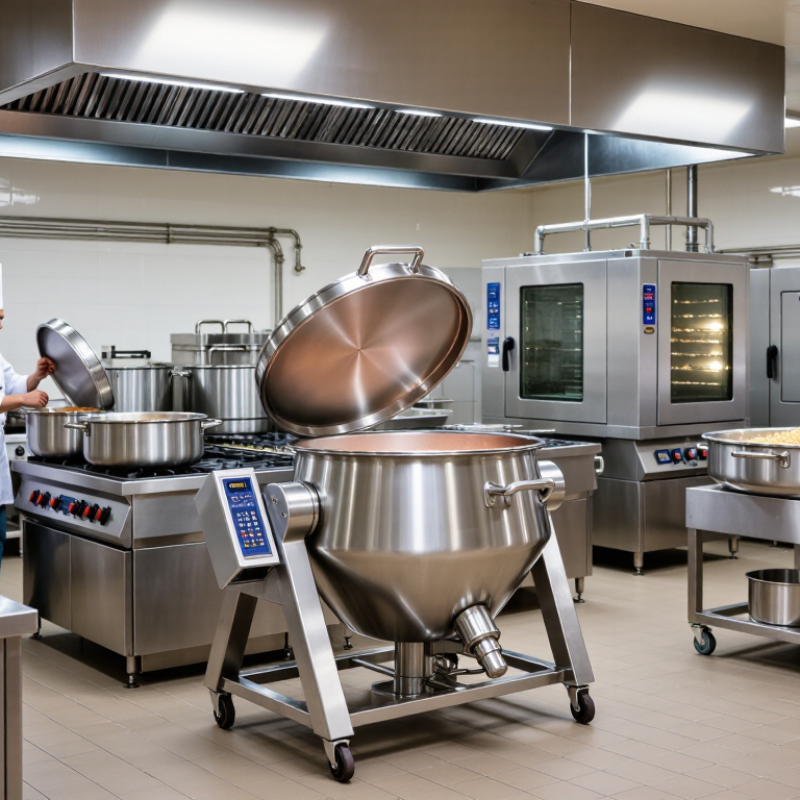
| Steam-Jacketed Kettle | Soups, sauces, stocks, gravies, grains and liquid-based batch recipes. | 50–500 L common commercial range
Compare usable volume, not only nominal vessel volume. | Even heating; adjustable temperature control; bottom outlet; mixing or scraping agitator; hinged lid; drainability; insulation; low-water or pressure safety protection. | Smooth, crevice-free product-contact surfaces; hygienic welds; sloped or fully drainable areas; food-contact materials suitable for the recipe temperature and acidity. | Confirm steam pressure and connection size, condensate return requirements, or electric heating load. Check local voltage, frequency, phase and protective-earthing requirements. | Food-contact framework such as EU Regulation (EC) No. 1935/2004 or applicable local rules; pressure equipment requirements may apply to pressurized jackets; electrical equipment may require IEC-based conformity or local certification. | Product data sheet; P&ID or utility schedule; pressure-vessel documentation if applicable; material certificates; cleaning instructions; factory acceptance test record. |
| Tilting Kettle or Tilting Braising Pan | Large-volume stews, sauces, vegetables, meat fillings and one-pot meals. | 80–500 L common commercial range
Check batch yield after allowing for safe operating headspace. | Controlled tilting angle; powered or assisted discharge; uniform heating; robust agitator option; lid; programmable cooking cycles; emergency stop; anti-splash design. | Product-contact surfaces should be corrosion-resistant and easy to inspect. Confirm that the discharge outlet, hinge areas and agitator shaft can be cleaned without inaccessible product traps. | Electric or gas heating must match site capacity. For gas models, verify gas type, inlet pressure, combustion-air requirements and exhaust provisions. Confirm lifting and floor-loading needs. | Applicable machinery safety requirements; local gas-appliance rules where relevant; EMC and electrical-safety requirements for powered controls; food-contact requirements for wetted parts. | Declaration of conformity where applicable; electrical diagrams; gas-combustion test data; load and anchoring information; risk assessment; spare-parts list. |
| Combi Oven | Roasting, steaming, baking, reheating, regeneration and multi-product batch cooking. | 6–40 GN 1/1 or equivalent pan positions
Confirm actual loading pattern and trolley compatibility. | Independent control of temperature and humidity; core-temperature probe; programmable recipes; fan-speed control; automatic washing system; door safety; data logging; USB or network export where required. | Washable cooking chamber; rounded internal corners; removable door gasket where appropriate; hygienic drain; validated cleaning chemicals; protection against cross-contamination. | Check electrical load or gas input, water pressure, water treatment, drain temperature and ventilation. Steam models may require softened or treated water to protect components. | IEC 60335-2-42 is commonly relevant to commercial electric cooking appliances; local gas and electrical approvals may also apply. Food hygiene rules and HACCP-based procedures remain the operator’s responsibility. | Installation manual; utility requirements; chamber-temperature calibration method; cleaning-chemical compatibility statement; electrical or gas test report; service access plan. |
| Pressure Steamer | Fast cooking of vegetables, rice, grains, legumes and other high-volume products. | Multiple pan or compartment configurations
Compare pan capacity, steam recovery and usable loading height. | Stable pressure control; short heat-up time; condensate management; automatic pressure release; door interlock; water-level protection; programmable cooking cycles. | Cleanable chamber and door seal; corrosion-resistant construction; accessible drain; clear separation between clean steam and condensate pathways where applicable. | Determine whether the unit uses internal steam generation or a central steam supply. Confirm boiler-room capacity, steam pressure, drain temperature and ventilation requirements. | Pressure equipment rules may apply to pressure-retaining parts. Electrical controls should meet applicable local safety and EMC requirements. Food-contact surfaces must comply with destination-market rules. | Pressure rating and safety-valve certificates; inspection and maintenance schedule; steam-quality specification; installation drawings; operator training materials. |
| Batch Fryer | High-volume frying of potatoes, poultry, seafood, snacks and coated products. | 15–50 L oil capacity often used commercially
Compare product throughput at the required oil-recovery temperature. | Fast temperature recovery; accurate thermostat; high-limit cut-out; filtration system; cold zone; automatic basket lift; oil-quality monitoring; fire-suppression compatibility. | Smooth fry-pot surfaces; removable baskets and filters; accessible oil-drain system; materials resistant to hot oil and cleaning chemicals; design that limits oil residue. | Verify electrical load or gas input, ventilation and make-up air, clearance to combustibles, floor drainage and fire-safety provisions. Gas units require correct flue and combustion-air arrangements. | Commercial cooking fire-safety requirements vary by jurisdiction. Gas and electrical certification, EMC requirements and food-contact rules should be checked for the destination country. | Heat-input and recovery test; high-limit test record; fire-suppression interface details; ventilation requirements; oil-filtration procedure; risk assessment. |
| Pasta Cooker or Boiling Pan | Pasta, noodles, rice, eggs, vegetables and other products cooked in boiling water. | 20–150 L water capacity common
Compare basket capacity, recovery time and simultaneous-batch capability. | Rapid heat-up; stable boil; independent baskets; automatic water-level control; drain valve; energy-saving standby mode; overflow protection. | Fully drainable vessel; removable baskets; hygienic overflow and drain design; corrosion-resistant product-contact materials; no concealed food residue zones. | Check water inlet, drain size, drain temperature, electrical or gas load and ventilation. High-volume units may require floor drains with adequate flow capacity. | Applicable commercial cooking-appliance, electrical, gas and food-contact requirements in the destination market; wastewater and environmental rules may also apply. | Utility schedule; heating-performance test; drain-flow data; material declaration; cleaning and descaling instructions; installation clearance drawing. |
| Blast Chiller or Blast Freezer | Rapid cooling or freezing after cooking to support food safety, quality and production scheduling. | 5–40 GN 1/1 or equivalent trolley capacity
Capacity should be stated with a defined food load and target temperature. | Forced-air circulation; core probe; programmable cooling cycles; automatic defrost; HACCP data logging; door alarm; temperature alarm; hot-gas or electric defrost options. | Cleanable chamber; coved or rounded corners; hygienic door gasket; condensate management; food-safe internal materials; separation of raw and cooked product procedures. | Confirm refrigerant type, electrical supply, heat rejection, ambient operating range, condensate drain and ventilation. Refrigerant regulations differ by market and may restrict certain gases. | Refrigeration safety and environmental requirements vary by jurisdiction. Electrical safety, EMC, food-contact and food-hygiene requirements should be assessed together. | Pull-down performance test; calibration certificates; refrigerant declaration; energy data; HACCP temperature records; installation and ventilation requirements. |
| Planetary Mixer or Heavy-Duty Batch Mixer | Doughs, batters, fillings, mashed products, emulsions and prepared mixtures. | 20–200 L bowl size range
Use the manufacturer’s stated dough or product load, not bowl volume alone. | Variable speed; mechanical or electronic overload protection; bowl guard interlock; tool quick-change system; timer; bowl lift; torque suitable for the intended recipe. | Removable tools and guards; smooth bowl; food-contact materials suitable for the product; hygienic shaft and seal design; no exposed lubricant near product zones. | Verify motor rating, starting current, voltage, frequency and phase. Confirm lifting access, floor stability, noise level and operator clearance. | EN 454 is relevant to certain planetary mixers in the European standards system; machinery safety, electrical safety, EMC and food-contact requirements may also apply. | Capacity test by product type; guarding and interlock test; noise data; electrical diagrams; lubrication schedule; operator-safety instructions. |
| Batch Food Processor or Cutter Mixer | Purees, sauces, minced fillings, emulsions, dressings and vegetable preparation. | 10–100 L bowl capacity common
Confirm maximum working load for wet, dry and fibrous products separately. | Variable cutting speed; pulse mode; controlled product temperature; blade safety interlock; overload protection; scraper or mixing function; easy emptying. | Removable bowl and blade assembly where safe; smooth internal surfaces; cleanable seals; corrosion-resistant blades; documented allergen-cleaning procedure. | Check motor power, duty cycle, electrical supply, noise, vibration and required clearance. Confirm whether washdown or hose-down cleaning is permitted. | Machinery guarding, electrical safety and EMC requirements apply according to market and configuration. Food-contact materials must comply with destination-market requirements. | Blade and guard risk assessment; cleaning validation guidance; noise and vibration data; electrical test report; spare-blade and seal specifications. |
| Holding Cabinet or Heated Holding System | Maintaining cooked food temperature before service, packing or dispatch. | 10–40 tray positions common
Compare usable tray spacing, loading recovery and holding time. | Even temperature distribution; humidity control; programmable holding profiles; door-open recovery; core-temperature monitoring; low-water protection for humidified units. | Removable racks; cleanable chamber; door gasket inspection; condensation control; materials suitable for repeated thermal cycling and cleaning chemicals. | Confirm electrical load, plug configuration, water connection if humidified, drain arrangement and ambient-temperature limits. Assess heat output to the room. | Applicable electrical safety and EMC requirements; food-hygiene procedures should define safe holding temperatures and maximum holding times for the intended foods. | Temperature-mapping report; calibration method; energy data; humidity performance data; cleaning instructions; alarm and data-logging specifications. |
| Automated Batch Cooking Cell | Integrated cooking, mixing, dosing, cooling and recipe-control operations for centralized production. | Define by kg or litres per batch
Compare hourly throughput using the same recipe, load and cycle definition. | Recipe management; load cells; automated dosing; traceability; temperature and time recording; remote diagnostics; manual override; clean-in-place capability where suitable. | Hygienic equipment layout; validated cleaning sequence; drainability; segregated raw and cooked zones; allergen-control features; food-grade seals and hoses. | Prepare a complete utility matrix covering power, steam, water, compressed air, drainage, ventilation, network connections and heat rejection. Confirm local automation voltage and communication standards. | Machinery safety, functional safety where applicable, electrical safety, EMC, food-contact and local food-hygiene requirements should be assessed as an integrated system. | User requirement specification; functional design specification; FAT and SAT protocols; software backup; cybersecurity responsibilities; validation and traceability records. |
| Insulated Batch Transport and Service Trolley | Moving hot or chilled prepared food between production, holding, service and delivery areas. | 10–40 tray positions common
Verify payload, tray standard and route distance. | Thermal insulation; active heating or cooling if required; door seal; temperature display; braking casters; impact protection; removable shelves; ergonomic handles. | Washable surfaces; removable racks; sealed joints; corrosion resistance; cleanable casters and handles; design that prevents liquid accumulation. | For powered models, verify charging voltage, battery type, charging area, operating time and electrical protection. Check doorway, lift and corridor dimensions. | Electrical safety and battery transport requirements may apply to powered units. Food-hygiene procedures should cover loading, cleaning and temperature monitoring. | Thermal-retention test; battery and charger documentation; payload and wheel-load data; cleaning instructions; route and access survey. |