2026 Best Appliance Injection Parts Suppliers?
Choosing the right Appliance Injection Parts supplier in 2026 means looking beyond a polished catalog. A refrigerator door liner may look simple, yet its fit depends on tooling accuracy, resin consistency, and controlled cooling. A dishwasher control housing faces different demands, including heat exposure, repeated handling, and close-fitting assembly points. Small defects matter. A warped edge can slow installation; a weak clip can trigger costly rework. Supplier evaluation should therefore consider material knowledge, mold design, process monitoring, inspection records, and communication during sampling.
Injection-molding author John Beaumont is often associated with the principle, “The process is the product.” For buyers, that idea is a useful reminder: a capable supplier must control production, not just deliver a mold or quote an attractive unit price. Ask how the supplier checks dimensions, tracks resin batches, and responds when a trial part misses specification. Request sample parts and review them against real assembly conditions. Look closely at gate marks, surface finish, wall thickness, and snap-fit behavior. A shortlist can still miss a strong partner. Supplier claims deserve verification, and even experienced teams can overlook a small design risk. This guide compares potential suppliers through practical criteria, helping manufacturers assess quality, capacity, technical support, and long-term fit before making a sourcing decision.
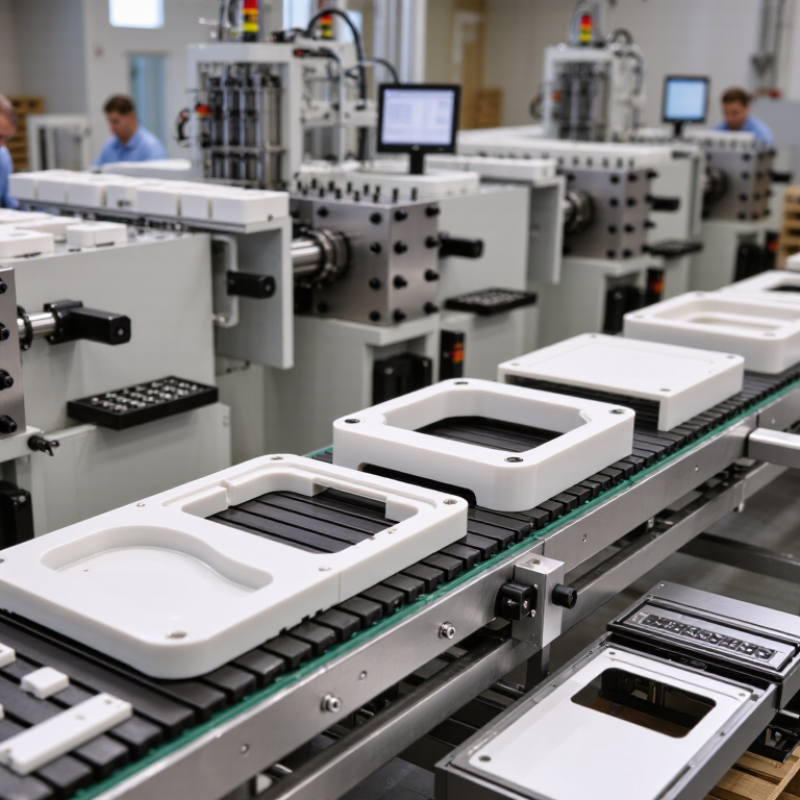
Appliance Injection-Molded Parts and Their Common Applications
Appliance Injection-Molded Parts and Their Common Applications
Injection-molded parts are found throughout everyday appliances, often where users notice them only when something cracks or sticks. Refrigerators use molded liners, crispers, door bins, and handles; dishwashers rely on spray arms, racks, and control bezels. Washers commonly include molded detergent drawers, agitator components, and exterior panels. These parts may use polypropylene for chemical resistance, ABS for rigid housings, or clear plastics for viewing windows. The right choice depends on heat, moisture, cleaning agents, impact, and appearance. Small details matter.
Grand View Research valued the global injection-molded plastics market at USD 284.5 billion in 2023 and projected 4.9% annual growth from 2024 to 2030. PlasticsEurope reported global plastics production of 413.8 million tonnes in 2023; that figure covers many industries, not appliances alone. Together, these reports show the scale of plastics manufacturing, but they do not prove that one resin or molding process suits every appliance part. In practice, suppliers should validate dimensions, surface finish, material behavior, and repeatability with production-representative samples. A thicker wall may feel more robust, yet it can increase cooling time and material use. That trade-off is easy to miss. A good design still needs testing under real household conditions.
Key Criteria for Evaluating Appliance Injection Parts Suppliers
Selecting appliance injection-parts suppliers means checking process control, material discipline, and engineering support—not just unit price. Request capability data for critical dimensions, cavity-to-cavity variation, resin certificates, and documented process changes. Ask for evidence. A refrigerator door liner, for example, may look clean but still have a warped edge that complicates assembly. Inspect parts after conditioning, not only straight from the press.
Certification is a useful baseline, not a guarantee. The International Organization for Standardization’s 2022 Survey reported 1,265,216 valid ISO 9001 certificates worldwide. Still, verify how a supplier controls your specific mold, resin, and tolerances. Review defect trends, corrective-action records, maintenance logs, and traceability from resin lot to finished part. Small details matter. Ask how teams respond to color shifts, short shots, or tool wear across shifts.
Capacity and production visibility also deserve scrutiny. Deloitte’s 2024 Smart Manufacturing Survey found that 92% of manufacturers viewed smart manufacturing as a key competitiveness driver over the next three years. Check whether production, downtime, and inspection data are actually accessible. Confirm backup tooling, realistic lead times, and clear escalation contacts. I would treat an impressive dashboard cautiously; a shop-floor visit and repeat production run can reveal gaps that reports miss.
2026 Best Appliance Injection Parts Suppliers?
Key Criteria for Evaluating Appliance Injection Parts Suppliers
Suggested evaluation weights for a supplier assessment: prioritize quality systems and part consistency, then review tooling, materials, production capacity, delivery reliability, compliance, and total cost. These weights are a planning framework, not measured market statistics; adjust them to fit your part and sourcing requirements.
Supplier Capabilities, Quality Standards, and Certifications
For appliance injection parts, supplier capability is visible in the details: stable shot weight, clean gate edges, and dimensional records tied to each production lot. PlasticsEurope’s Plastics—The Fast Facts 2024 reports 413.8 million tonnes of global plastics production in 2023. That figure covers many applications, not appliance molding alone, but it highlights why resin grade and batch traceability matter.
Small details matter.
Ask suppliers for documented process controls, material certificates, mold-maintenance logs, and first-article inspection results. Statistical process control and capability studies can reveal drift before clips, ribs, or screw bosses fall out of tolerance. ISO 9001 certification supports a structured quality system; check its current scope and site, rather than treating the certificate as proof of every part’s performance.
A certificate can become paperwork if nobody checks the press-floor records.
Environmental claims need the same scrutiny. The OECD’s Global Plastics Outlook (2022) estimates that only 9% of plastic waste generated in 2019 was ultimately recycled. For recycled-content parts, request evidence of material origin, batch segregation, and validation of strength and appearance.
Ask for actual test data. Review dimensional reports, impact results, and color consistency against the part specification. Supplier reviews should also include corrective-action records; repeated issues deserve a clear explanation, not just a polished audit score.
How to Compare and Shortlist Suppliers for 2026 Projects
2026 Best Appliance Injection Parts Suppliers?
How to Compare and Shortlist Suppliers for 2026 Projects
For a 2026 appliance project, compare suppliers against the part’s actual requirements, not just the quoted price. A molded control-panel housing may need tight dimensions, a textured finish, and resin that tolerates heat. Ask how suppliers manage material drying, mold temperature, and first-article inspection. Specific answers matter. Vague promises do not.
Request samples made with production-intent tooling, then check critical dimensions and visible surfaces. Ask for inspection records and examples of how defects are contained and corrected. Confirm available machine capacity, tooling ownership terms, expected lead times, and how schedule changes are communicated. A low unit price can lose its appeal if mold maintenance or repeat sampling causes delays. Small details count.
Use a simple scorecard for quality, technical support, capacity, delivery, and total project cost. Give each category a weight based on the part’s risk. Speak with the engineers who will handle mold trials, not only the sales contact. Their answers can reveal how practical the supplier’s process is. No scorecard captures everything; that is a limitation worth admitting. Keep two or three candidates for trial parts, and record unresolved questions before making a decision.