What is a 180 Rotation Rotary Actuator and How Does It Work?
The 180 Rotation Rotary Actuator is a crucial component in various mechanical systems. It facilitates precise movements, allowing for controlled rotation within a 180-degree range. This actuator finds applications in robotics, industrial machinery, and automotive systems.
Operating on simple principles, the 180 Rotation Rotary Actuator works through electric motors and gear systems. When activated, the actuator spins to the desired angle, offering responsive control. Its efficiency makes it ideal for places demanding quick adjustments.
However, the actuator's performance can sometimes be inconsistent. Factors like wear and tear or electrical fluctuations may impact its functionality. Periodic maintenance is essential to ensure reliability. Understanding its operation helps users appreciate its role in enhancing mechanical processes.
Overview of 180 Rotation Rotary Actuators
180-degree rotation rotary actuators are essential in various automation and robotics applications. These devices convert rotary motion into linear motion. They are crucial for tasks that require precise movements and positioning. Reports indicate that the global market for rotary actuators is expected to see a compound annual growth rate (CAGR) of approximately 6.8% from 2023 to 2028.
One significant advantage of 180-degree rotation actuators is their compact design. They can fit into tight spaces where traditional actuators might not fit. This feature is vital in industries like manufacturing and aerospace. The performance metrics show that these actuators often achieve positioning accuracies within ±0.5 degrees. However, costs can be a concern for smaller companies. Investing in high-quality actuators can strain budgets, leading to challenging financial decisions.
User feedback often highlights that while 180-degree rotary actuators are efficient, they can have limitations. The speed of operation may not always meet production demands. Maintenance is another area that requires attention. Regular checks are essential to ensure longevity and optimal performance. Ignoring these details can lead to unexpected downtime, impacting overall productivity. Understanding these challenges is critical for those in the field.
Key Components of a 180 Rotation Rotary Actuator
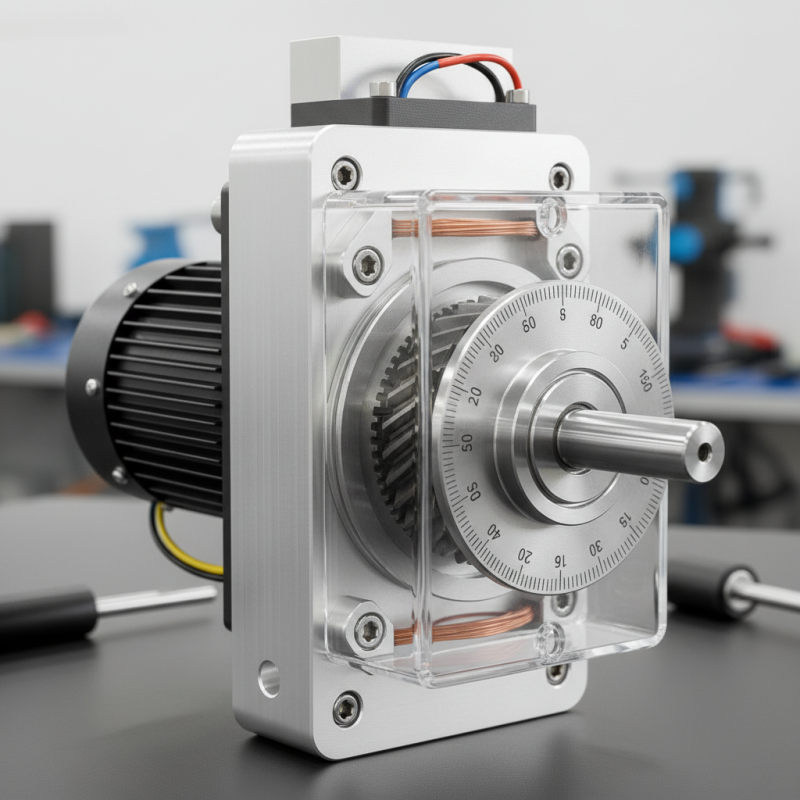
A 180 Rotation Rotary Actuator is a mechanical device that enables controlled movement in a semi-circular path. Its key components include gears, motors, and sensors. These parts work together to provide precise positioning. The actuator often uses a DC motor or a stepper motor as the driving force.
Gears play a crucial role. They transfer the motor's rotational energy into the desired movement. Gear ratios can be adjusted to modify speed and torque. This flexibility is essential for various applications. Sensors provide feedback, ensuring that the actuator reaches the correct position reliably.
Sometimes, these components may not align perfectly. Misalignment can lead to performance issues. Regular maintenance is necessary to prevent failures. Gears can wear down, and motors can overheat if not monitored. Understanding these elements will help in troubleshooting. It’s vital to check each part regularly for optimal performance.
Working Principles of 180 Rotation Rotary Actuators
180 Rotation Rotary Actuators are crucial components in automation systems. They can rotate an object a full 180 degrees. This device is widely used in robotics, industrial machinery, and even in home automation systems. The actuator relies on a simple principle: when electrical energy is applied, a motor engages. This motor drives gears or belts that produce the rotational movement.
The mechanism operates through a precise arrangement of components. A dc motor converts electrical energy to mechanical energy. The gear system amplifies this energy, allowing for a powerful output. Notably, the actuator may employ limit switches to prevent over-rotation. These switches ensure the actuator stops precisely at the desired angle.
Tips: Regular maintenance is essential for longevity. Lubricate moving parts to reduce wear. Additionally, always check wiring connections to prevent failures. Be cautious while operating these devices, as improper use can cause damage. Reflect on your project needs; not every situation requires a full rotation. Sometimes, precision and control are more valuable than speed.
Applications of 180 Rotation Rotary Actuators in Industry
180-degree rotation rotary actuators are widely used in various industrial applications. These devices convert rotary motion into linear movement or vice versa. They often appear in automation systems, where precise control is essential. For instance, they can rotate valves in pipeline systems, controlling the flow of liquids or gases. This application is crucial in industries like oil and gas, where safety and accuracy are priorities.
In the manufacturing sector, these actuators play a key role in robotic arms and assembly lines. They allow machines to perform repetitive tasks with great precision. For example, a rotary actuator can position components for assembly or even grip and move objects in packaging machinery. The consistent performance of these actuators often leads to increased efficiency in production processes.
However, it's important to note some challenges. Calibration issues can arise, affecting precision. Environmental factors, like temperature changes, may also impact their performance. In some cases, maintenance may be overlooked, leading to unexpected downtime. These aspects require ongoing attention to ensure optimal functioning of rotary actuators in any application.
Advantages and Limitations of 180 Rotation Rotary Actuators
180 rotation rotary actuators offer distinct advantages and limitations in various applications. These devices excel in precision control, providing accurate and repeatable movement. The ability to rotate 180 degrees makes them suitable for tasks like conveyor systems and robotic arms. According to a recent industry report, the market for rotary actuators is expected to grow at a CAGR of 7.5%, indicating increasing reliance on automation.
However, there are challenges. Limited rotation can restrict application versatility. In scenarios requiring continuous rotation, these actuators may not perform well. Power consumption is another concern; while many models are efficient, some can drain energy quickly if not monitored. Additionally, the mechanical complexity may lead to maintenance issues over time.
In practice, the use of 180 rotation rotary actuators might not meet high-demand requirements. Variability in load conditions can affect their performance. With inadequate torque, the actuator might struggle under heavy loads. Evaluating specific application needs is crucial before making a selection. Thoughtful consideration of these factors can lead to better decision-making.
What is a 180 Rotation Rotary Actuator and How Does It Work?
| Feature | Description |
| Rotation Angle | 180 Degrees |
| Type | Rotary Actuator |
| Power Source | Electric, Hydraulic, or Pneumatic |
| Applications | Robotics, Automation, Valve Control |
| Advantages | Compact Design, High Precision, Cost-Effective for 180° Control |
| Limitations | Limited to 180° Rotation, May Require Additional Components for Full Functionality |
| Response Time | Variable Depending on Type and Control System |
| Maintenance | Regular Inspections Recommended to Ensure Optimal Performance |